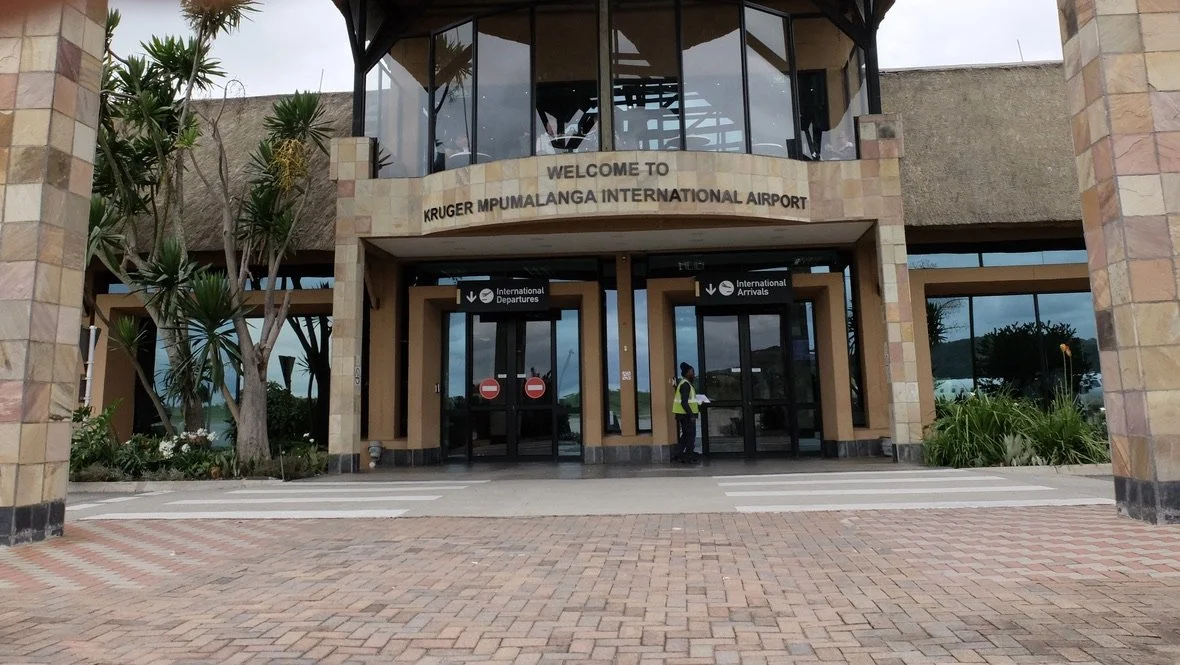

We arrived here on fastjet Airlines.
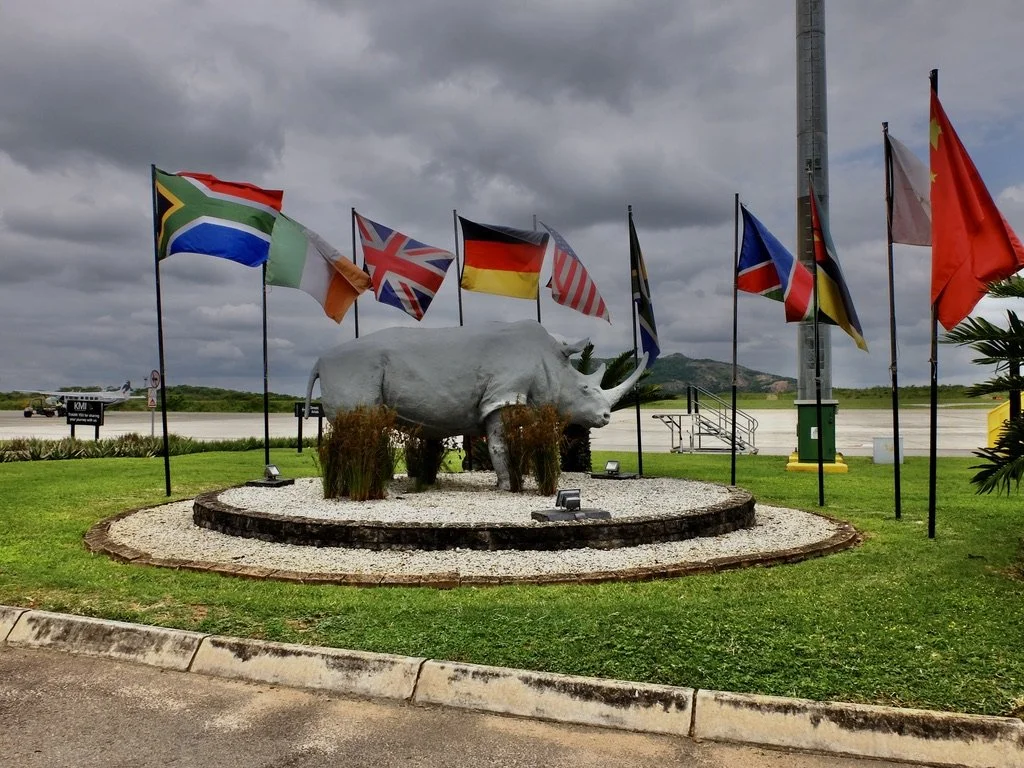
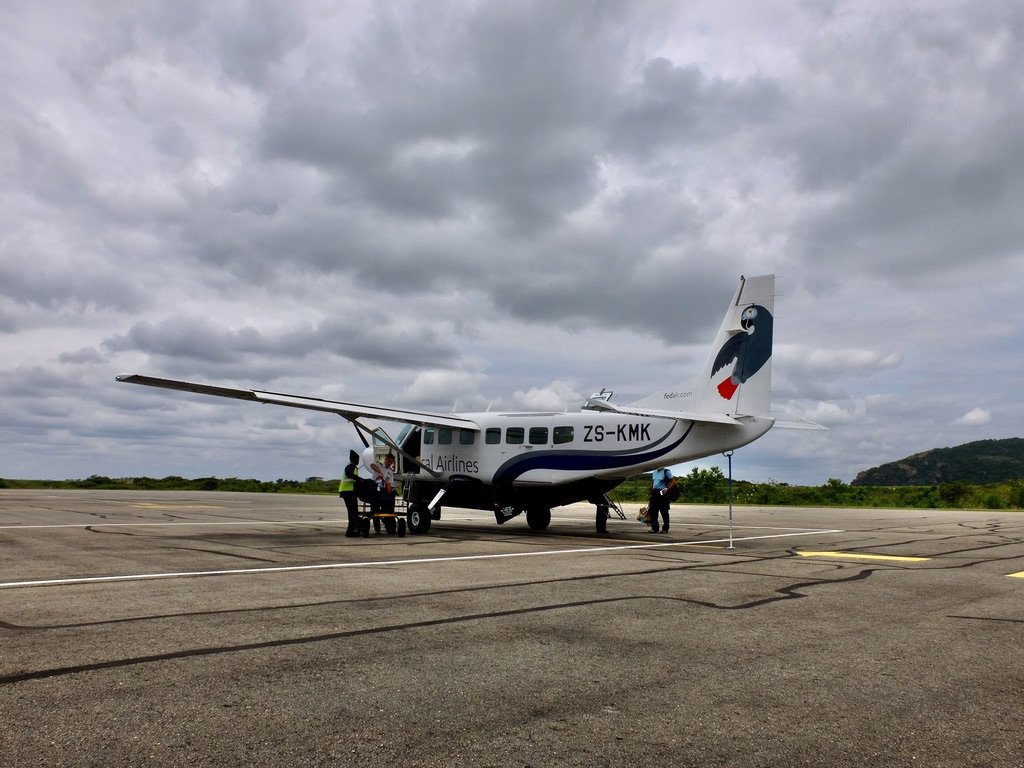
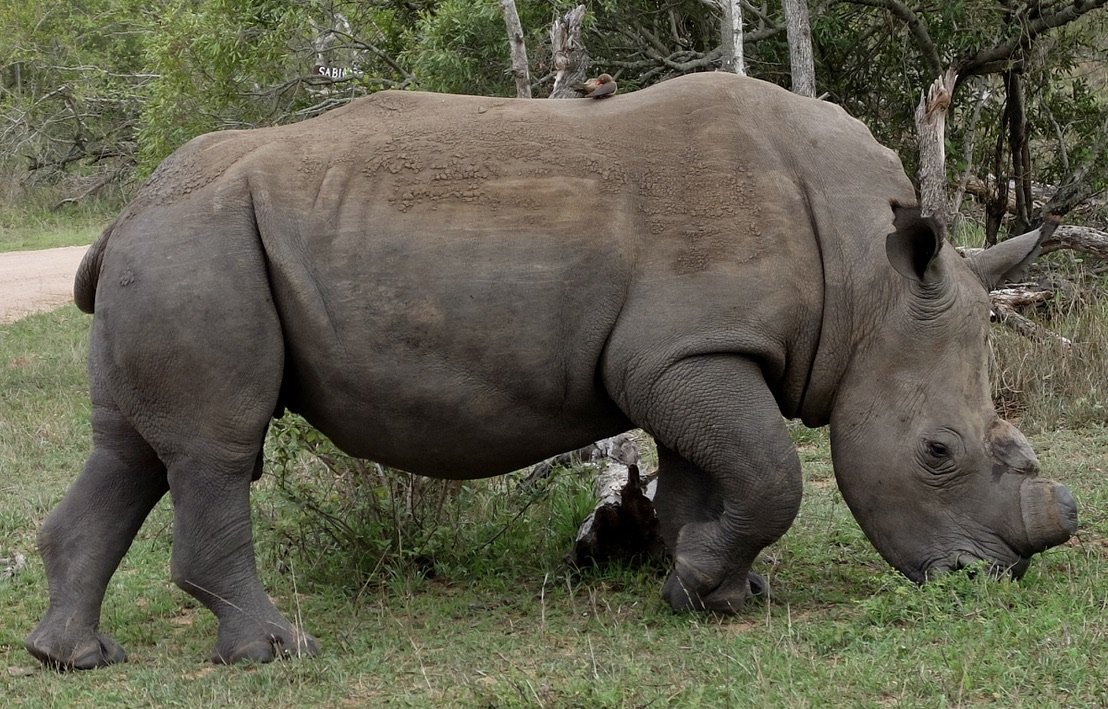
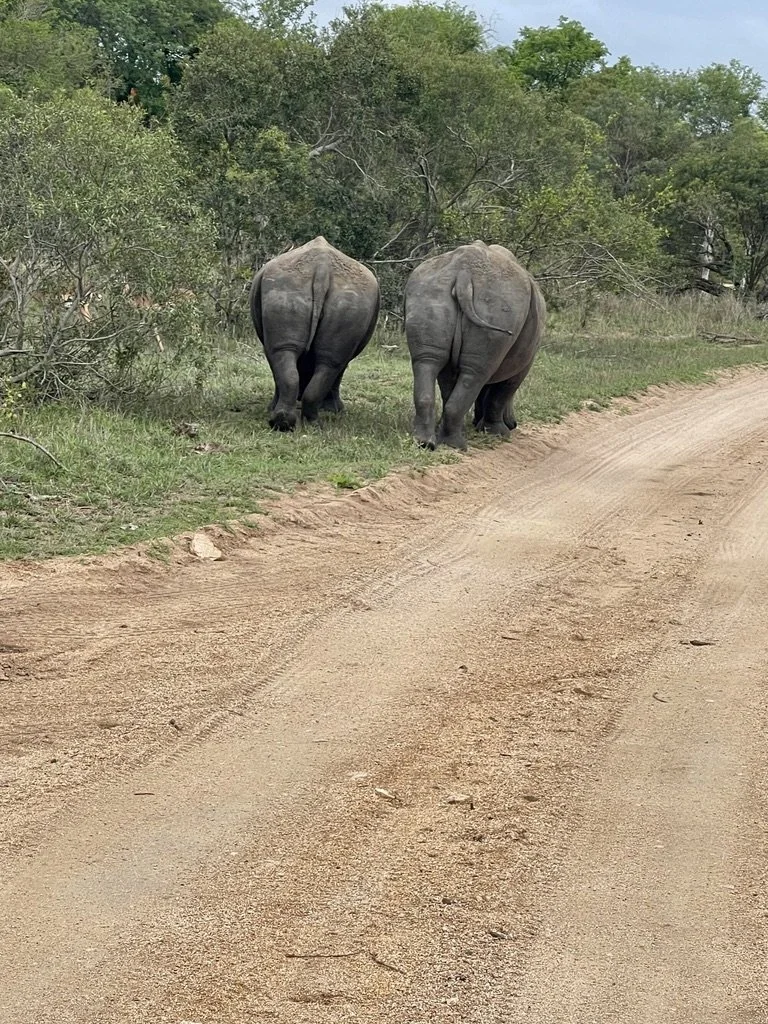
Poachers haven’t gotten to the tusks of this rhino at the Kruger Mpumalanga Internat'l Airport. Our Federal Air flight was awaiting us. It’s in the left of the photo or…
…here.
Federal Air flight to Skukuza Airport Kruger Nat'l Park.
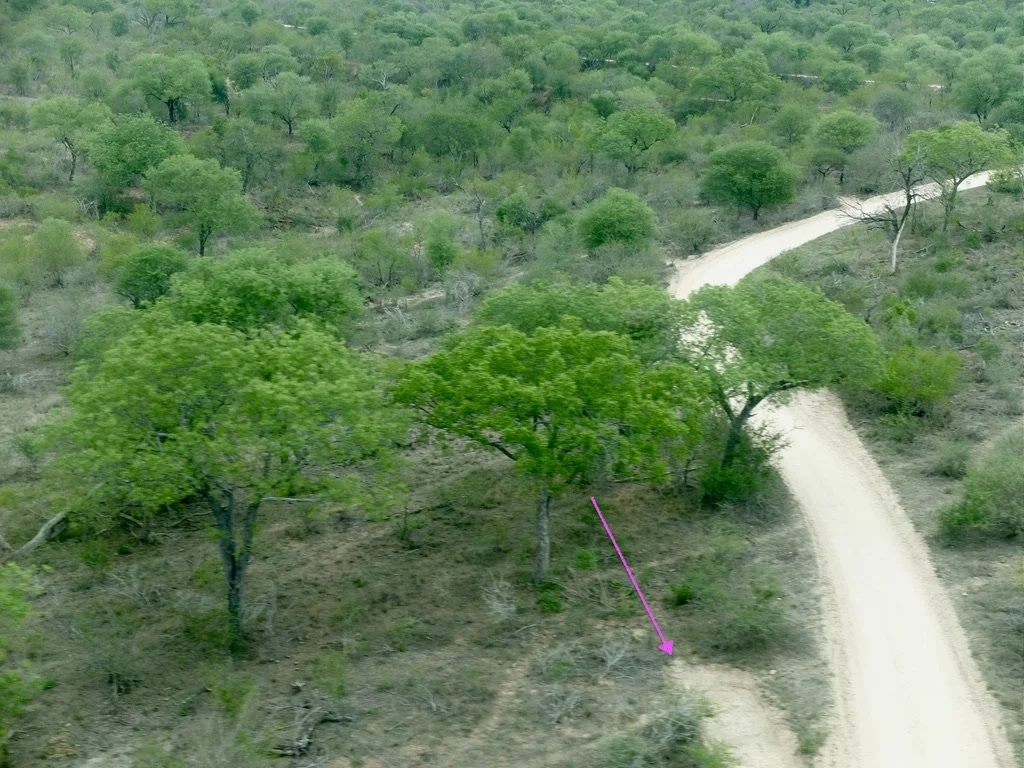
On the flight to Skukuza Airport, I noticed many of these turnoffs from the roads. (Purple arrow) I also noticed them as we were driving through the nature reserve. I was told they led nowhere but allowed for water run-off.
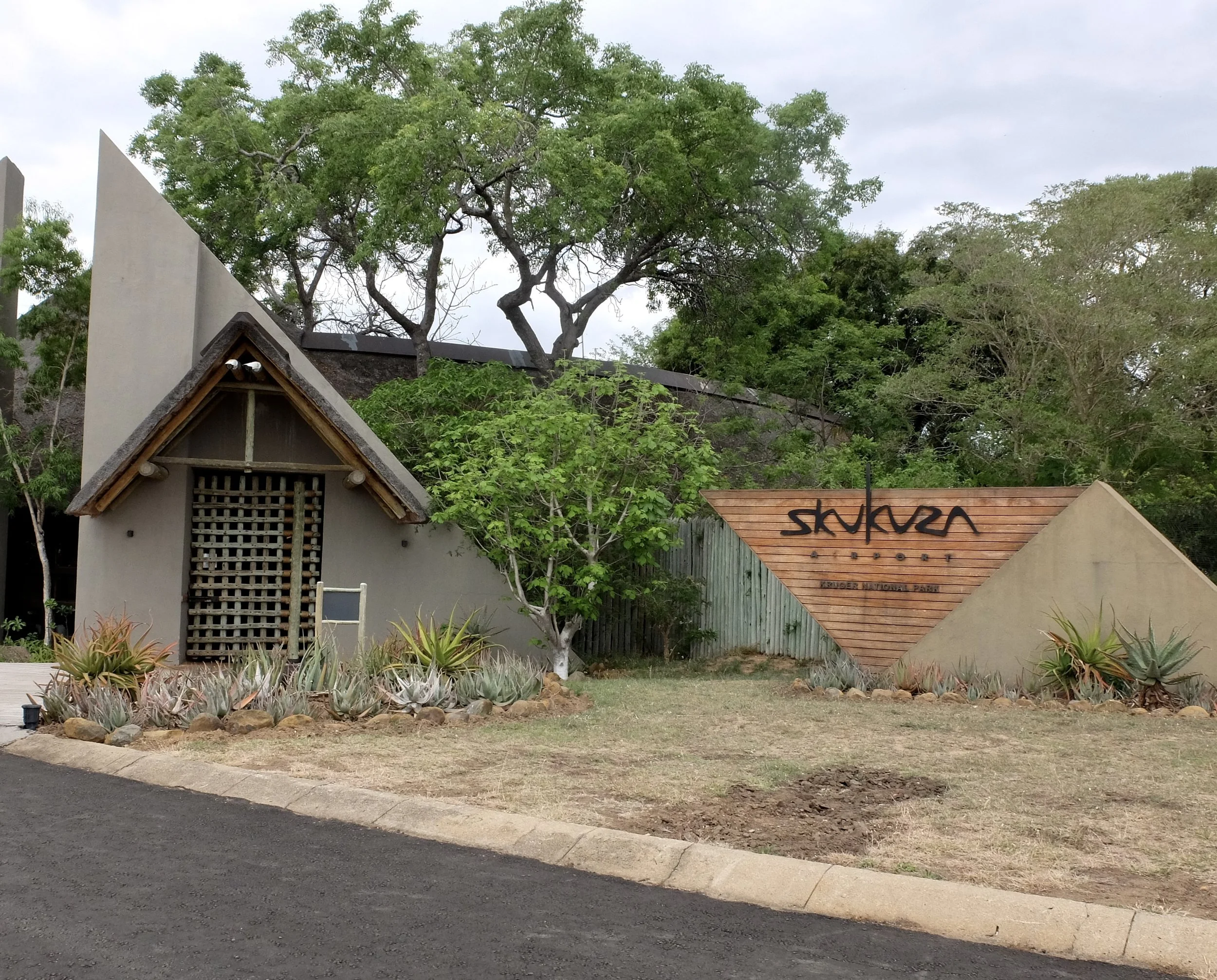
Skukuza Airport Kruger Nat'l Park.
Notten’s Bush Camp began in 1963 when John Notten acquired a portion of the privately owned Sabi Sand Game Reserve. It is now in its fourth generation in the Notten family.
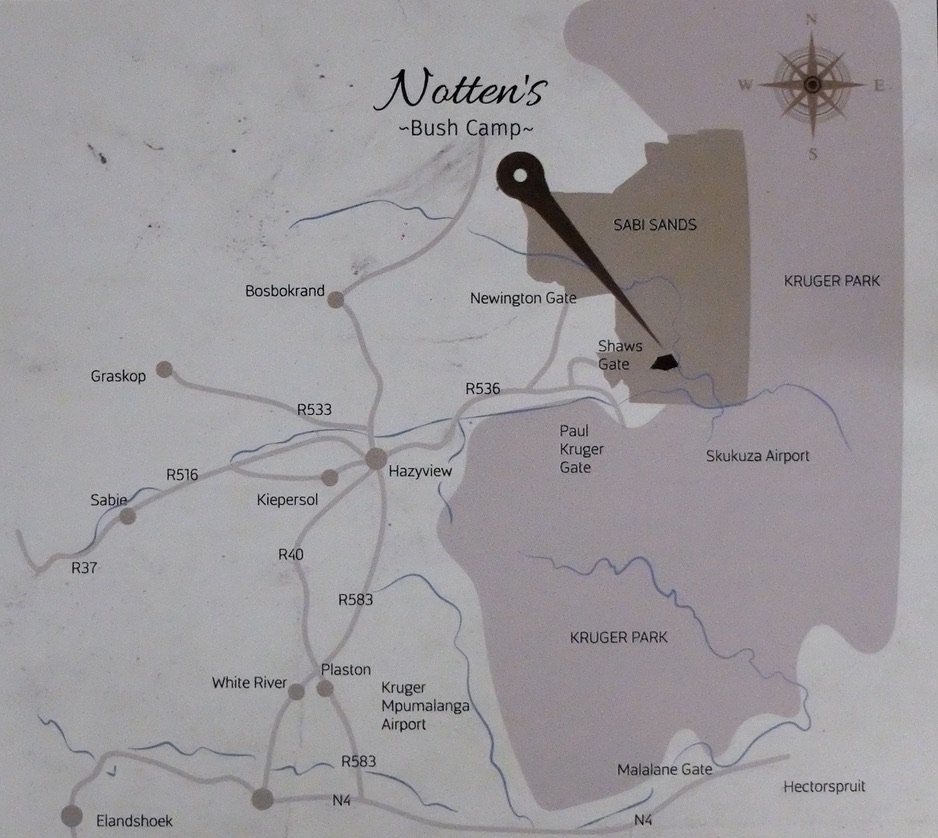
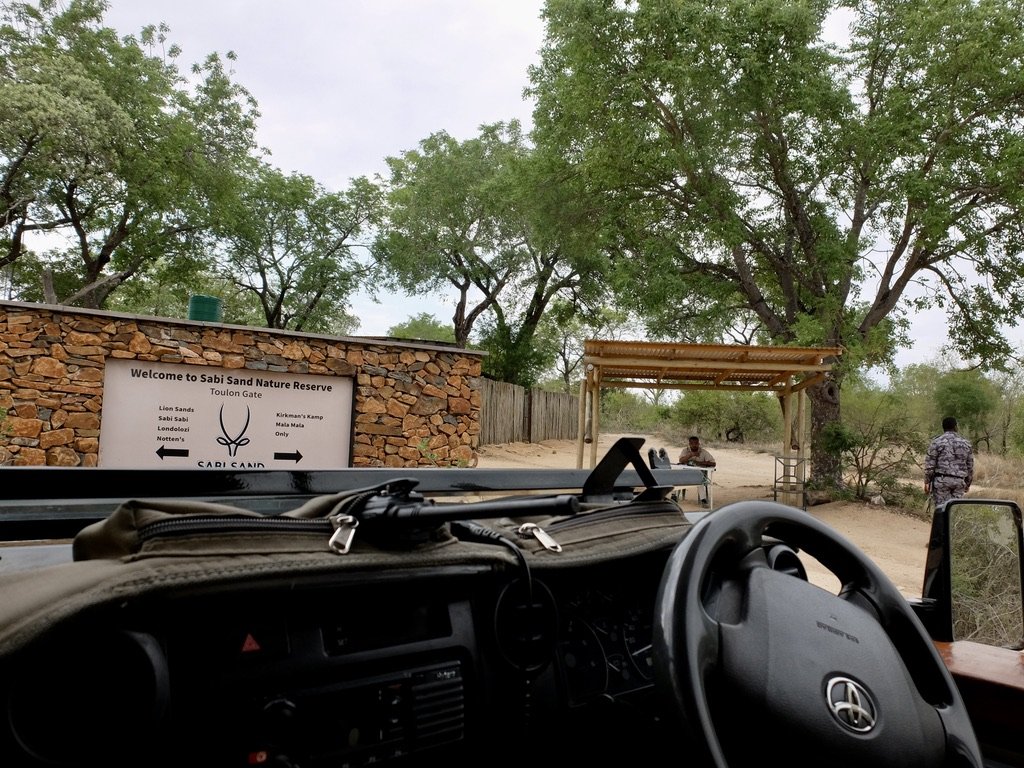
The 45 minute drive from the airport to Sabi Sands Nature Reserve & Notten's Bush Camp - "There are no fences between Kruger National Park and Sabi Sands Game Reserve, so wildlife roams freely in a huge natural environment."
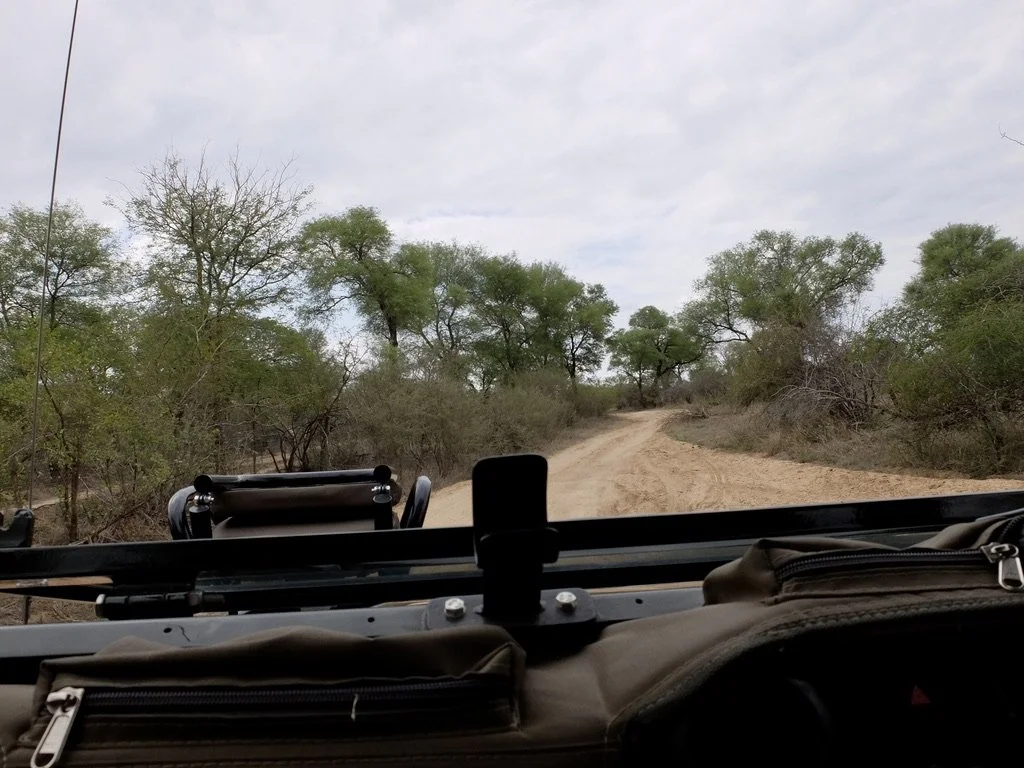
There once was the ca. 1880’s Selati Railway Line along some of this road. It was “…one of the great railway scandals of the day” & ceased operation in 1973.
Drive to Sabi Sand Nature Reserve & Notten's Bush Camp - "...the land owners created the Sabi Private Game Reserve adjacent to Kruger National Park in 1934. Of these pioneering land owners, six families still own land in the Sabi Sands Game Reserve, they are now third and fourth generation owners. In 1948 the landowners formally formed what now is the Sabi Sand Reserve."
Note the armed guard at the entrance.
The quotes in italics in the captions that follow come from Notten’s The Story that was in our room & for us to take home.
And some captions are quotes from African Field Guide 8th Edition by Mark. R. Nolting from Africa Adventure Company.
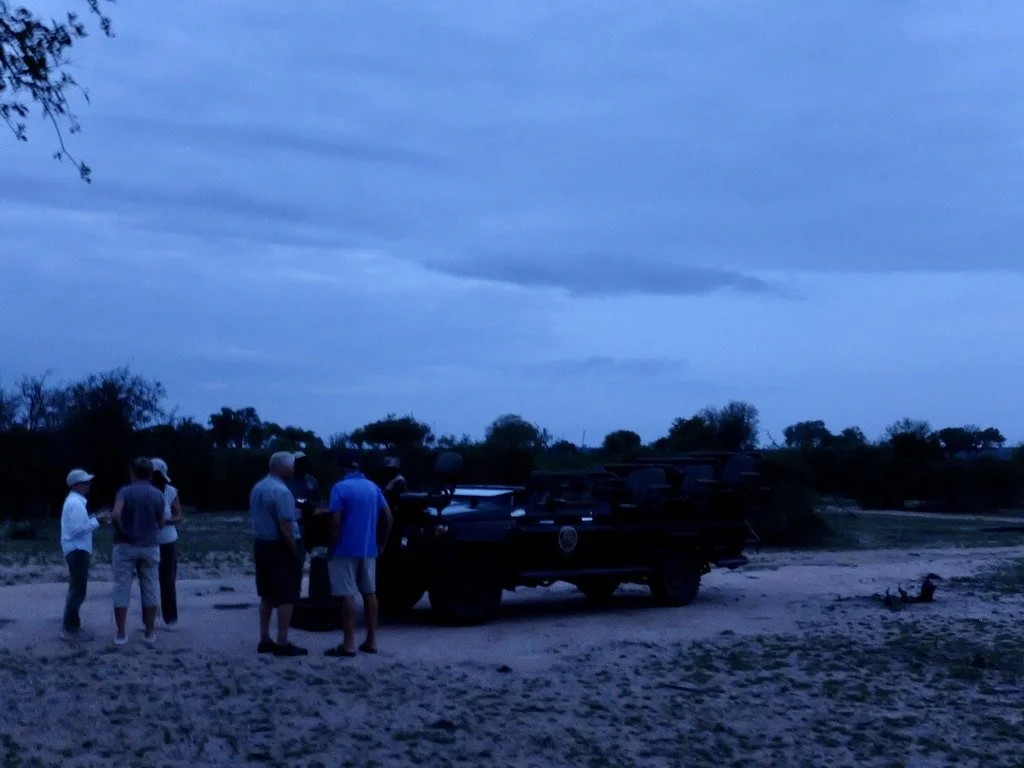
We arrived at Notten’s Bush Camp, got slightly settled in our lodgings, were served some food &…
…by 4:15 were off in a open top Toyota Land Cruiser on an afternoon game drive.
This photo was taken at 4:22PM.
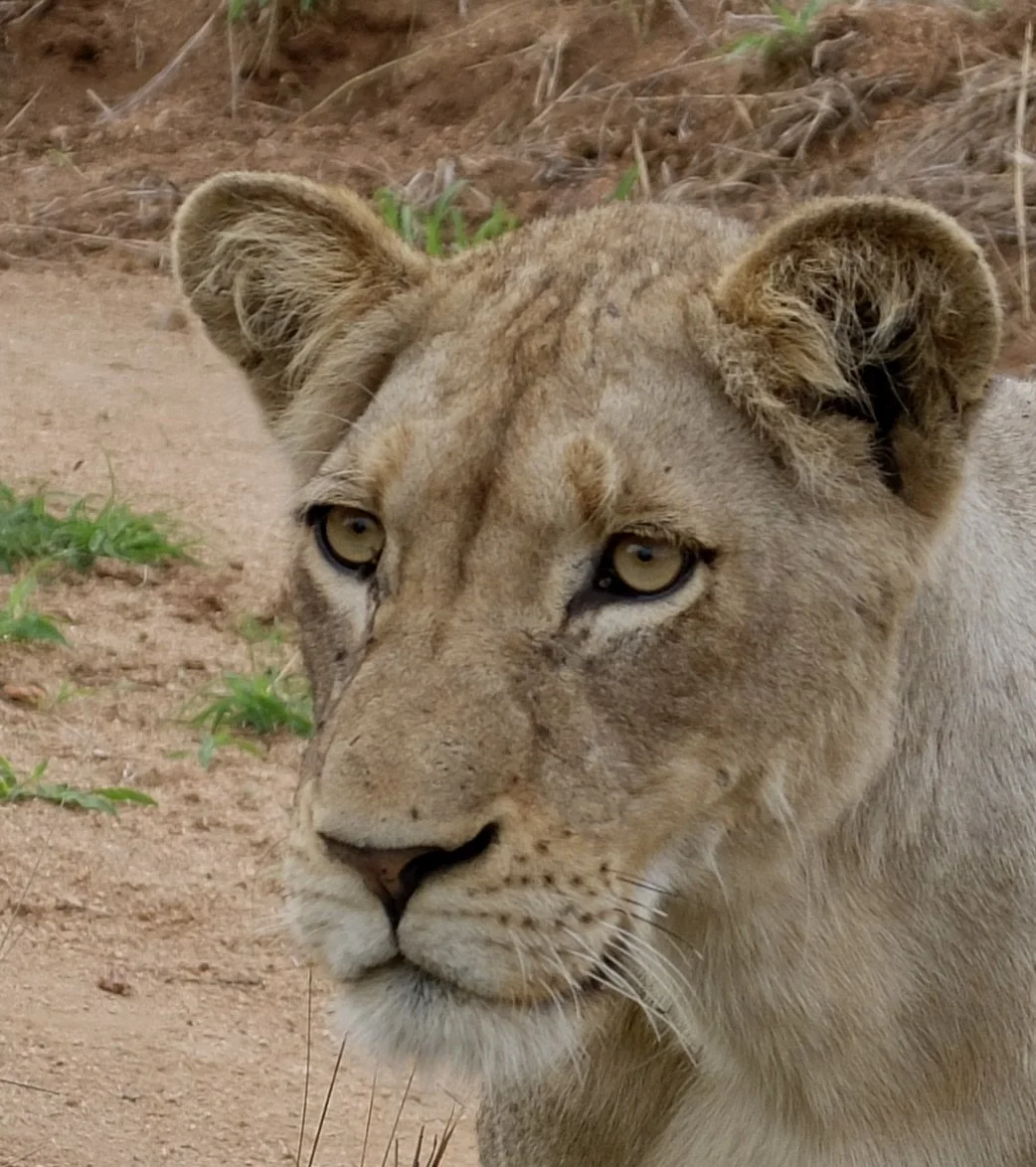
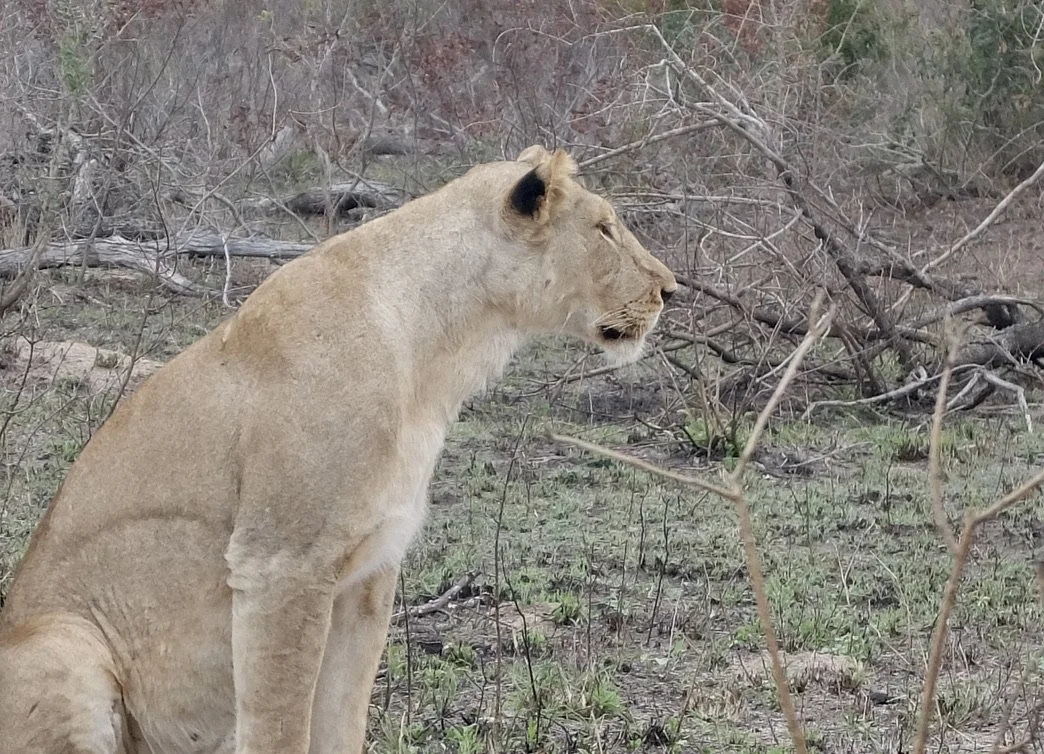
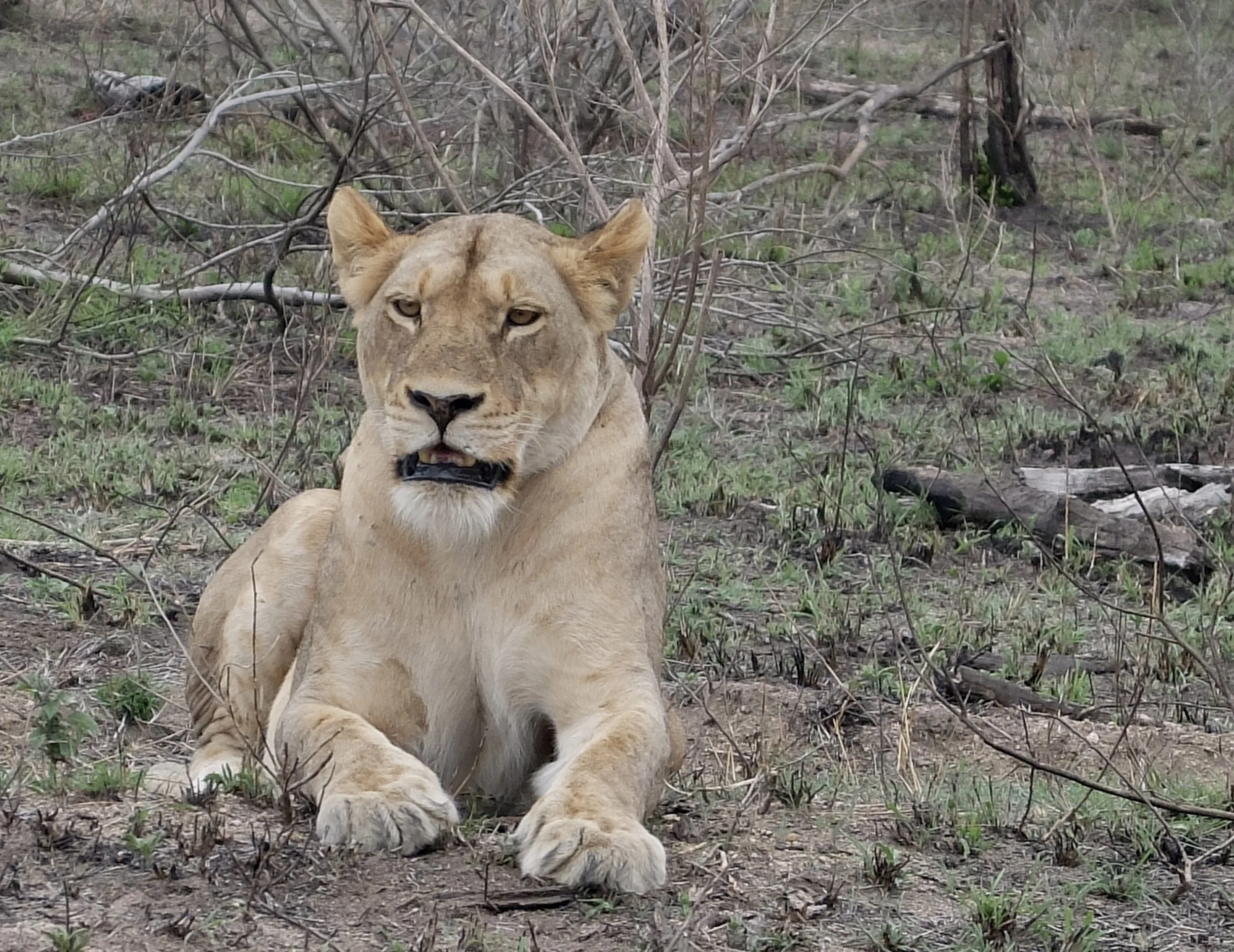
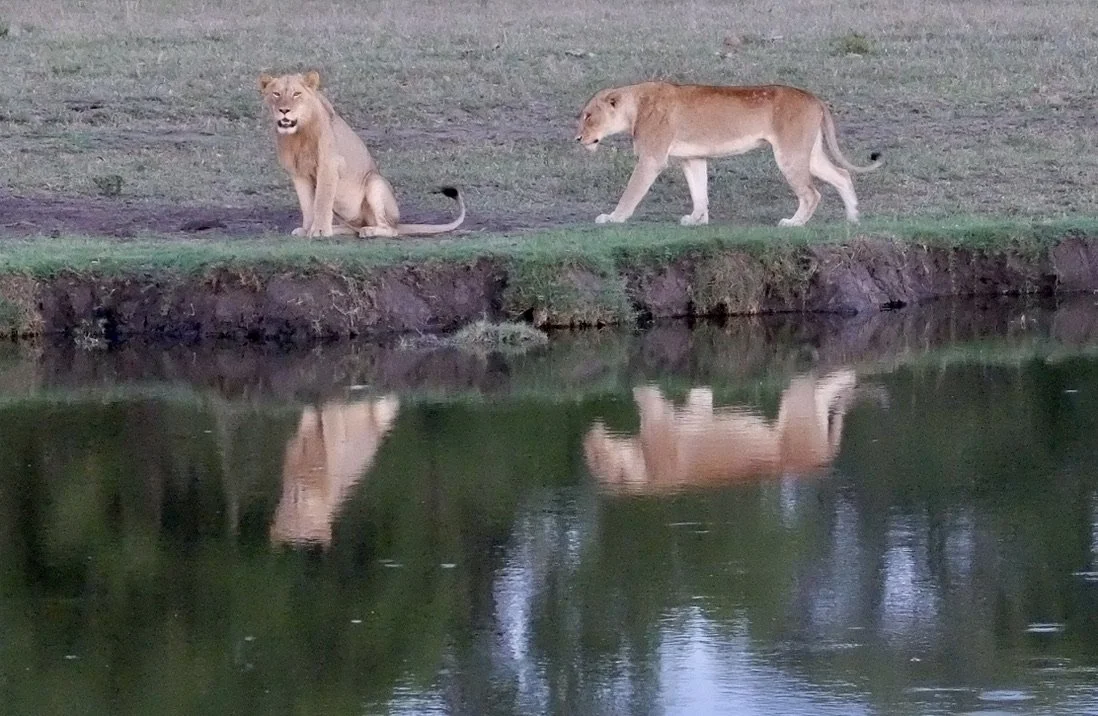
ingonyame, the Zulu word for lion means “the master of all flesh.”
"What's up folks? Where are y'all going?"
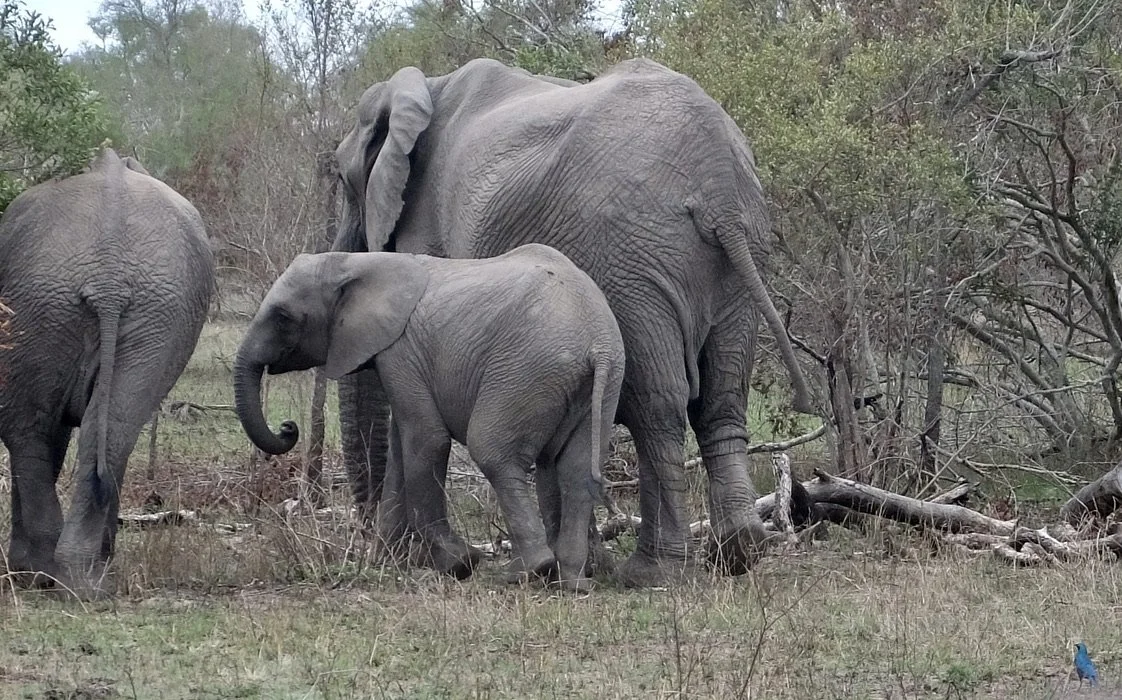
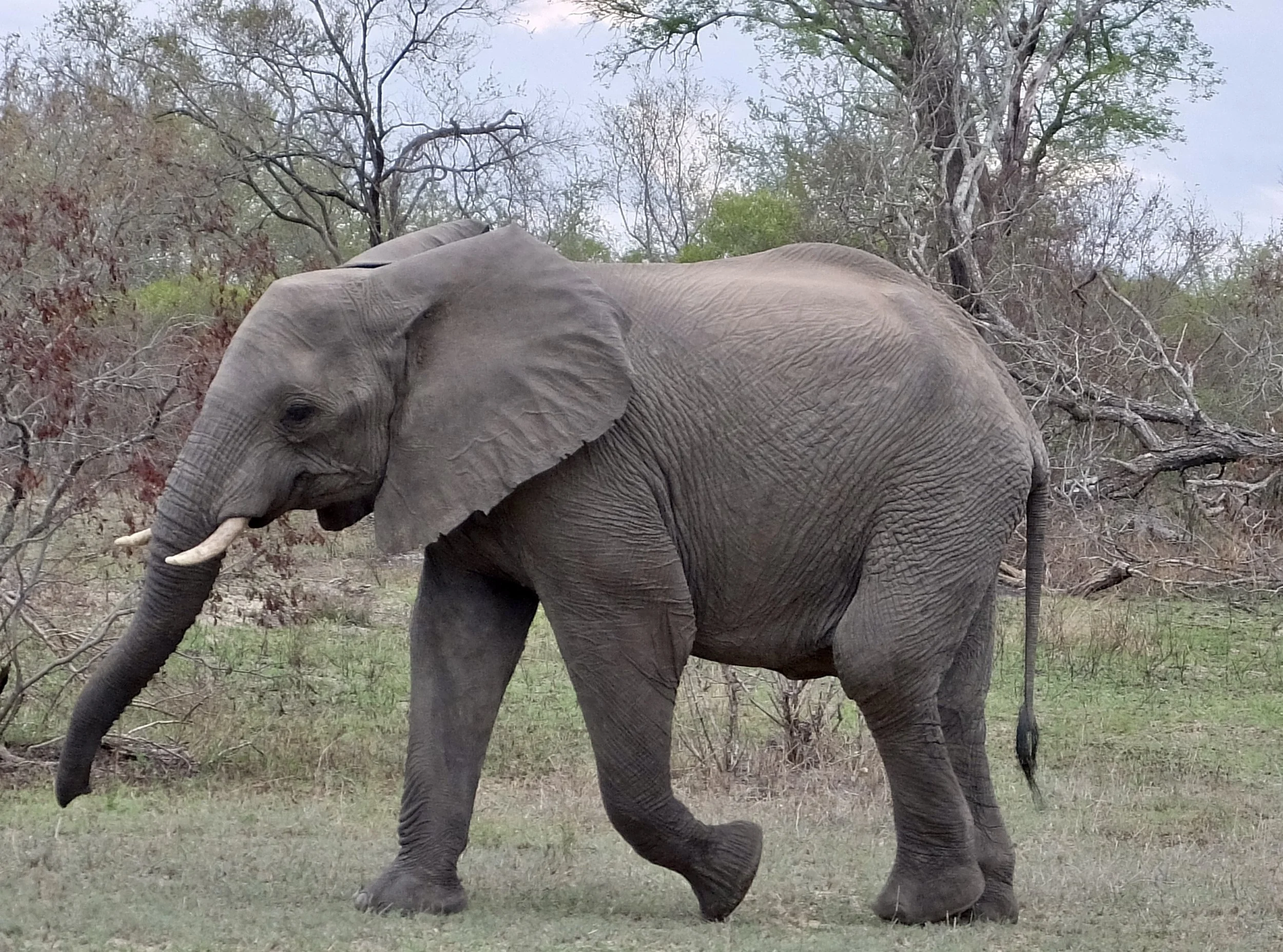
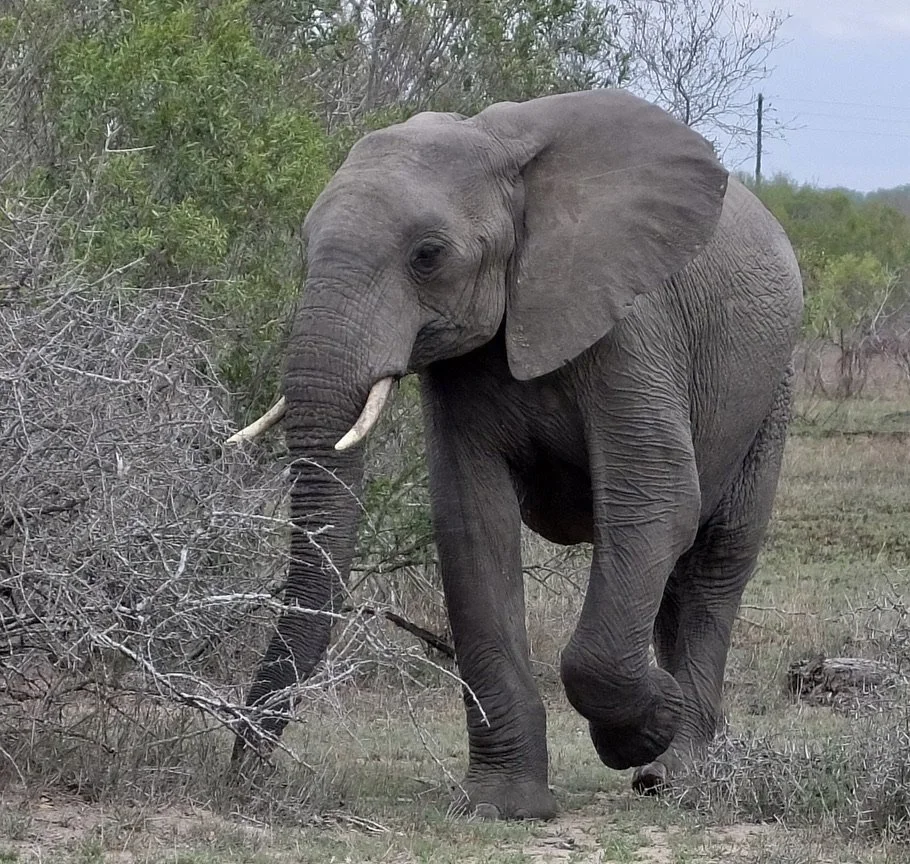
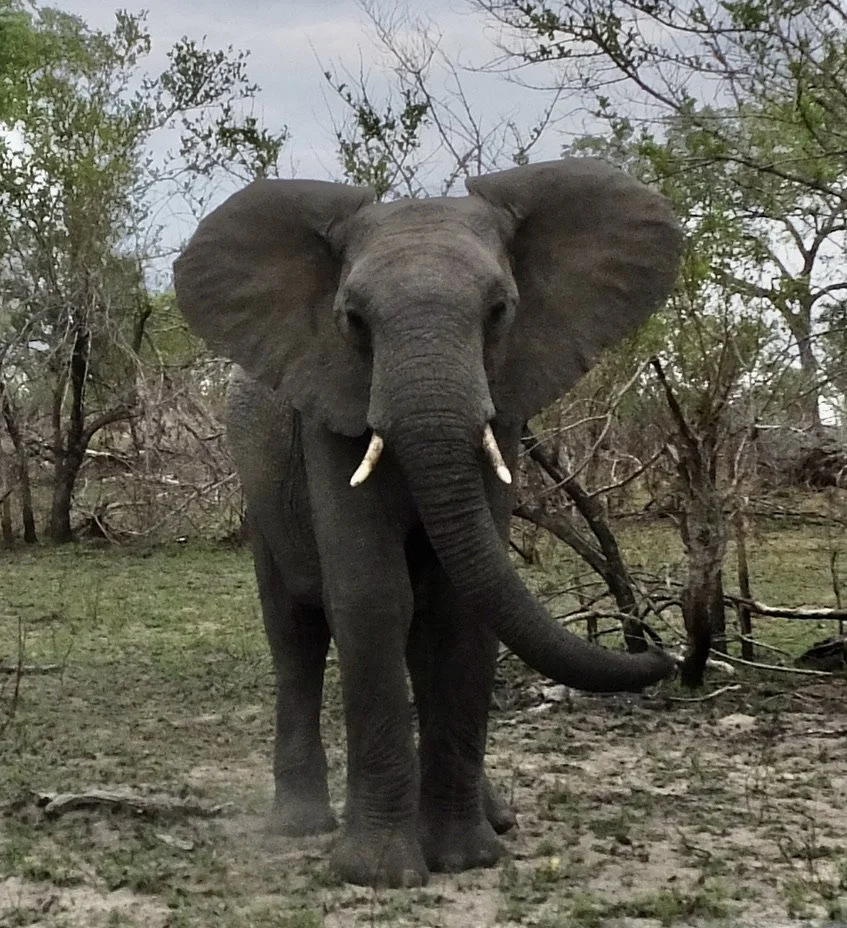
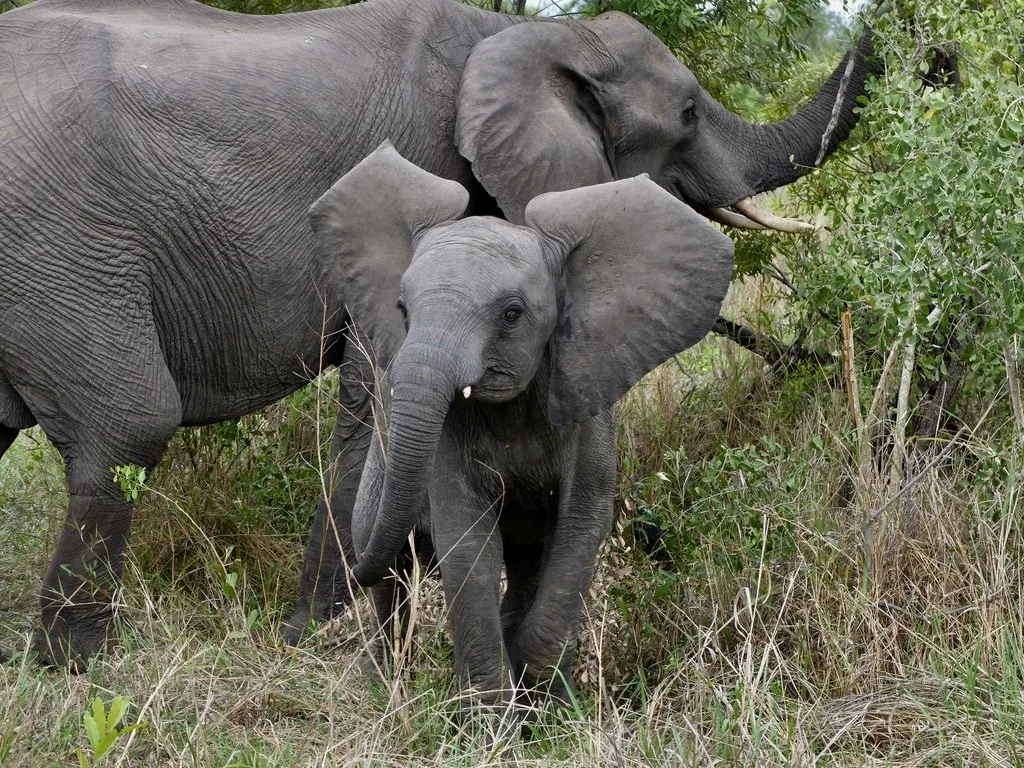
African people regard the elephant with a very deep reverence.
The Zulu, Tswana & Tsonga name for elephant mean “the forceful one,” “the unstoppable one.”
In Zulu, the name for an elephant is indlom from the verb dlom, which means to…
…”to crash through,” “to pierce savagely.”
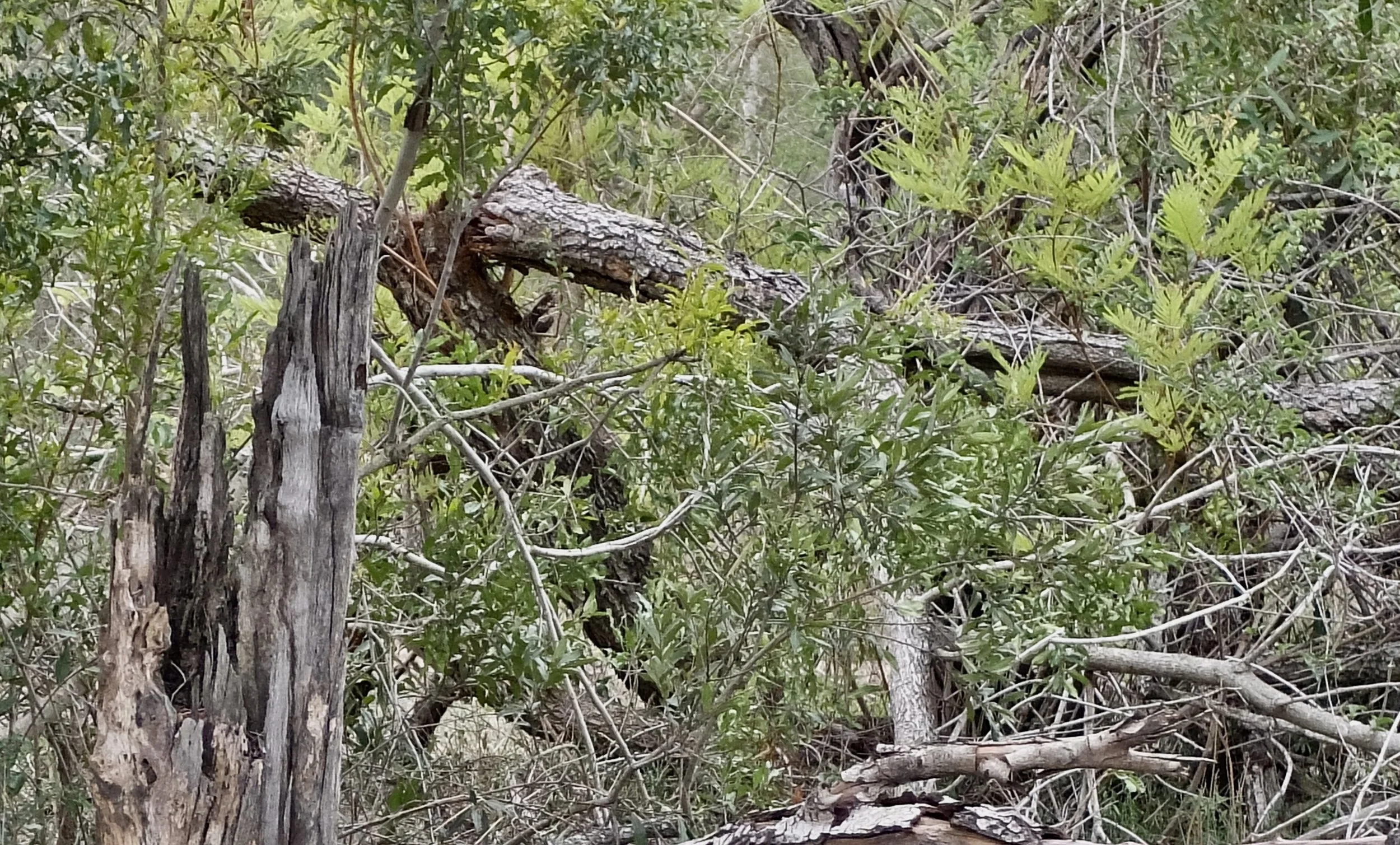
This is the sort of damage that the elephants do to the trees.
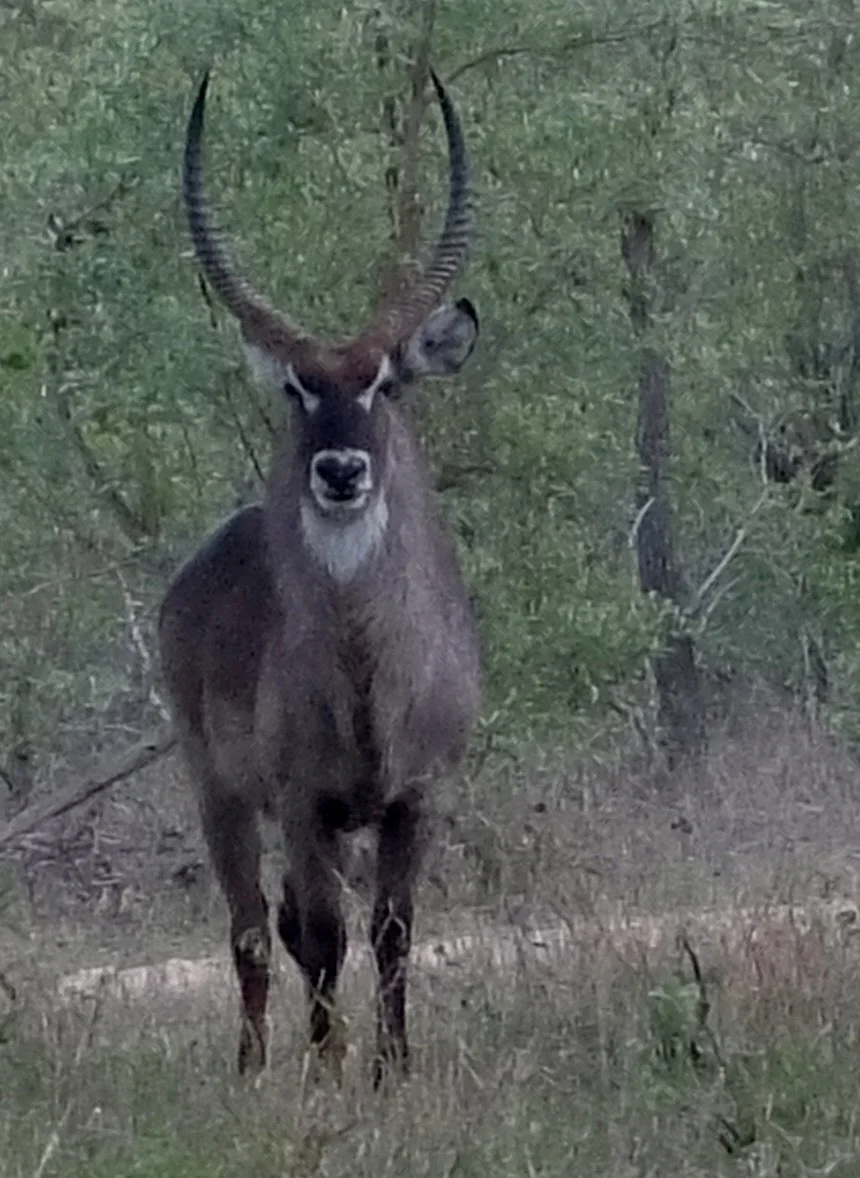
Waterbuck species of African antelope.
The trademark white ring around the waterbuck's hindquarters is used as a "follow me" sign. If one of the group spots a predator & runs, the rest know where to follow to avoid becoming dinner for one of the hungry cats.
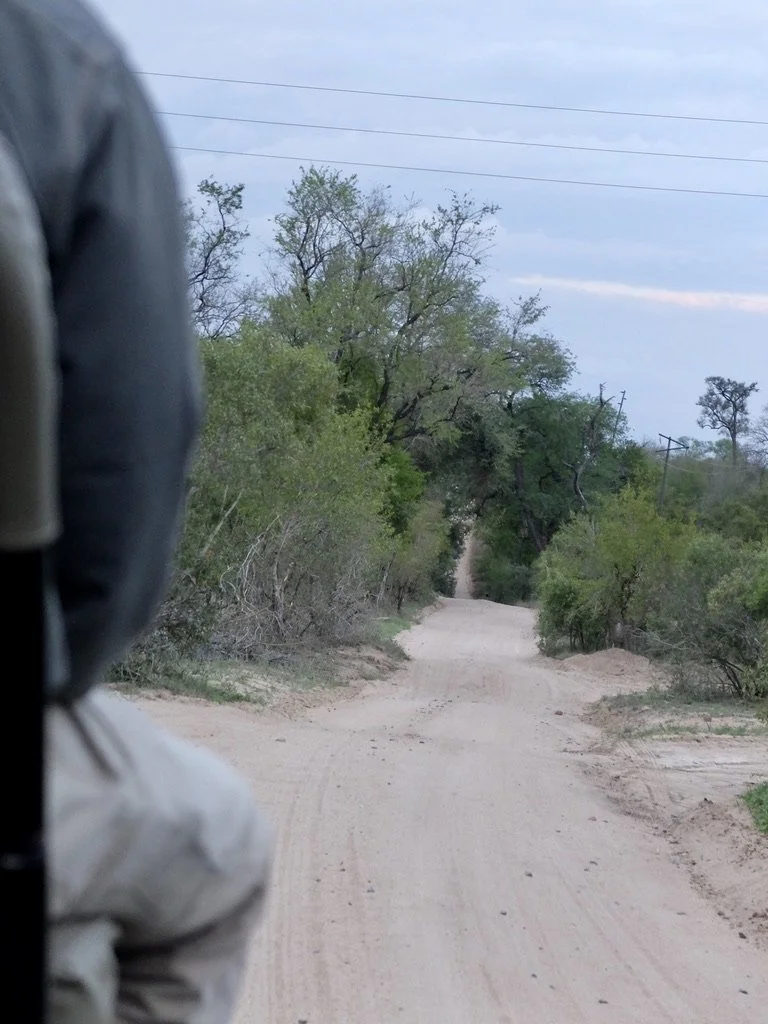
Just loved these roads!
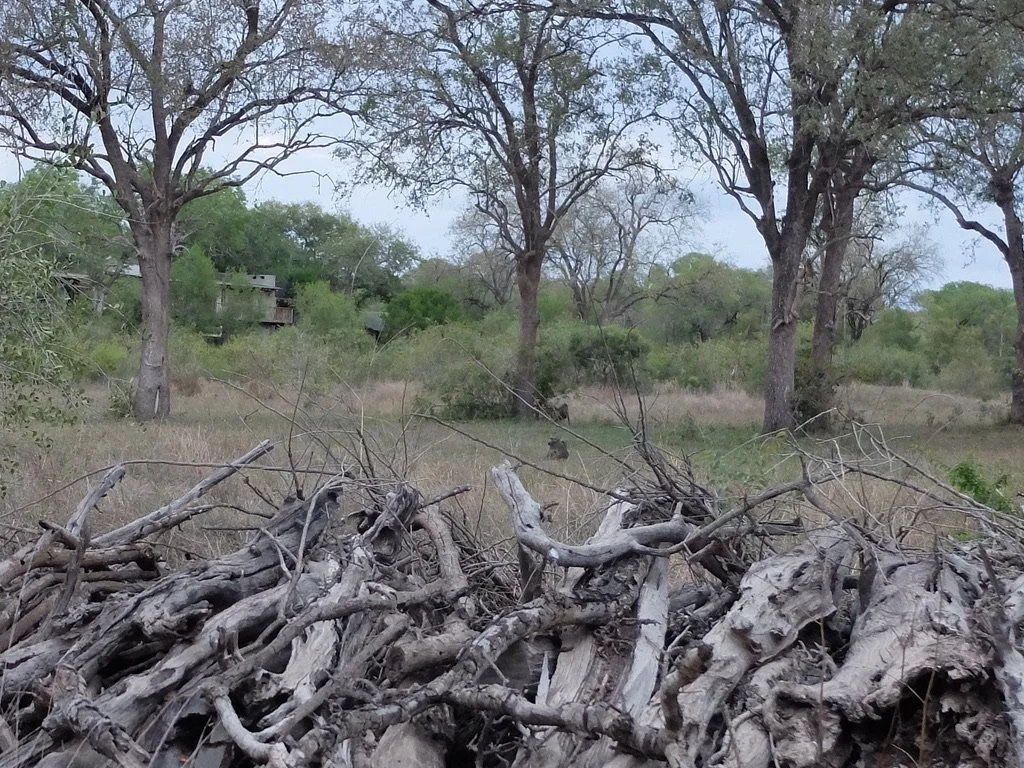
Lone baboon. This is unusual. The troop must be very nearby.
The chacma baboon (Papio ursinis), also know as the Cape baboon (we saw many around The Cape later in our journey) is, like all other baboons, from the Old World monkey family. It is one of the largest of all monkeys. Baboon in Zulu is called onfene. This word comes from the verb fana which means “to resemble.” This implicitly means that which resembles a human being.
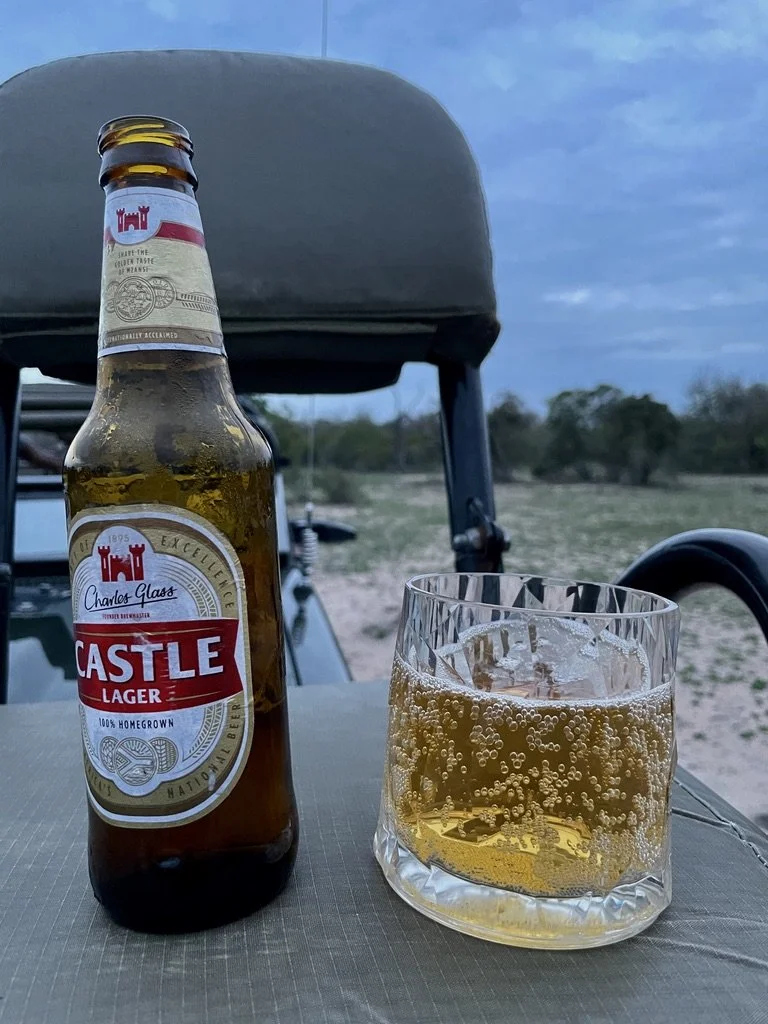
At about 6:30 PM, “the pause that refreshes.”
"Since 1895, Castle Lager has been the familiar taste of South African life—the beer that brings people together, from the Cape to the Highveld and everywhere in between." “ ...since the gold rush...when Charles Glass, founder of the Castle Brewery, began selling beer to the miners after noticing a gap in the market...It is widely considered the 'national beer' of South Africa..."
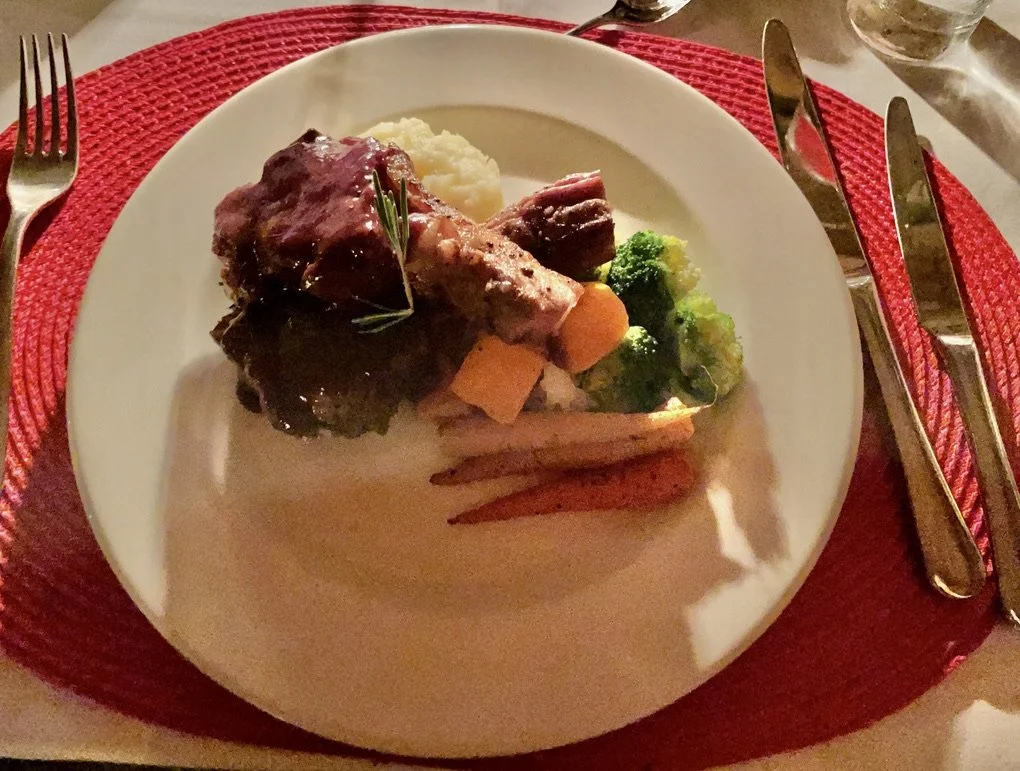
Dinner.
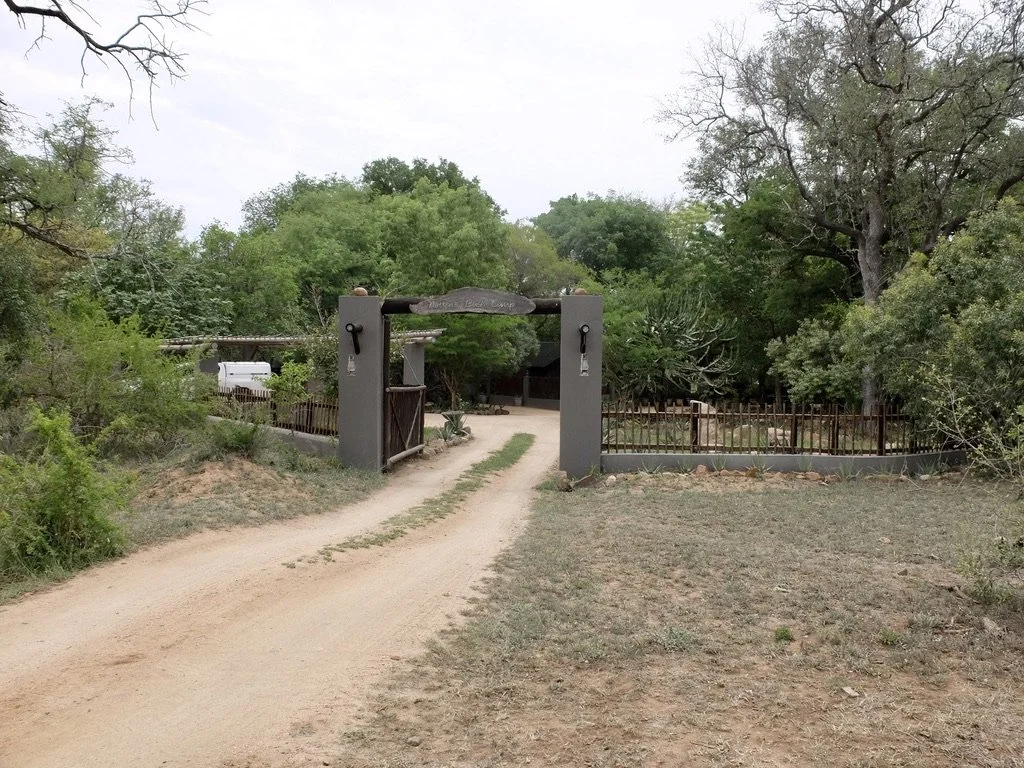
Notten's Bush Camp, Sabi Sand Reserve, South Africa.
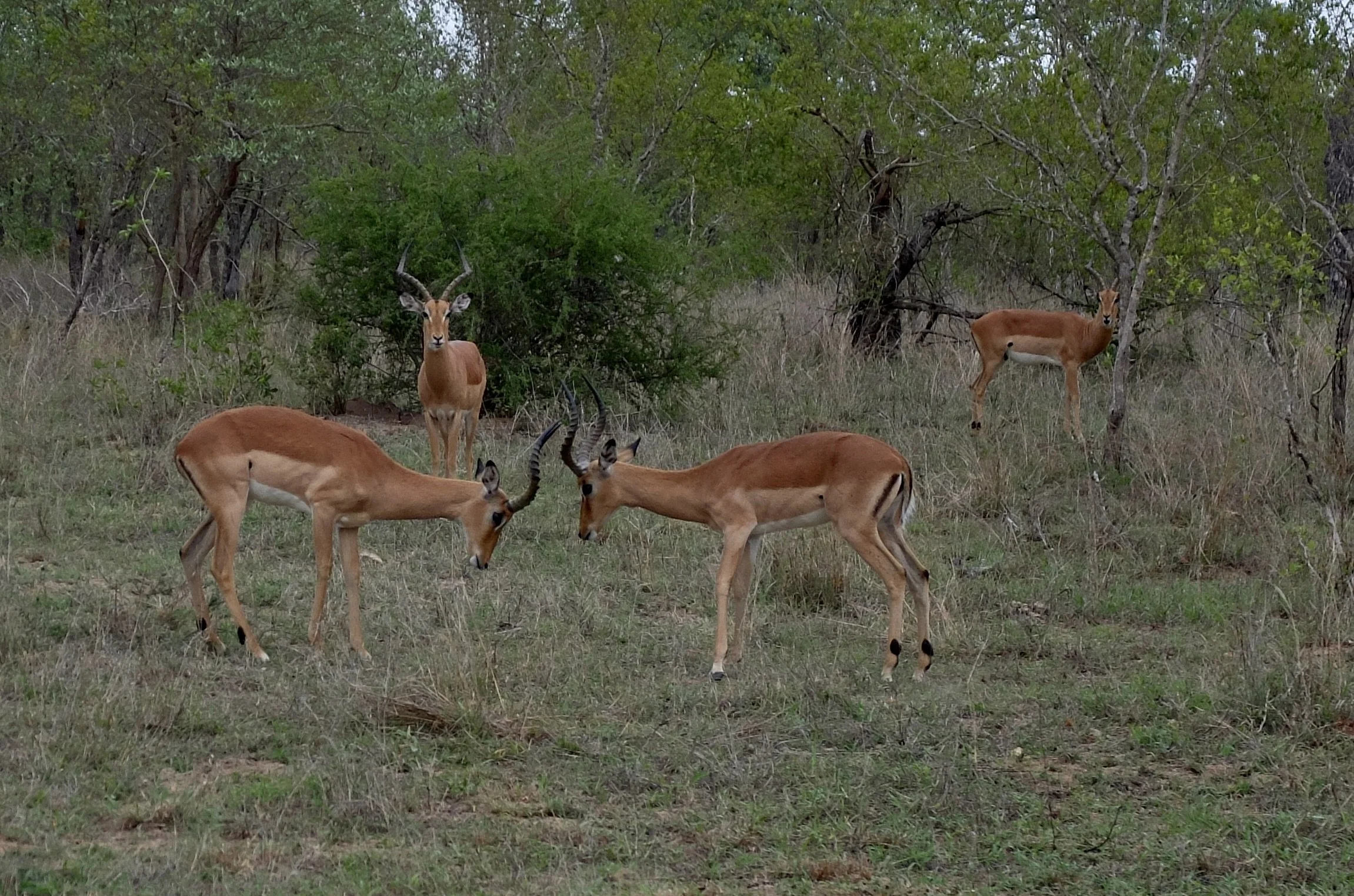
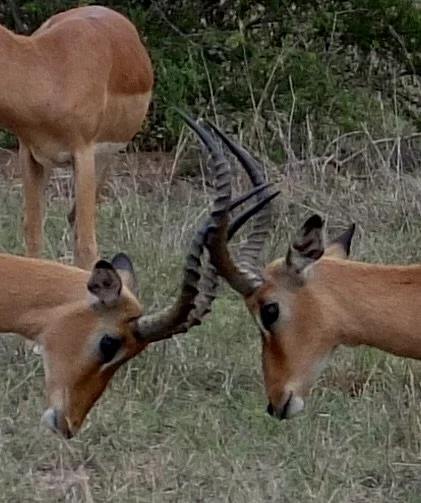
Impalas. A face off of rams with a referee & witness.
Impala rams.
-
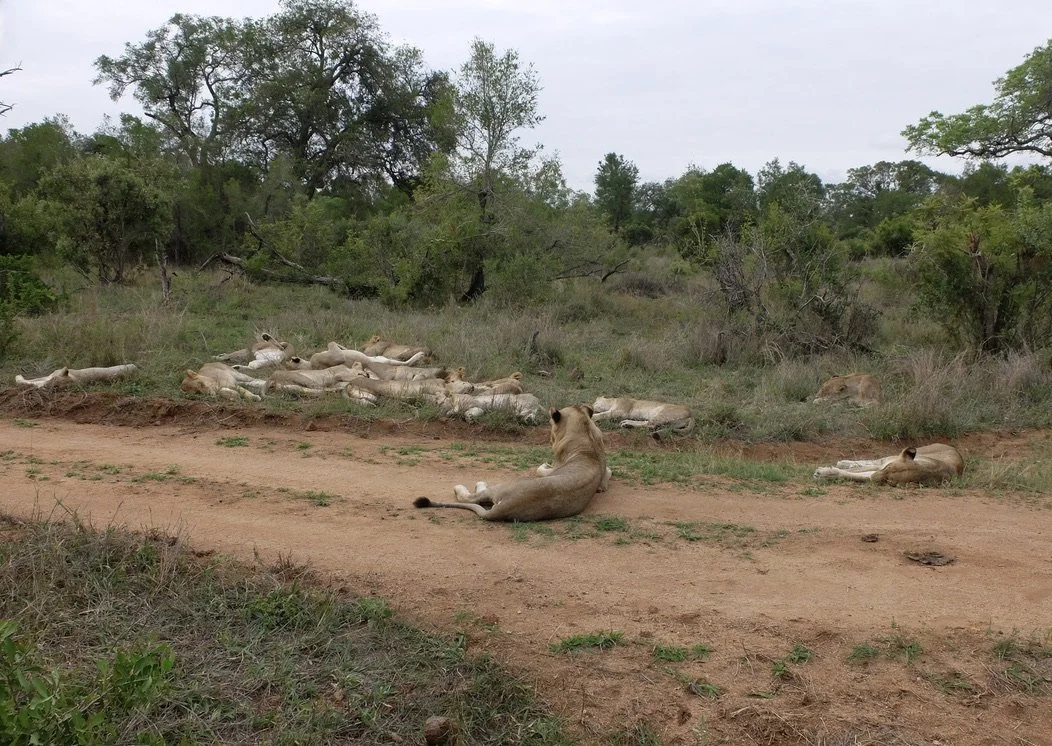
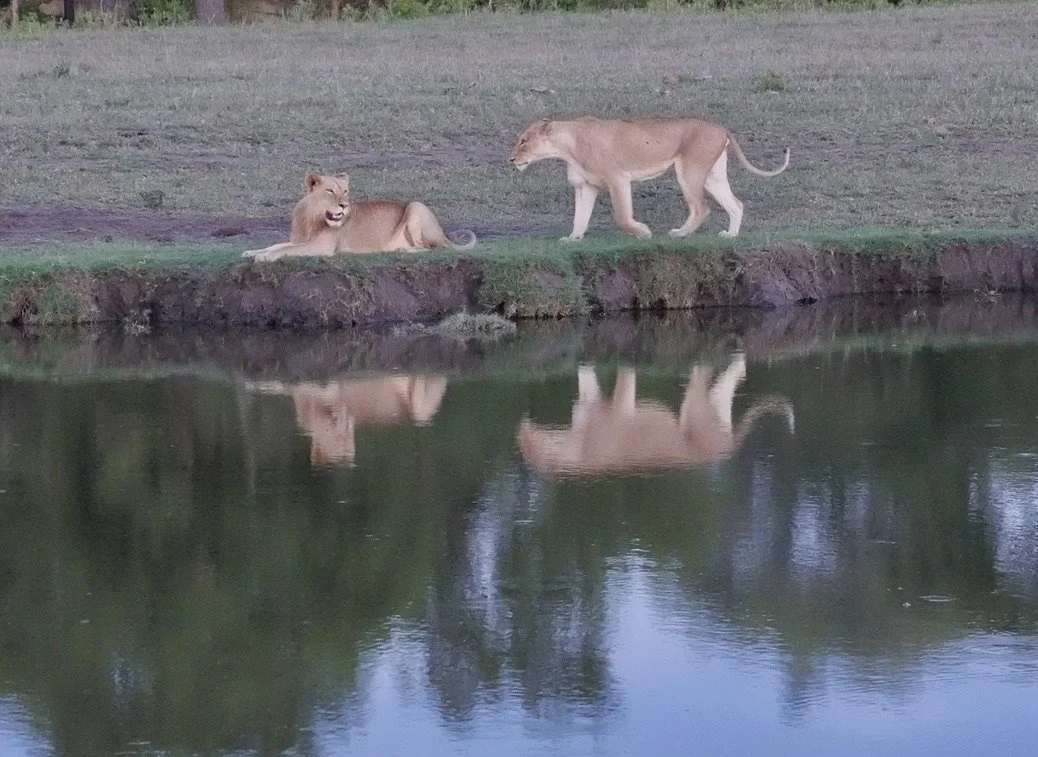
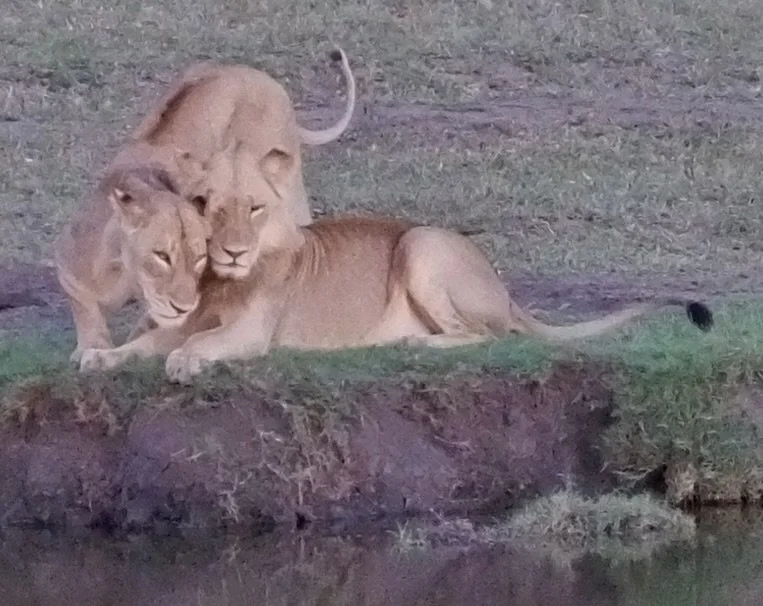
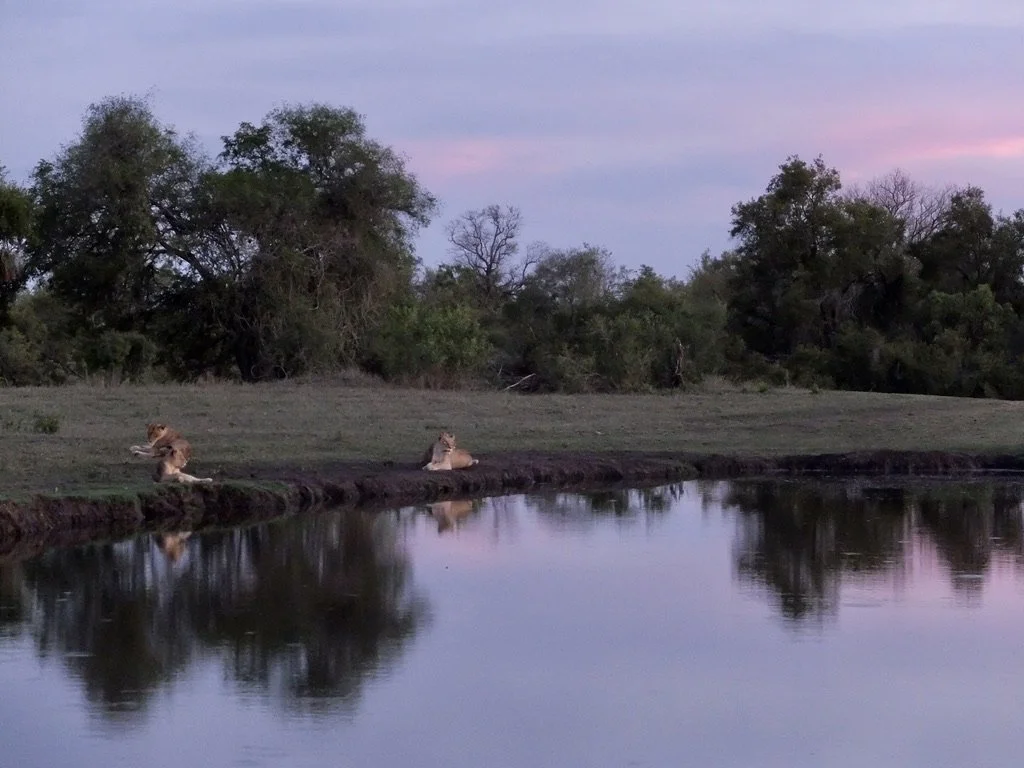
A pride of lions at rest.
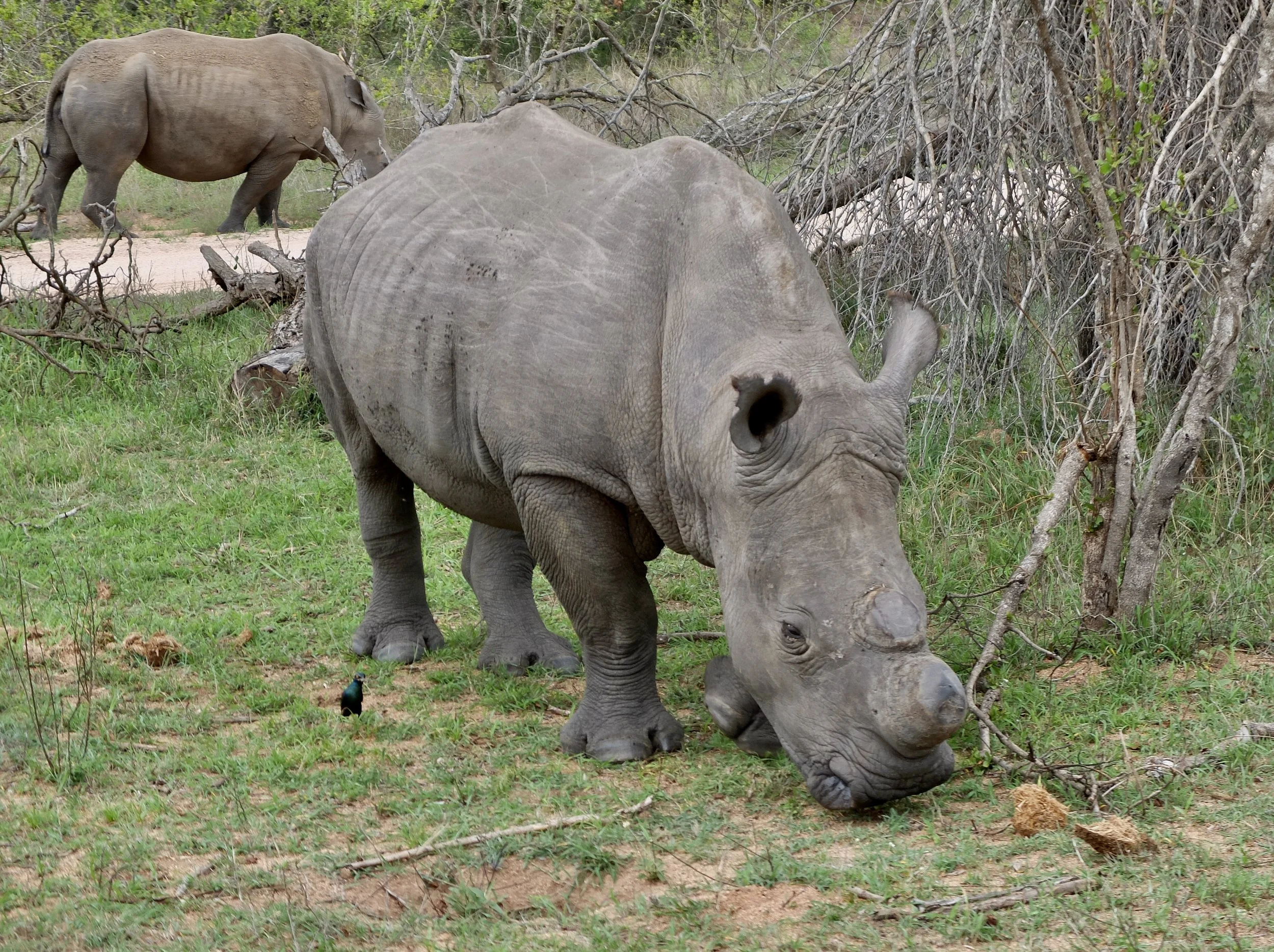
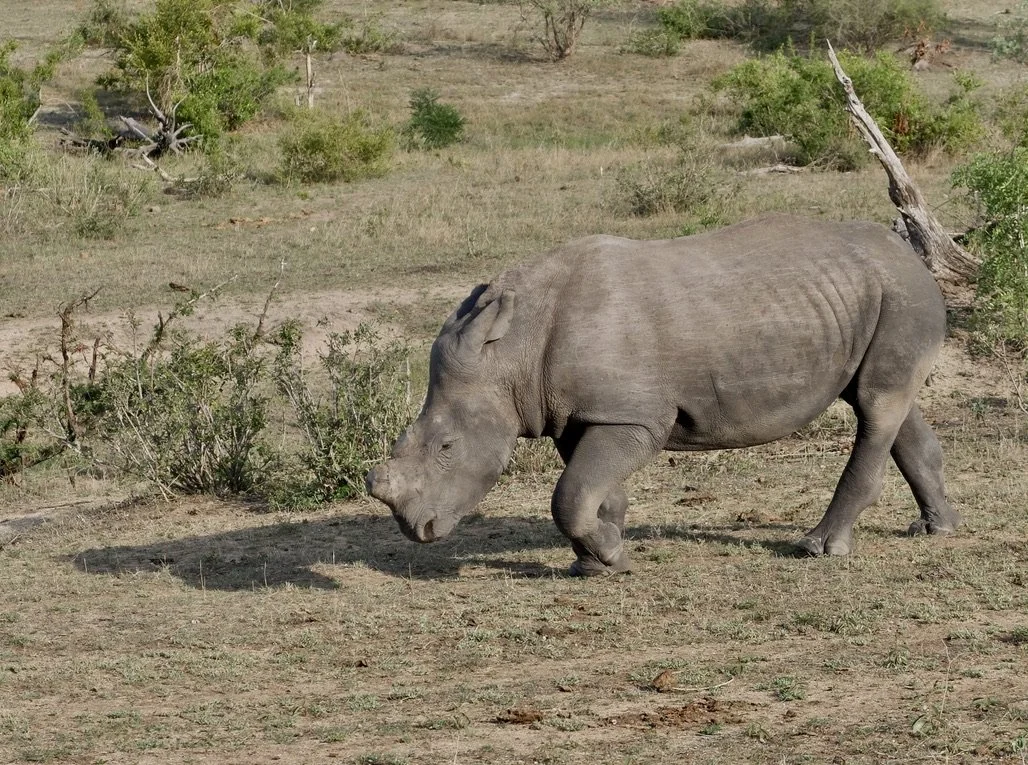
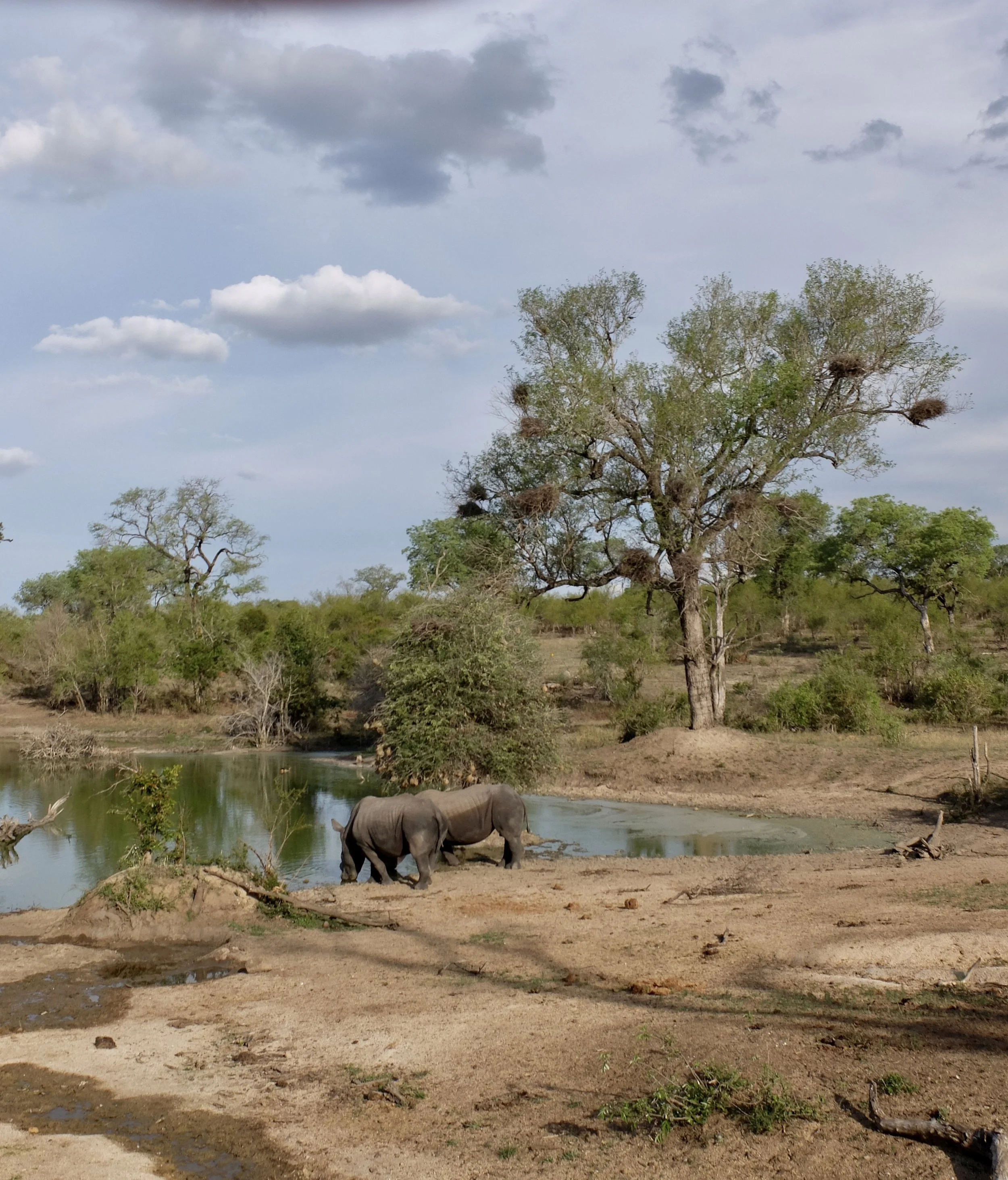
A crash of rhinos.
Greek word “rhis” meaning nose & “keras” meaning horn, direct translation, “nose horn.”
The horns of the rhinos here have been removed by the conservationists to deter poachers.
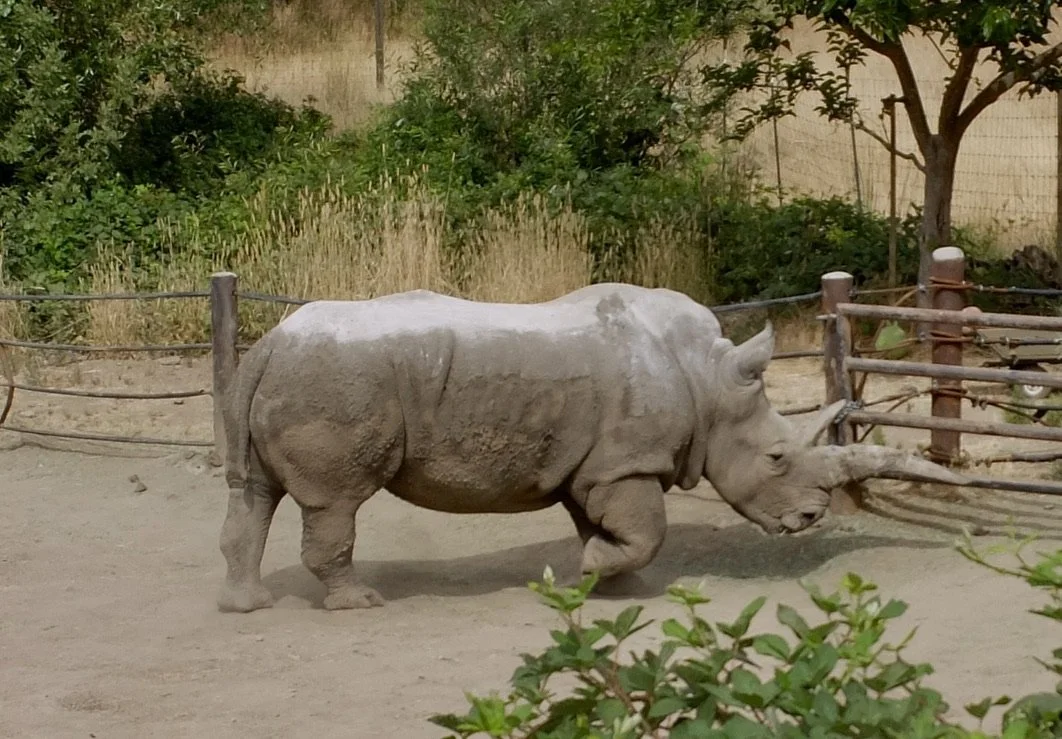
This is what the horns look like on a rhino as seen at Safari West, Santa Rosa, CA, USA in July 2022. They are not worried about poachers here.
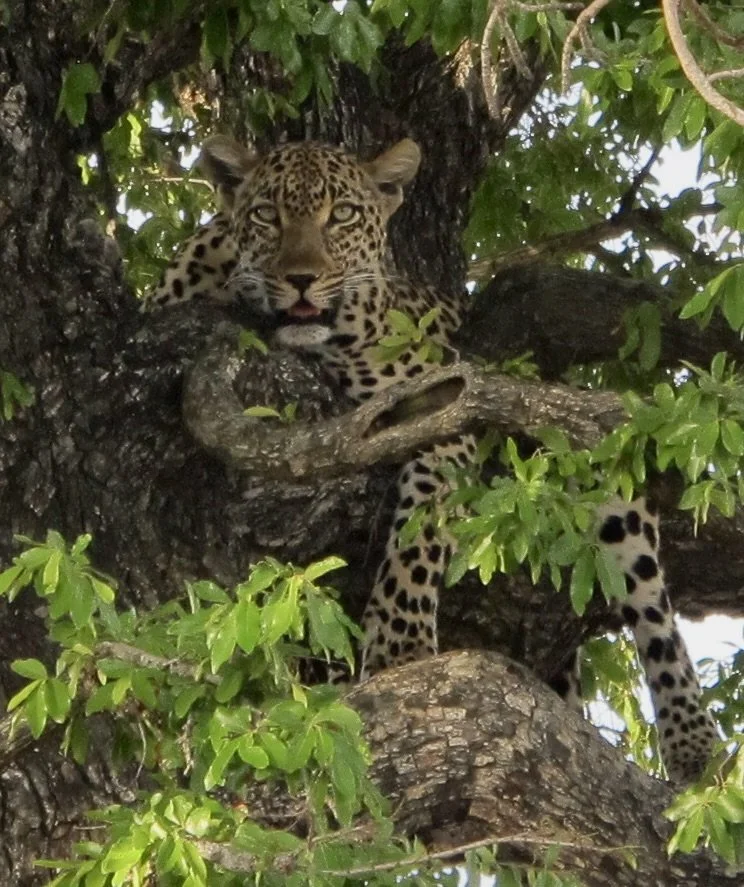
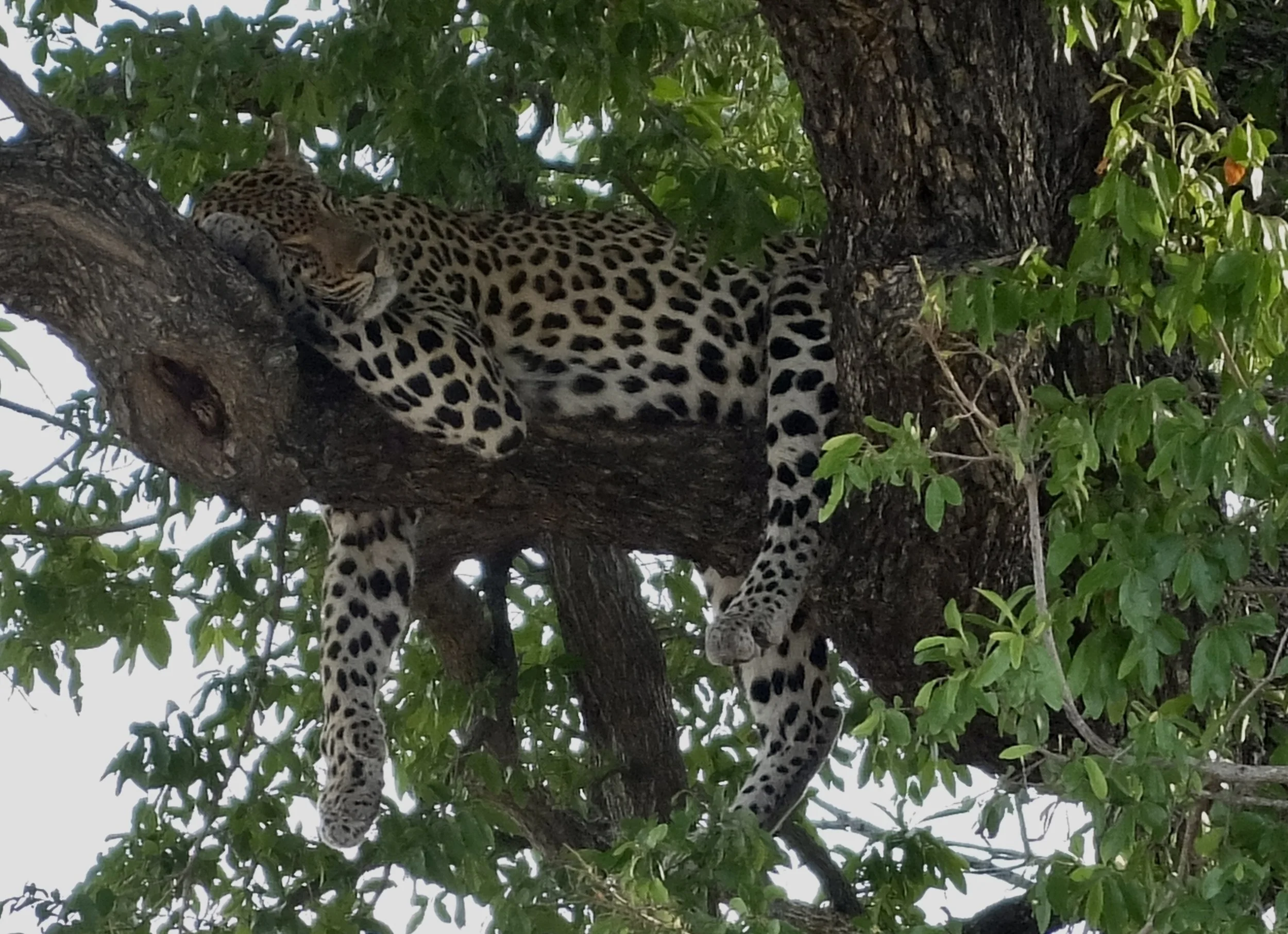
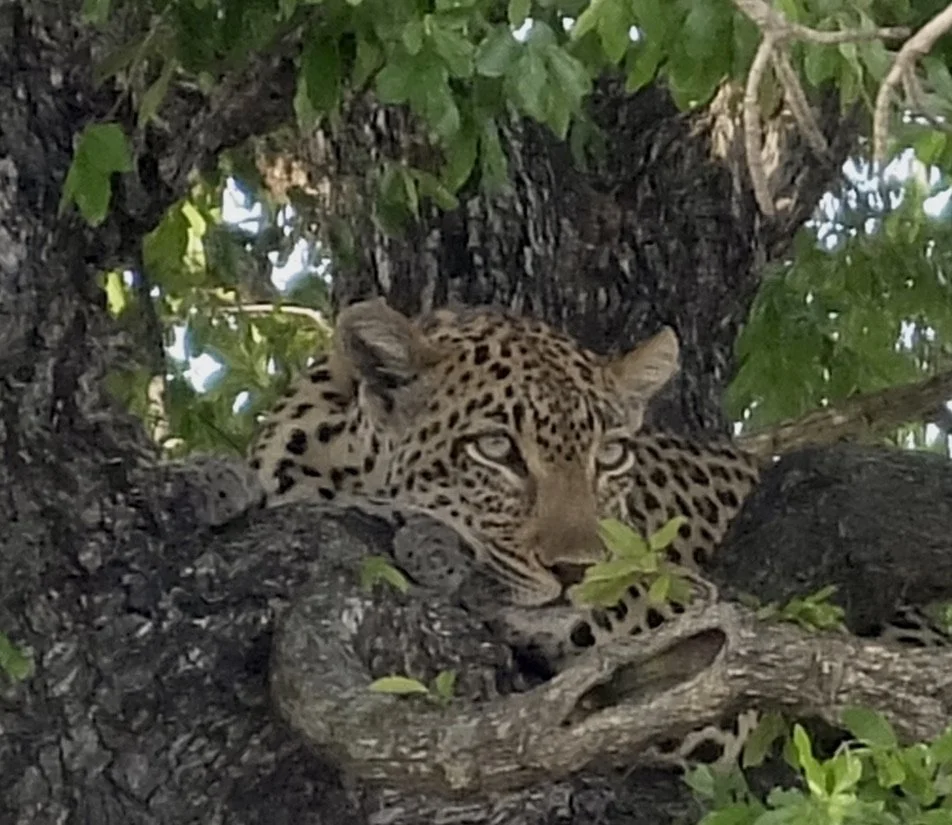
Leopards, except for mating, are lifelong solitary creatures. A group would be a “leap of leopard.”
You can’t see it but to the leopard’s left is a baboon carcass draped on the branch. Later someone showed a video of the leopard dining on the baboon. Gross…
A parade or memory of elephant.
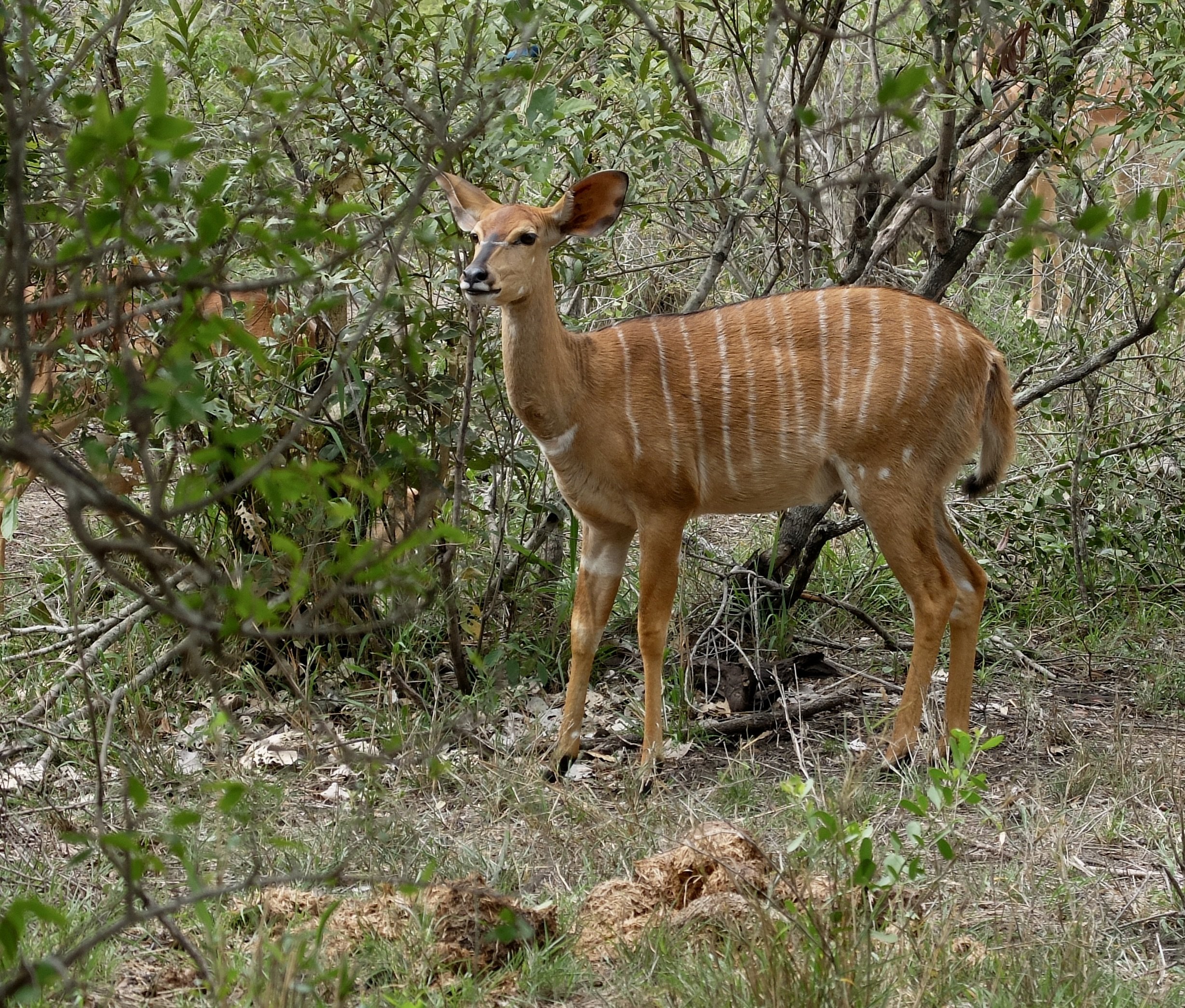
Greater kudu ewe.
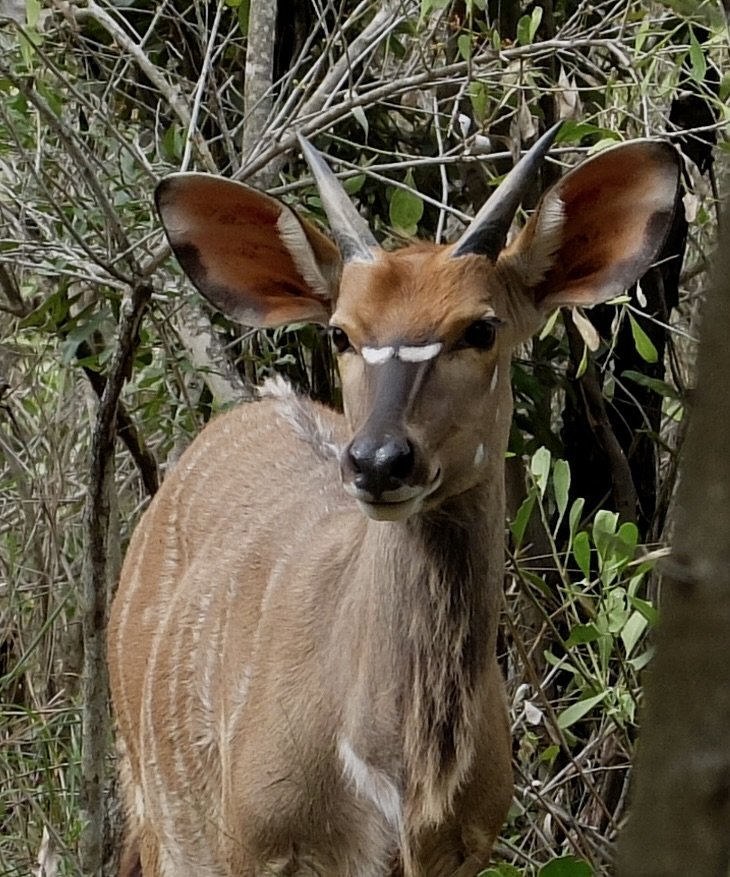
Greater kudu ram.
Our spotter Wonder told us that in the dark he uses a light to search for animals. He cannot use it on the kudus as the white under their eyes makes the light blinding to them.
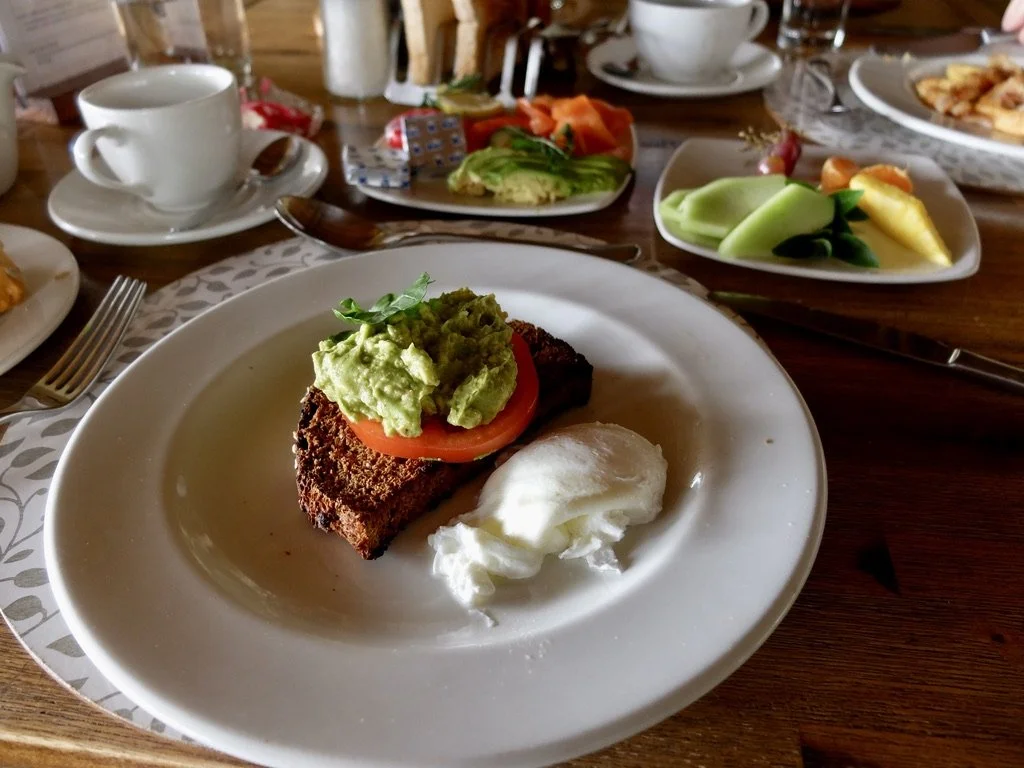
Another style of avocado toast.
Breakfast following the early morning game drive.
While Naomi & our group went on a bush walk with an armed guard, Tinyko, I explored (that is hobbled around) the camp.
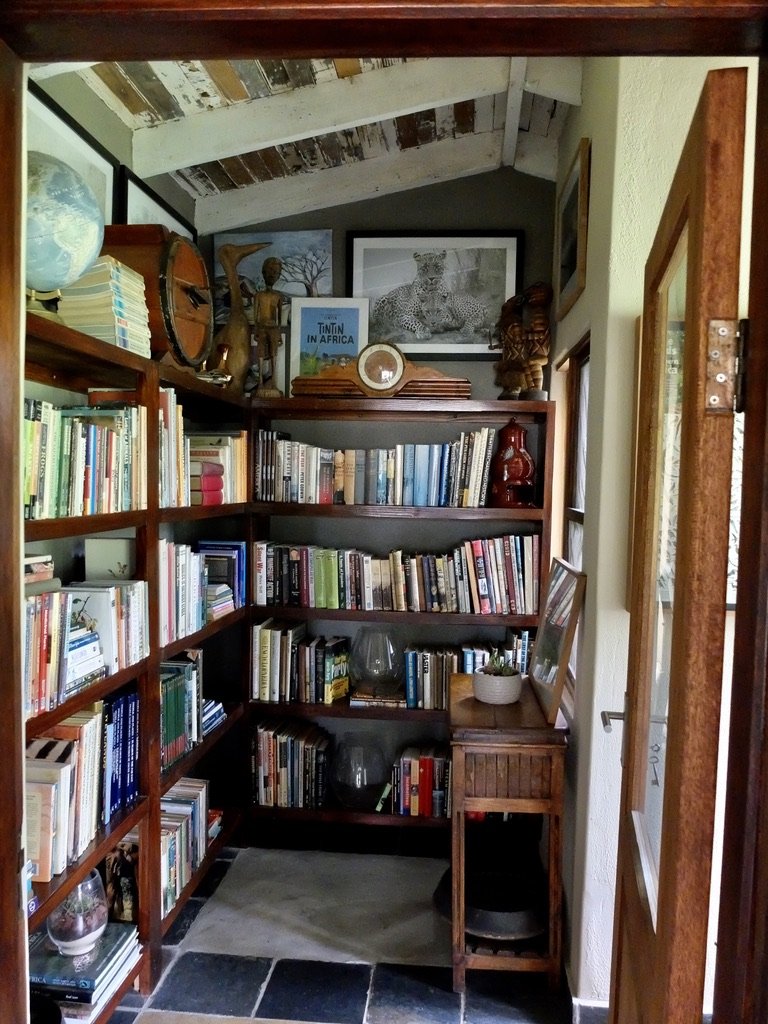
The Oom Uncle Paul Kruger Library was fascinating. I assume it is named for Stephanus Johannes Paulus Kruger South African politician. “He has been called a personification of Afrikanerdom and admirers venerate him as a tragic folk hero.”
The Oom Paul Kruger Library.
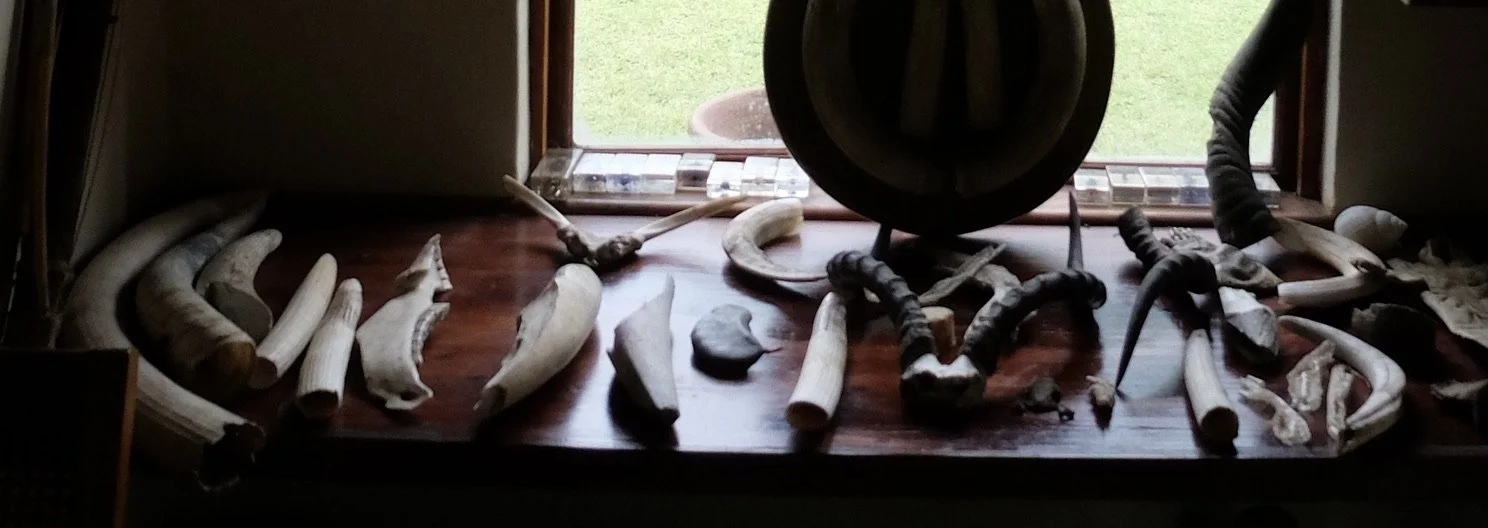
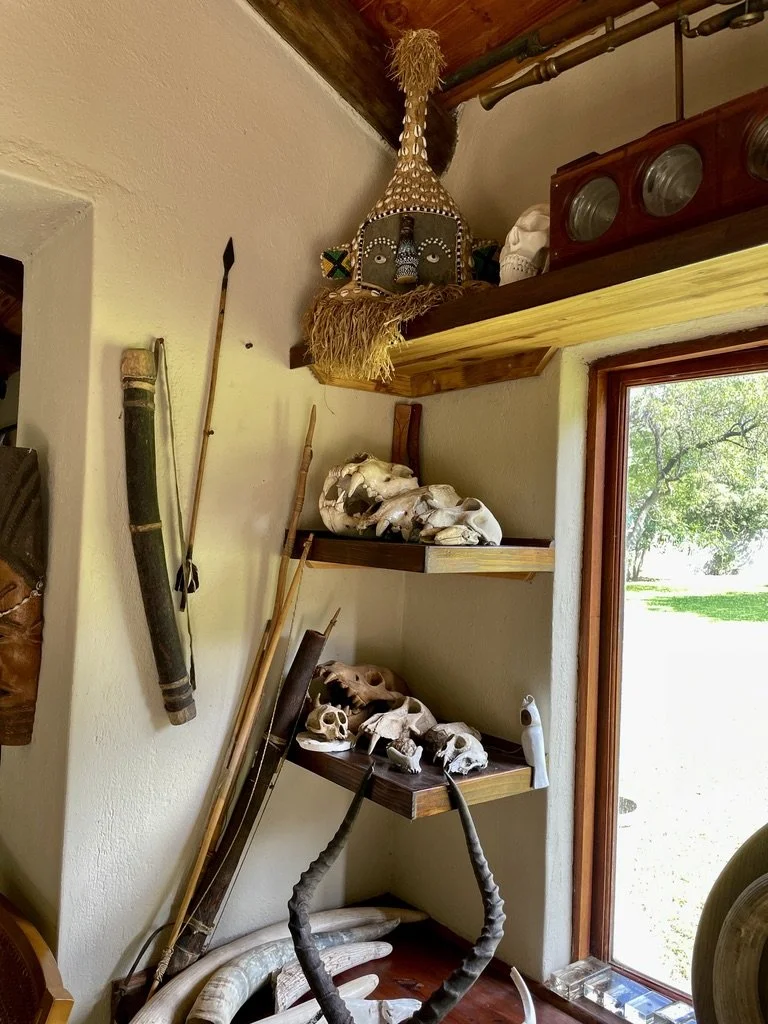
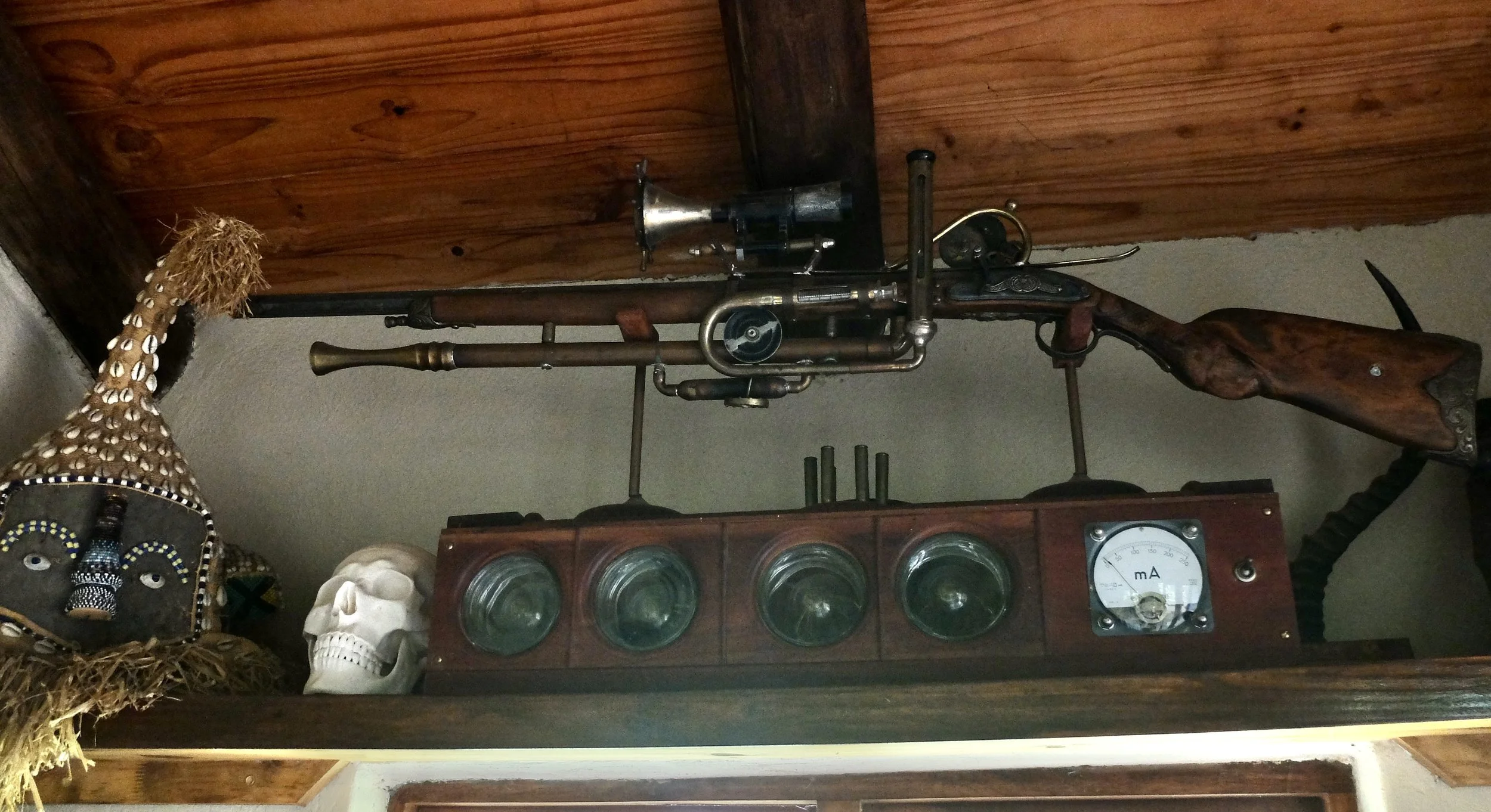
Needless to say I was fascinated by the skulls, teeth…
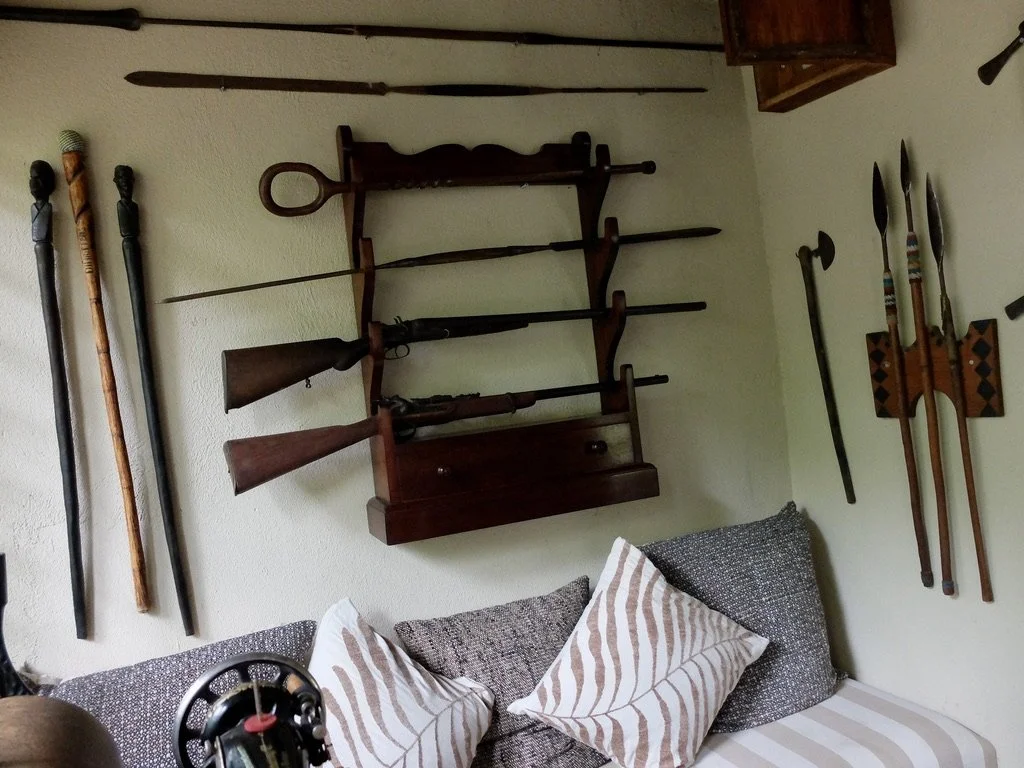
…& after having read Michener’s The Covenant, the weapons.
The Oom Paul Kruger Library.
Those vintage Enfield rifles were really heavy as were the spears, assegai.
The Oom Paul Kruger Library.
I could only imagine the weight of this rifle.
The Oom Paul Kruger Library.
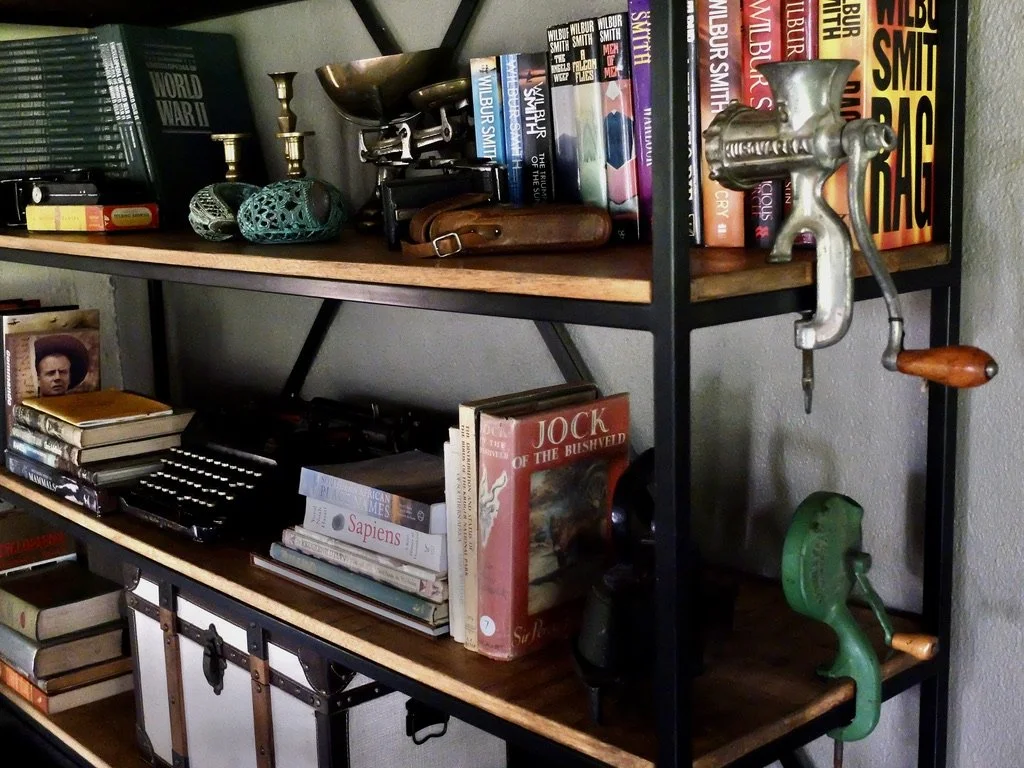
I was intrigued by the collection of Wilbur Smith books. He was “…a Northern Rhodesian-born British-South African novelist specializing in historical fiction about international involvement in Southern Africa across four centuries.” I just bought his first book to read out of curiosity. Seems like he was not an apartheid proponent.
As an aside, I used to use my mother’s meat grinder, like the one on the shelf, to make chopped liver.
The Oom Paul Kruger Library.
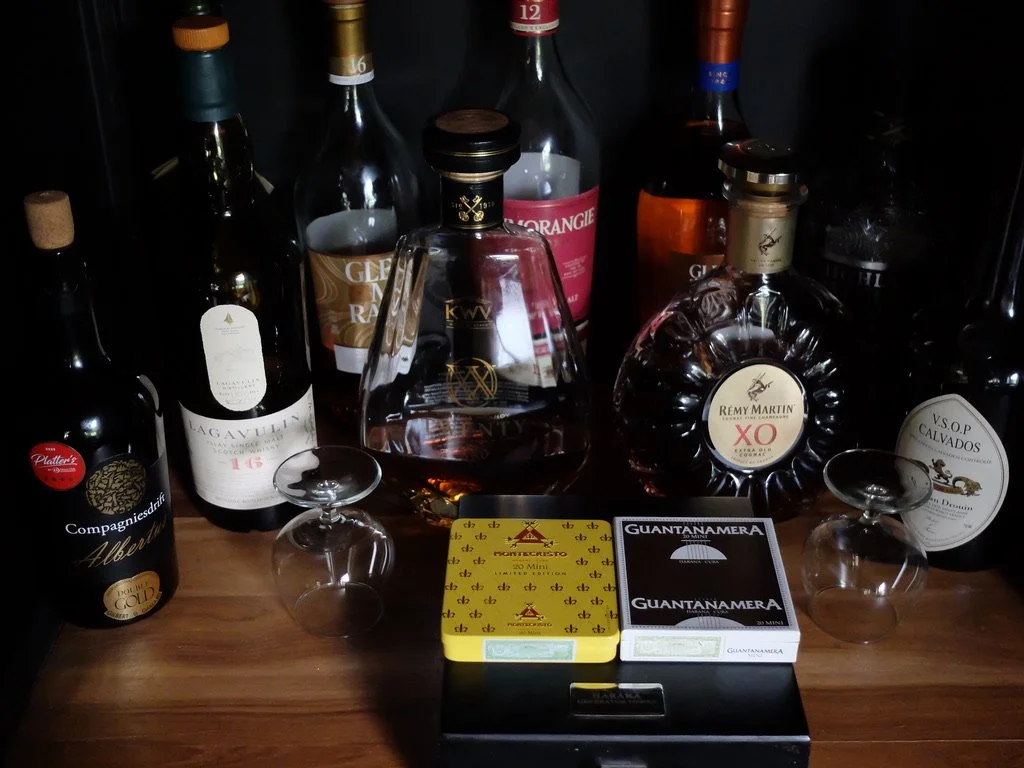
I had to try one of those Guantanamera Habana Cuba Minis…
The Oom Paul Kruger Library.
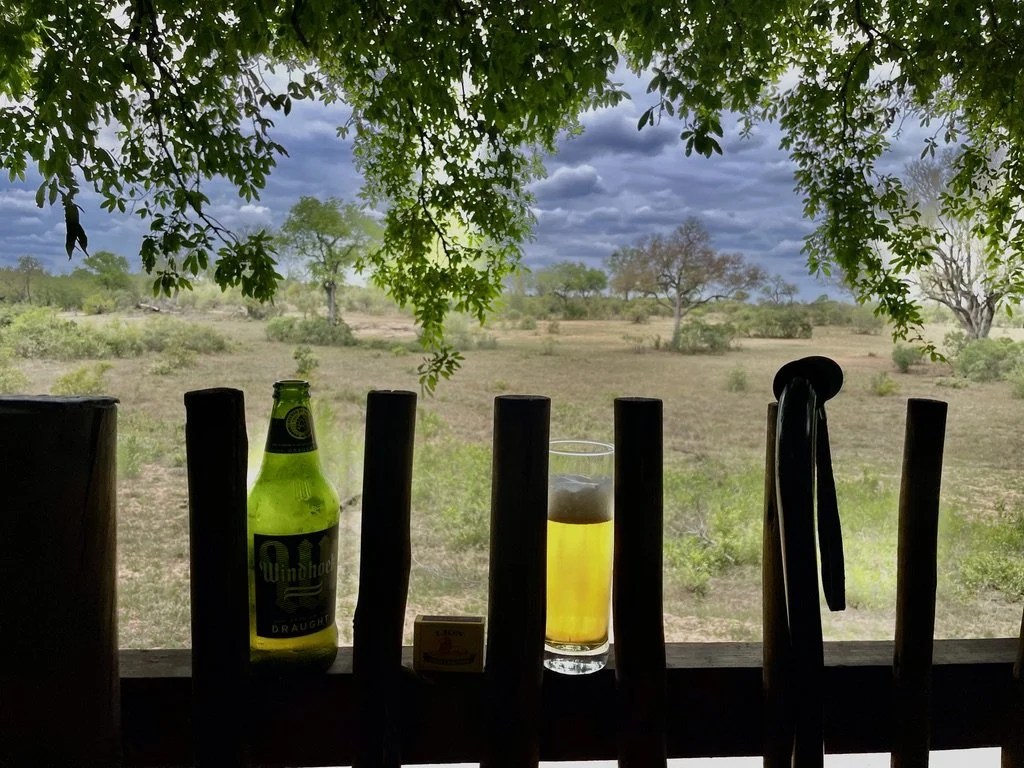
…accompanied by a refreshing Namibian Windhock lager. Namibia was once German South West Africa.
Notten's Bush Camp, Sabi Sand Nature Reserve.
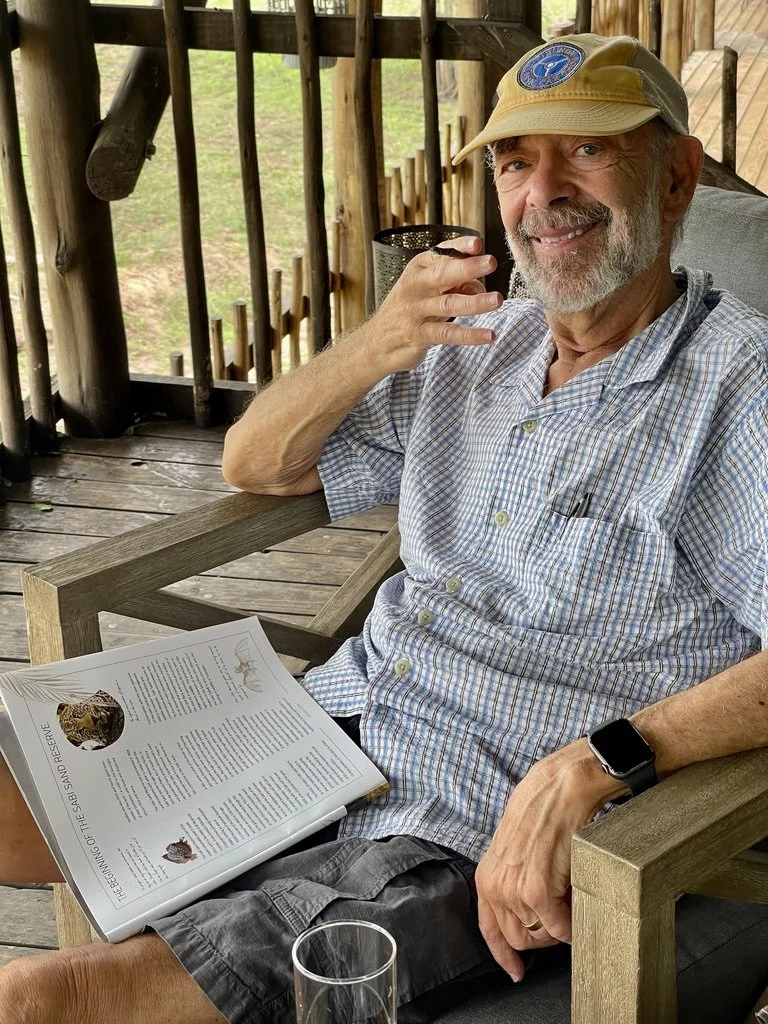
I hadn’t had a cigar since Luca was born over ten years prior to this.
Notten's Bush Camp, Sabi Sand Nature Reserve.
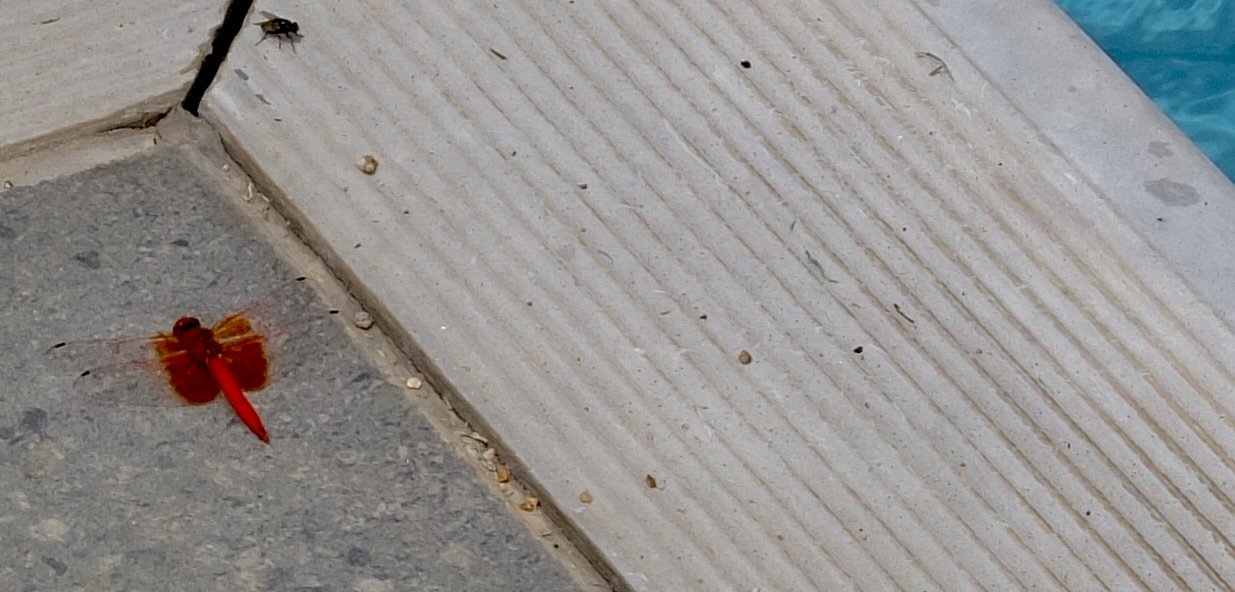
Poolside at Notten's Bush Camp, Sabi Sand Nature Reserve a Trithemis kirbyi, Red-veined dropwing dragonfly..
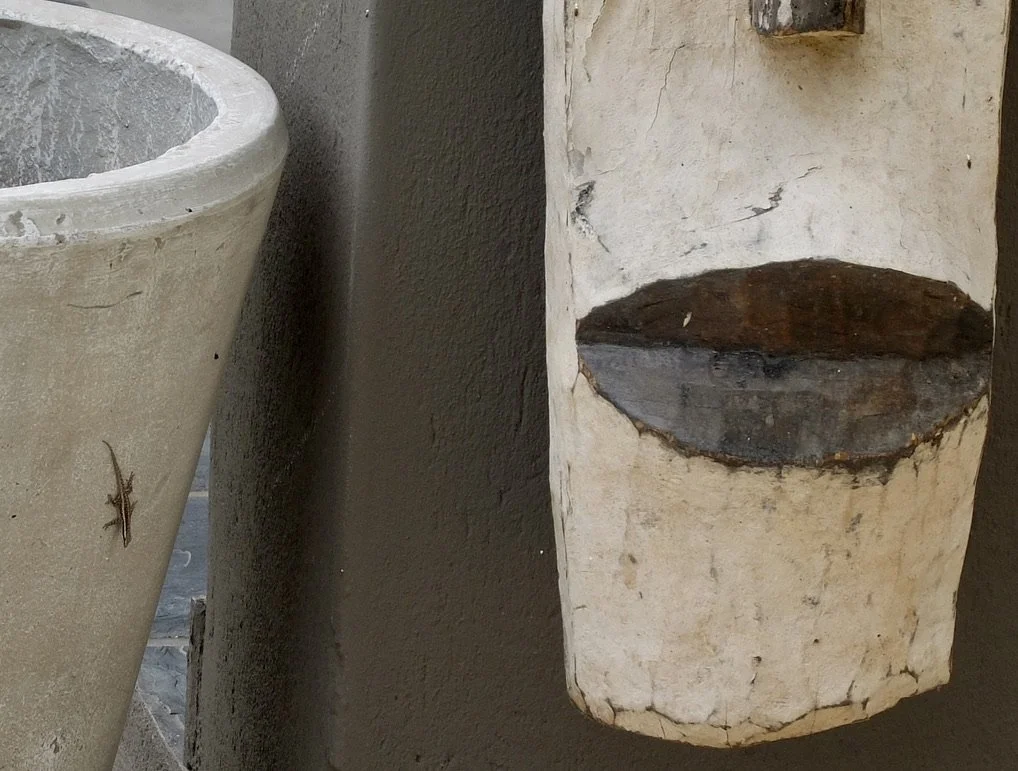
A Cape dwarf-gecko poolside at Notten's Bush Camp, Sabi Sand Nature Reserve.
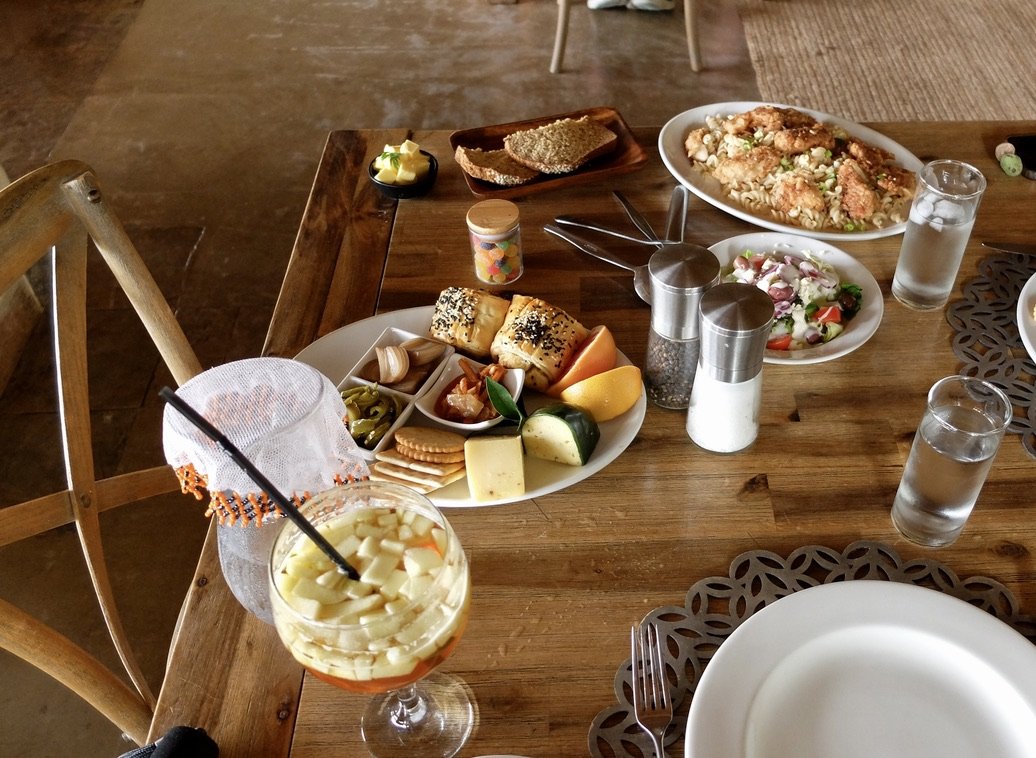
Lunchtime at Notten’s Bush Camp with the Pimm’s Cup that Wonder had made for me earlier at the poolside bar.
Going to a water hole.
The water holes were once for cattle, now long gone, but kept & used by the wild animals.
All African tribes regard the leopard as an animal that symbolizes all that is noble, courageous & honorable. It is called ingwe by the Zulus & nkwe by the Bantus. These words originally meant “pure sovereignty” or “pure kingship.”
“The leopard is the most adaptable of Africa’s large predators…& may be found in close proximity to human settlements…”
“…they are active at night but are not strictly nocturnal…”
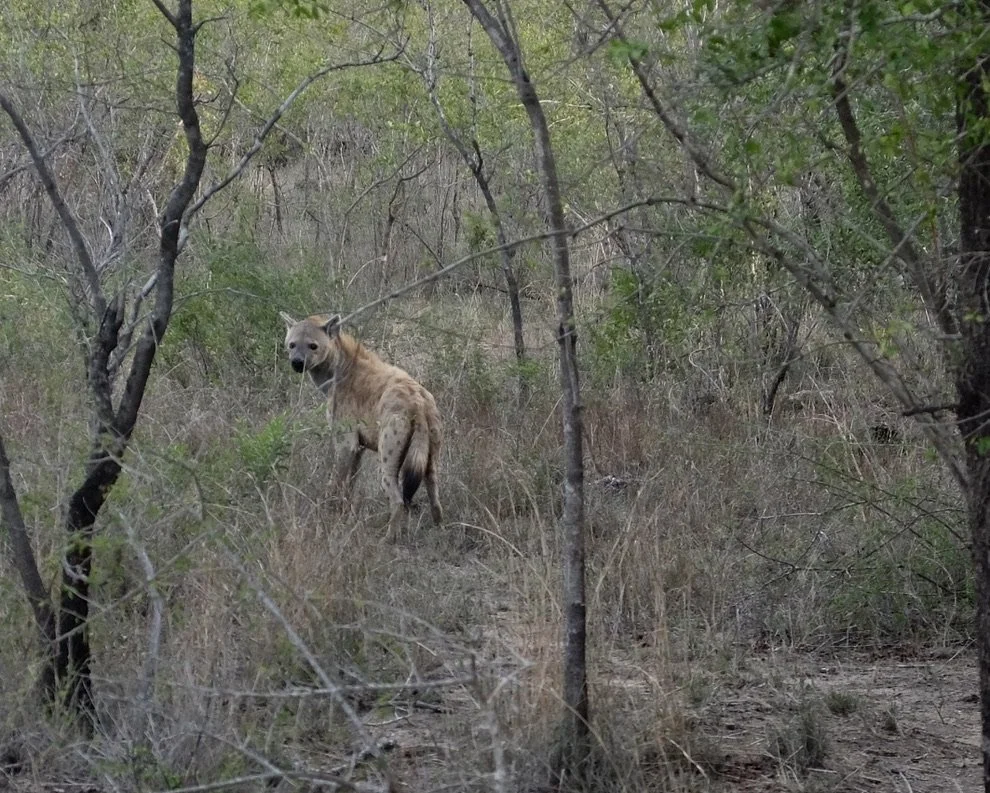
Spotted hyena
South African people know the hyena by its Zulu name, impisi, while some tribes in Zimbabwe call it sis. These words literally mean “the purifier,” “the cleaner,” “the one who makes things orderly.” This name is indicative of the hyena’s tendency to tidy up the carcasses on which it feeds.
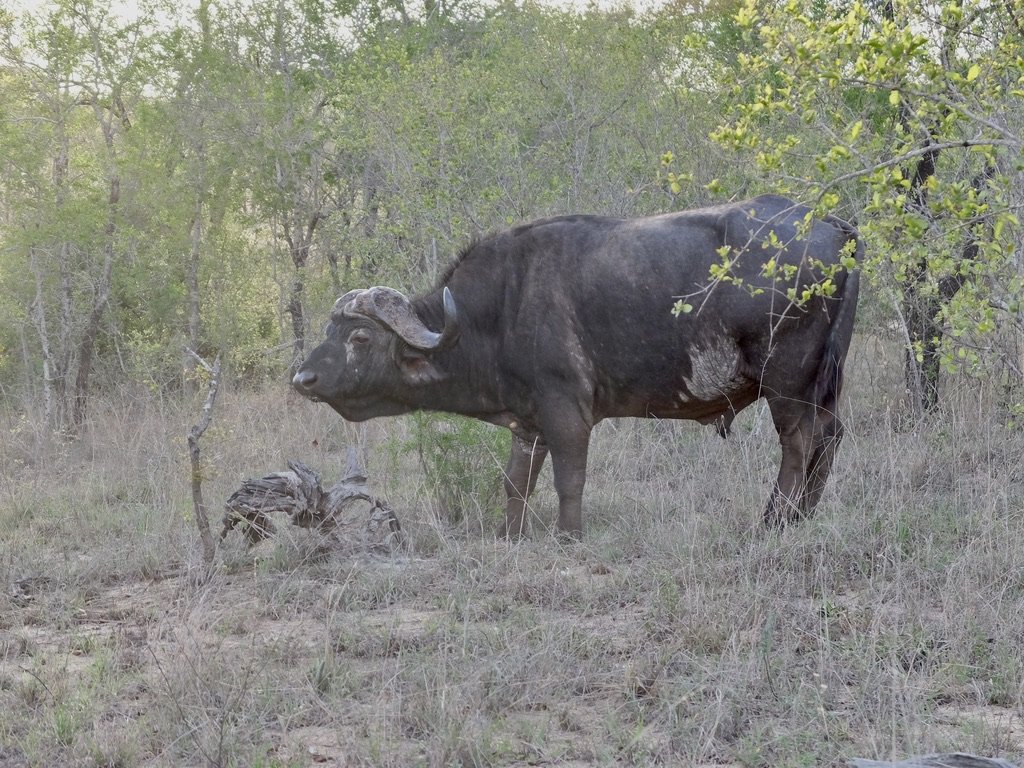
Buffalo
The African buffalo (Syncerus caffer) is a large bovine. The adult buffalo’s horns are it’s characteristic feature : they have fused bases, forming a continuous bone shield across the top of the head referred to as a “boss.”
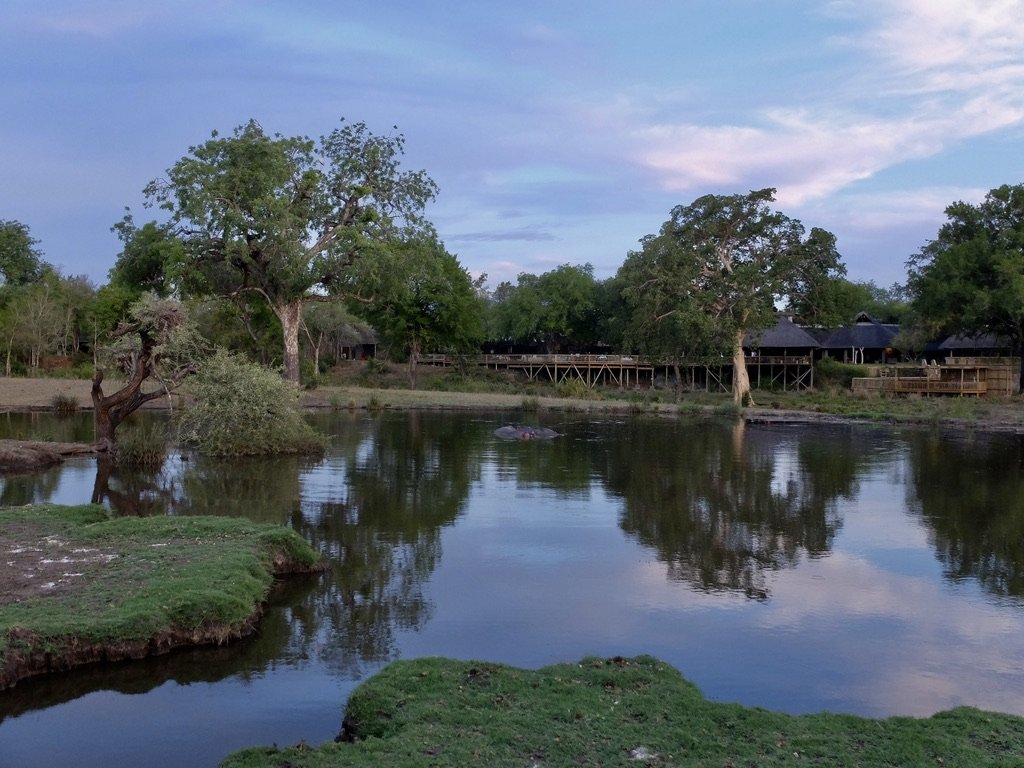
In the center of the water hole behind the Sabi Sabi Private Game Reserve (a much, much higher end lodge than Notten’s where we were staying), is a pod of hippos.
African people believe that the hippo is an animal of confusion because it cannot make up its mind if it is a rhinoceros or elephant. The Zulu people call the hippo inmbu. …meaning “mixed up creature” or the creature which is unable to make up its mind what it is!
At the same waterhole.
-
-
-
-
Pals out for a stroll.
Photo by Naomi.