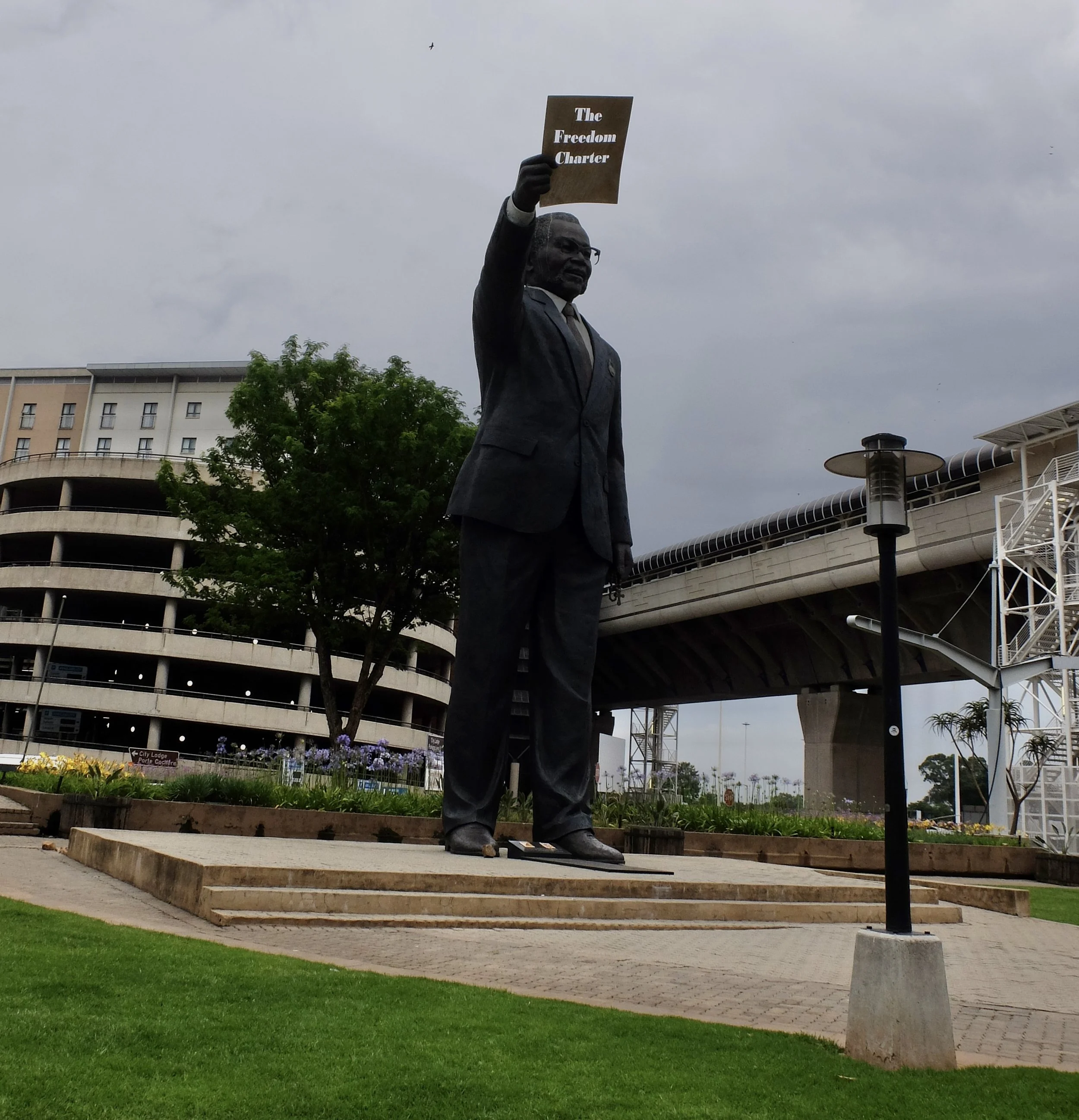
"Oliver Reginald Kaizana Tambo (27 October 1917 – 24 April 1993) was a South African anti-apartheid politician and activist who served as President of the African National Congress (ANC) from 1967 to 1991."
O.R. Tambo Internat’l Airport, Johannesburg, South Africa (Joburg, ZA).
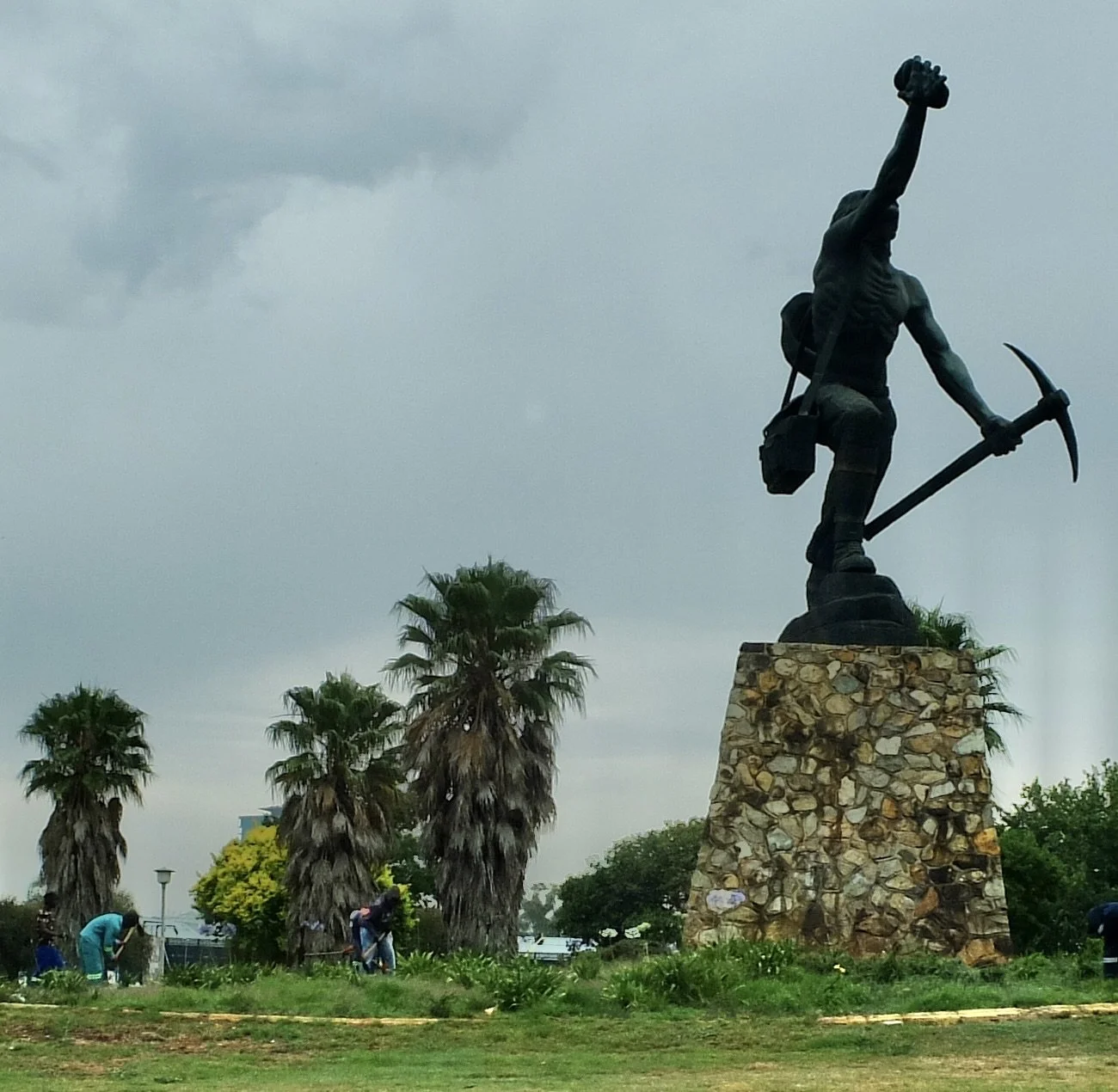
This statue of George Harrison commemorates the 1853 discovery of gold in Joburg. The Joburg area is at about 6,000 feet & was just flat desolate savannah before the discovery of gold.
Joburg, ZA.
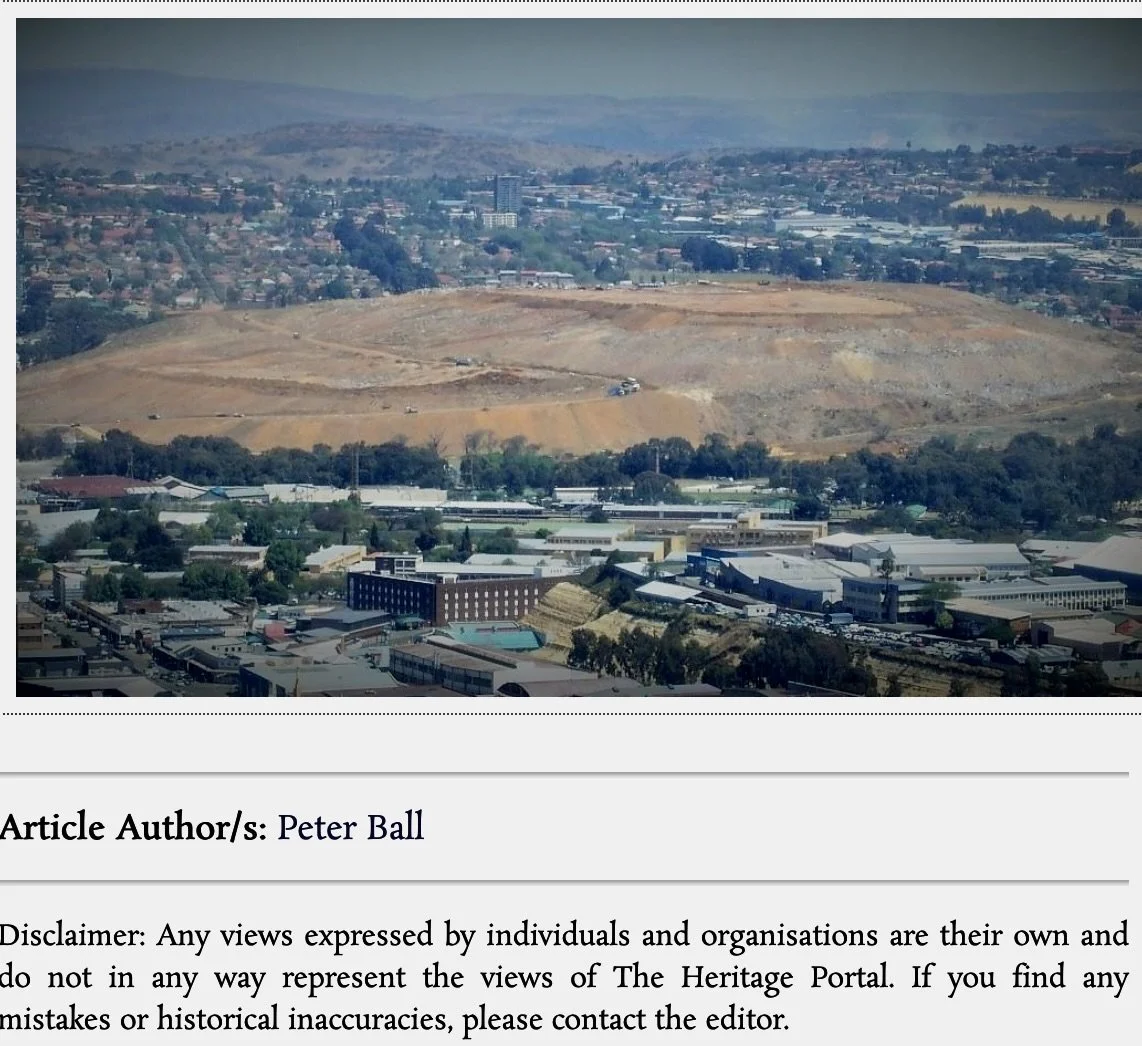
Gold mine tailings can be seen while driving around. Many areas are being considered historical sites. I didn’t realize that I had tossed a photo that I had taken.
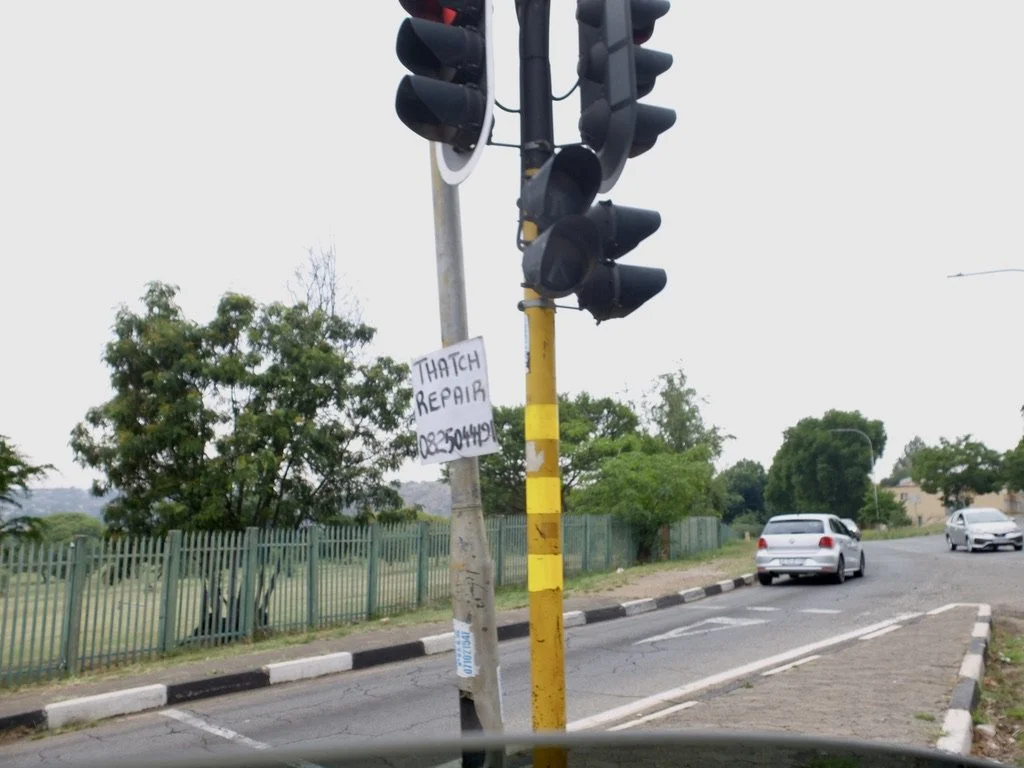
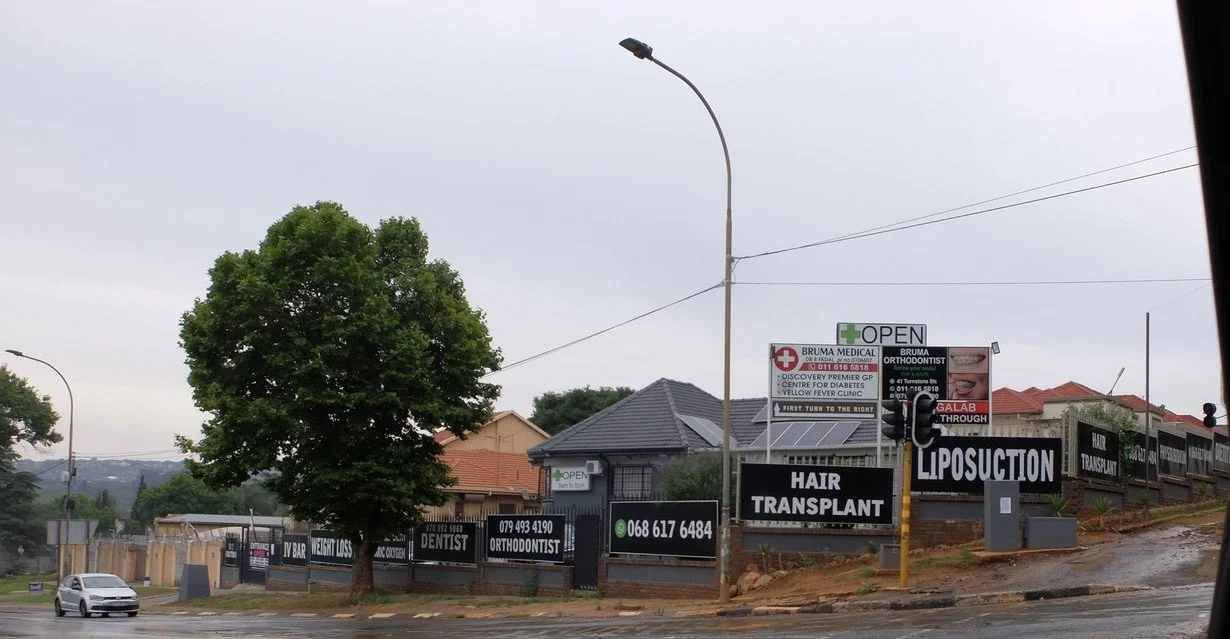
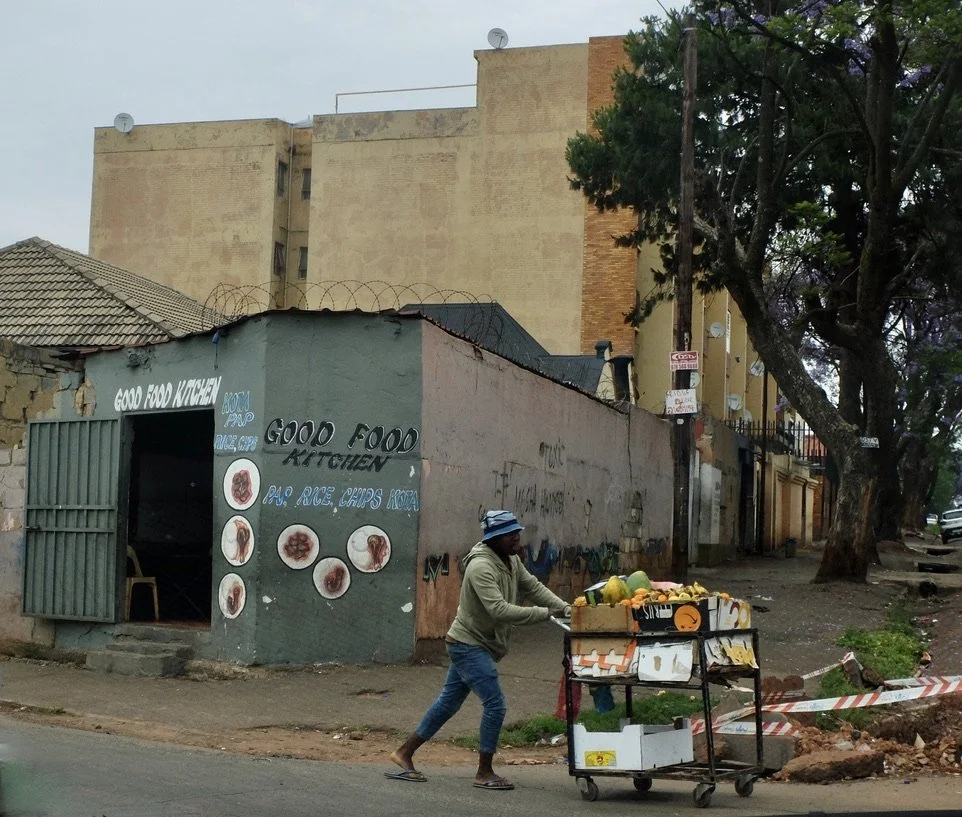
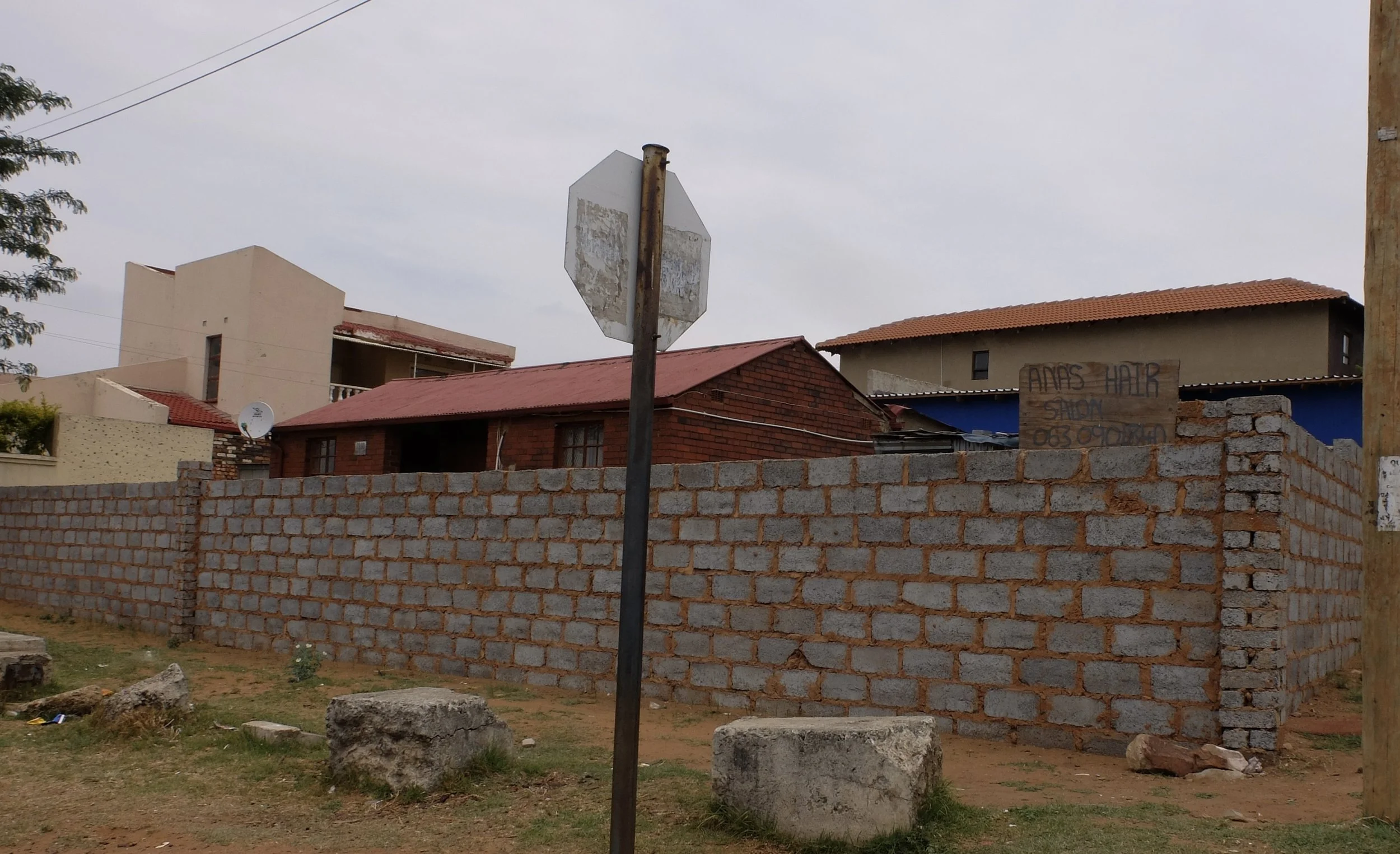
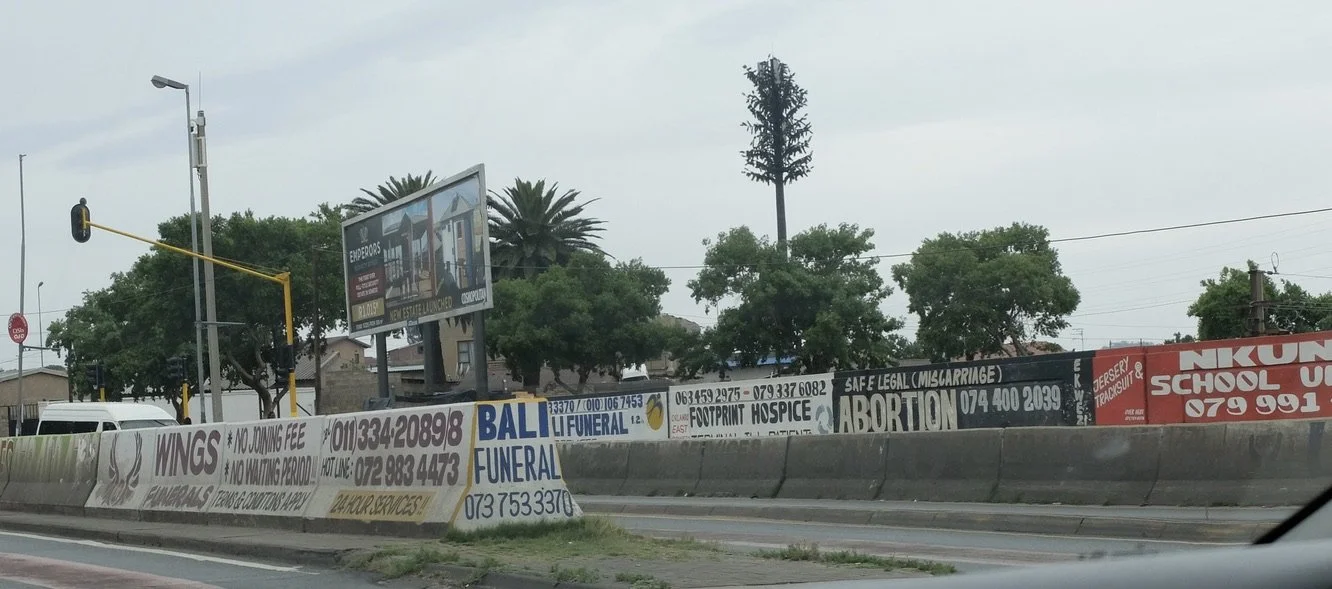
When I noticed this hand lettered sign I knew that I wasn’t in Kansas anymore!
Joburg, ZA.
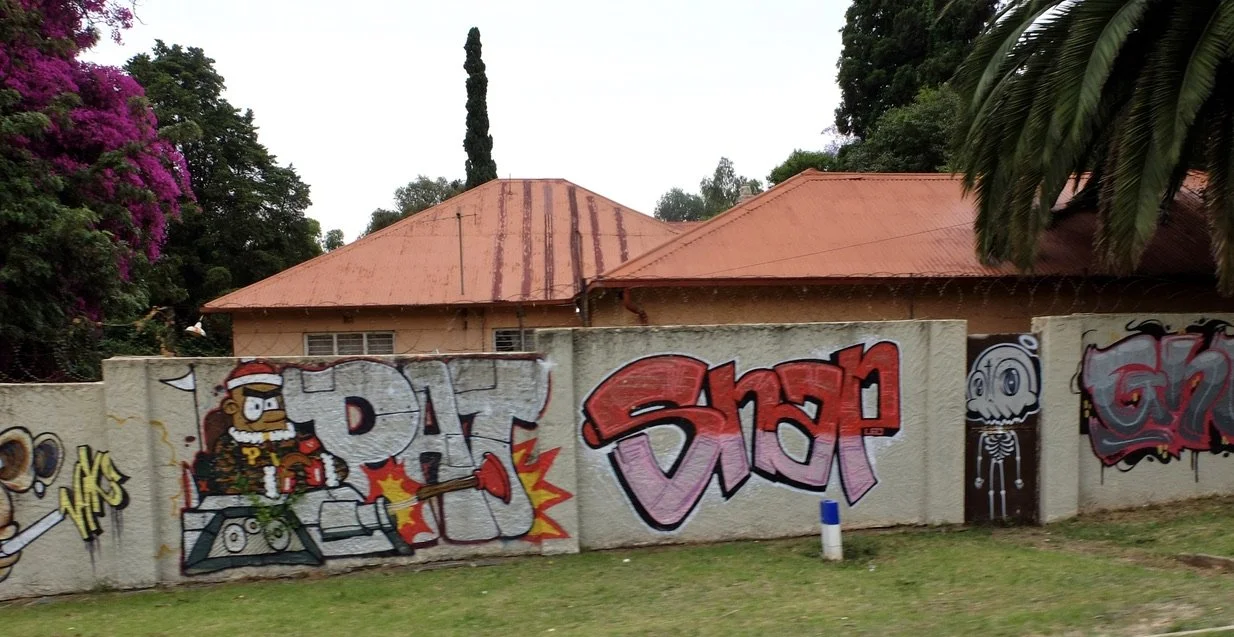
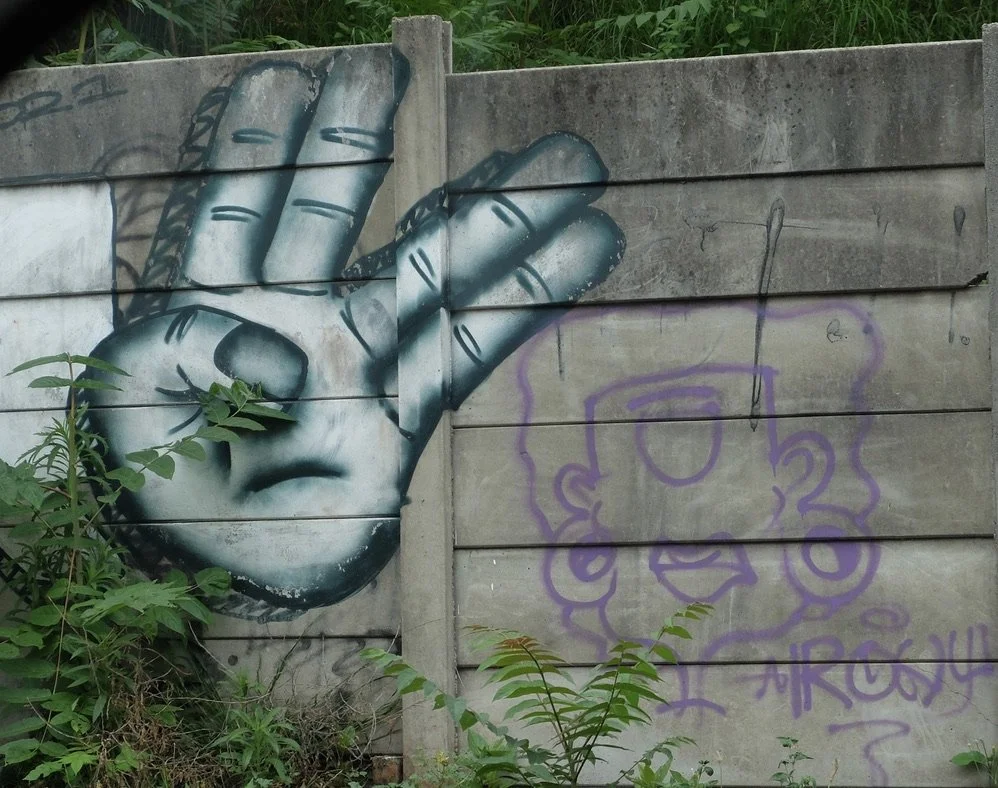
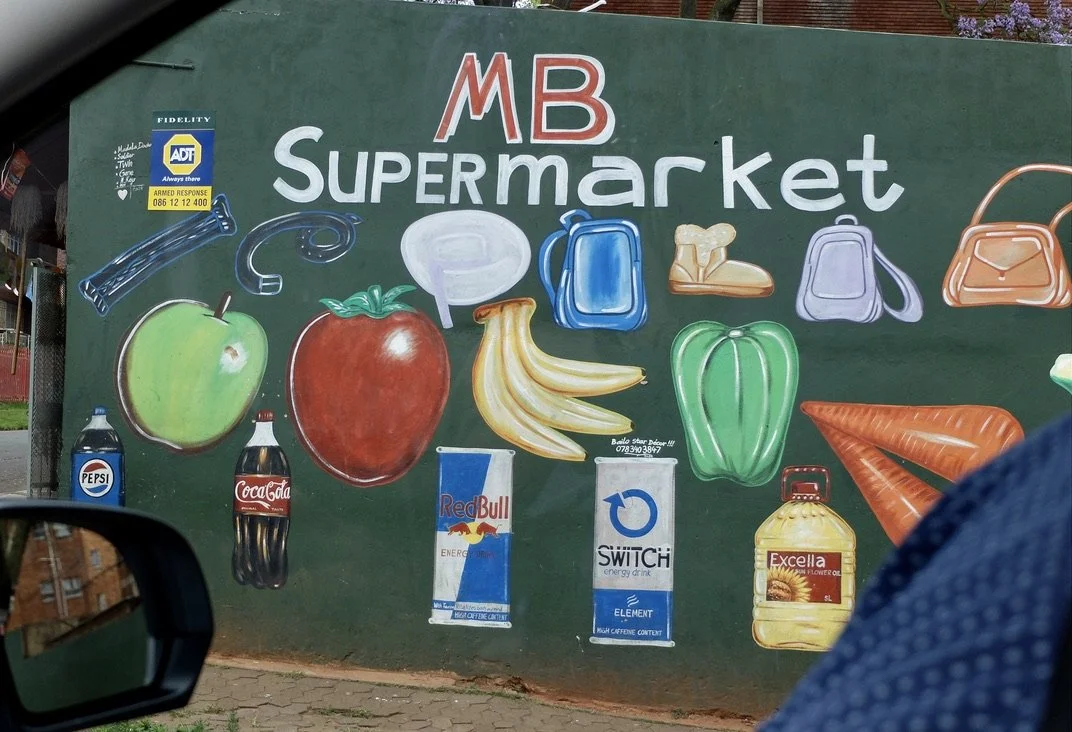
Signs & graffiti abound.
Or, “You can get it if you really want.”
Joburg, ZA.
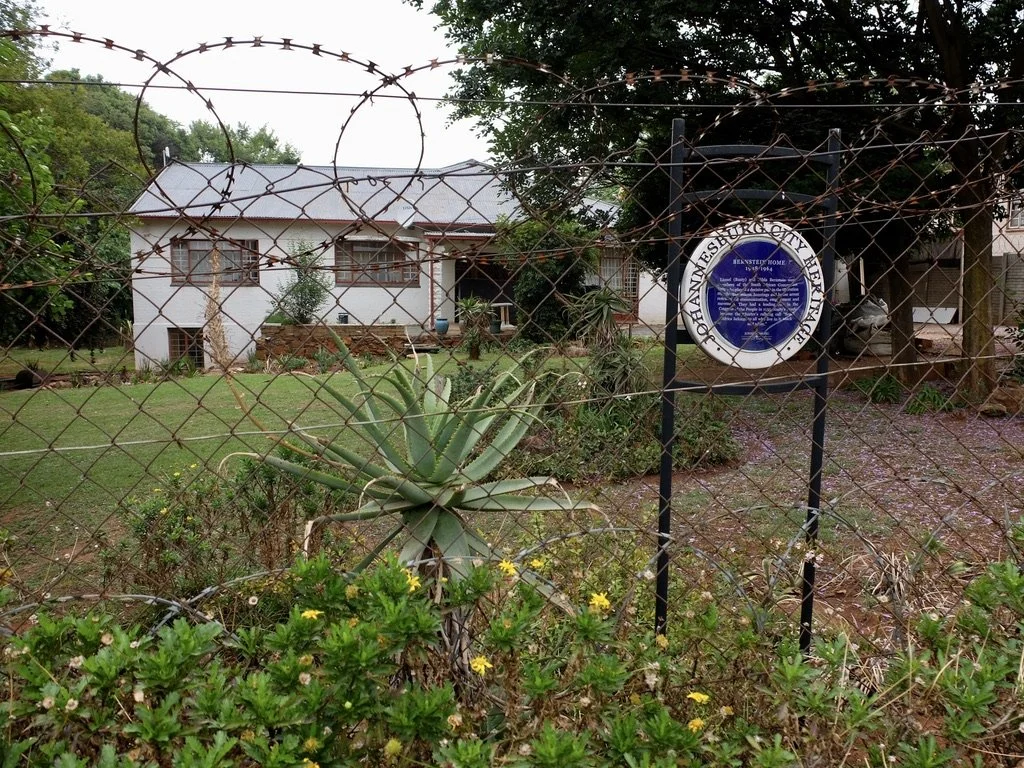
Note the barbed wire atop the wall. In more exclusive areas, the wire is electrified.
Joburg, ZA.
SOWETO (South West Township), Jo-burg, ZA.
“Soweto was created in the 1930s, when the White government started separating Blacks from Whites, to create black ‘townships’. Blacks were moved away from Johannesburg, to an area separated from White suburbs by a so-called cordon sanitaire (or sanitary corridor) which was usually a river, railway track, industrial area or highway. This was carried out using the infamous Urban Areas Act of 1923.”
The home of anti-apartheid activists, Hilda & Rusty Bernstein. Hilda’s memoir, The World That Was Ours educated us on the horrors of the apartheid system. In the book she gave the address of their home. Our driver Jacob found it.
Joburg, ZA.
Joburg, ZA.
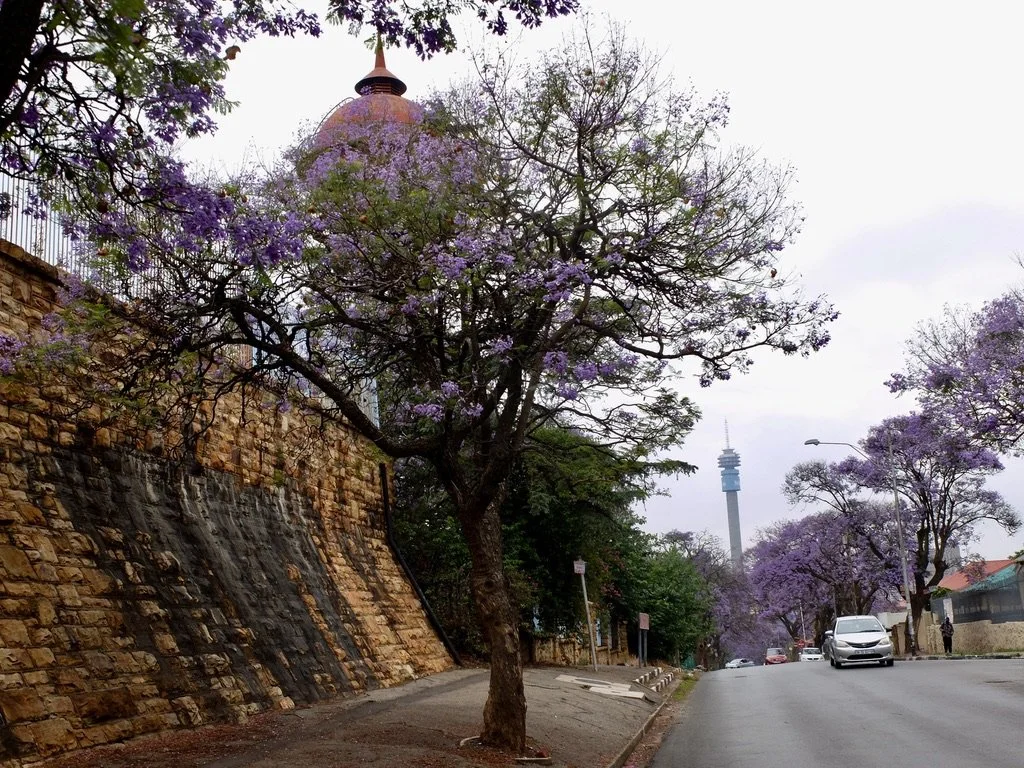
“Nothing says home quite like the jacarandas. They’re an integral part of Joburg summers, and with the blossoms in season between late September and November.”
Joburg, ZA.
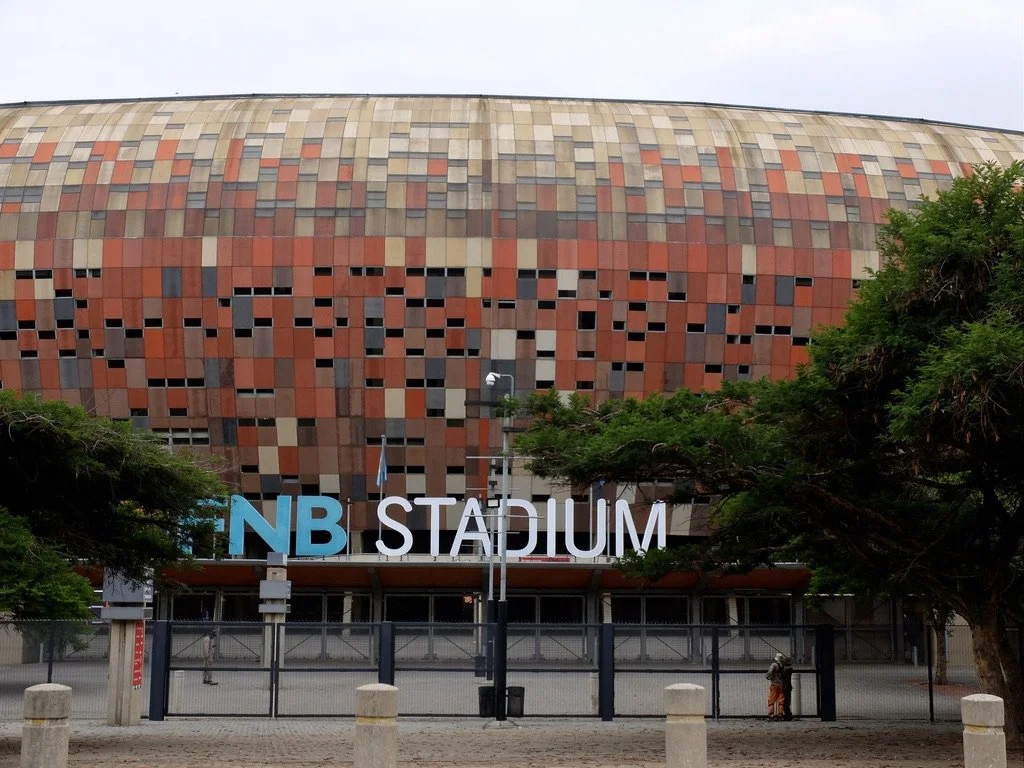
FNB Stadium holds 94,700 & hosted the 2010 FIFA World Cup The World Cup.
Joburg, ZA.
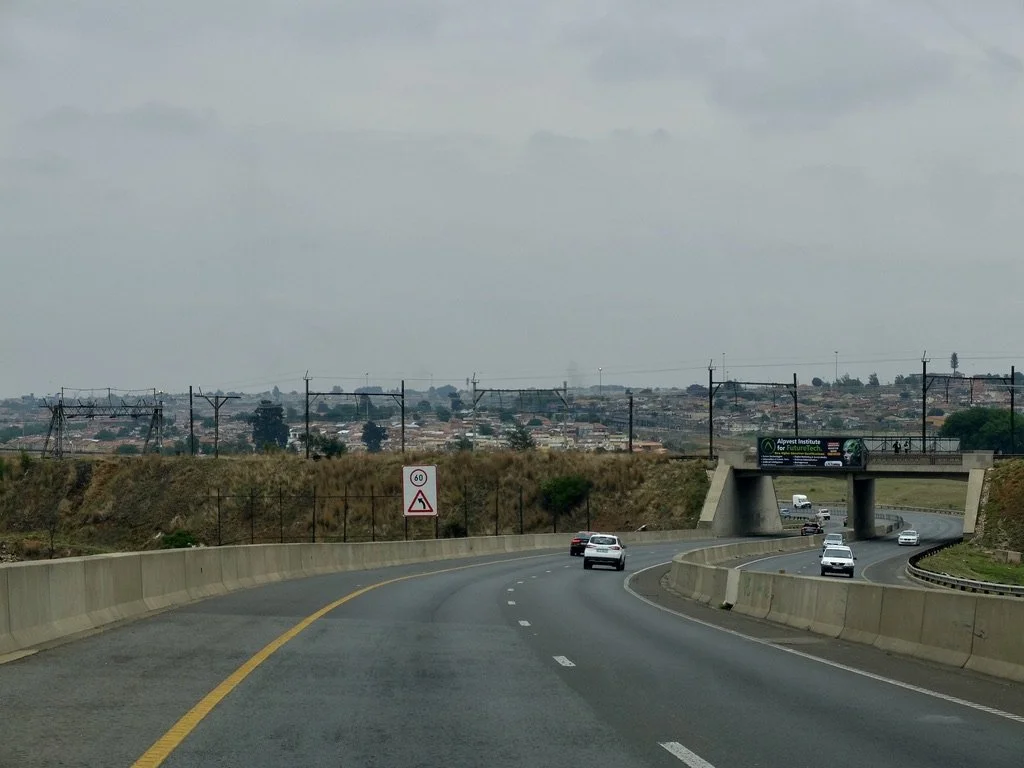
That’s Soweto ahead.
“The establishment of Apartheid in 1948 cemented racial divisions.
New townships, such as the infamous Soweto (South Western Township), were built on exposed land to the south of the mines and subject to the winds. Whites moved to wealthy northern suburbs sheltered by trees, planned development, and natural windbreaks.”
Soweto, Joburg, ZA.
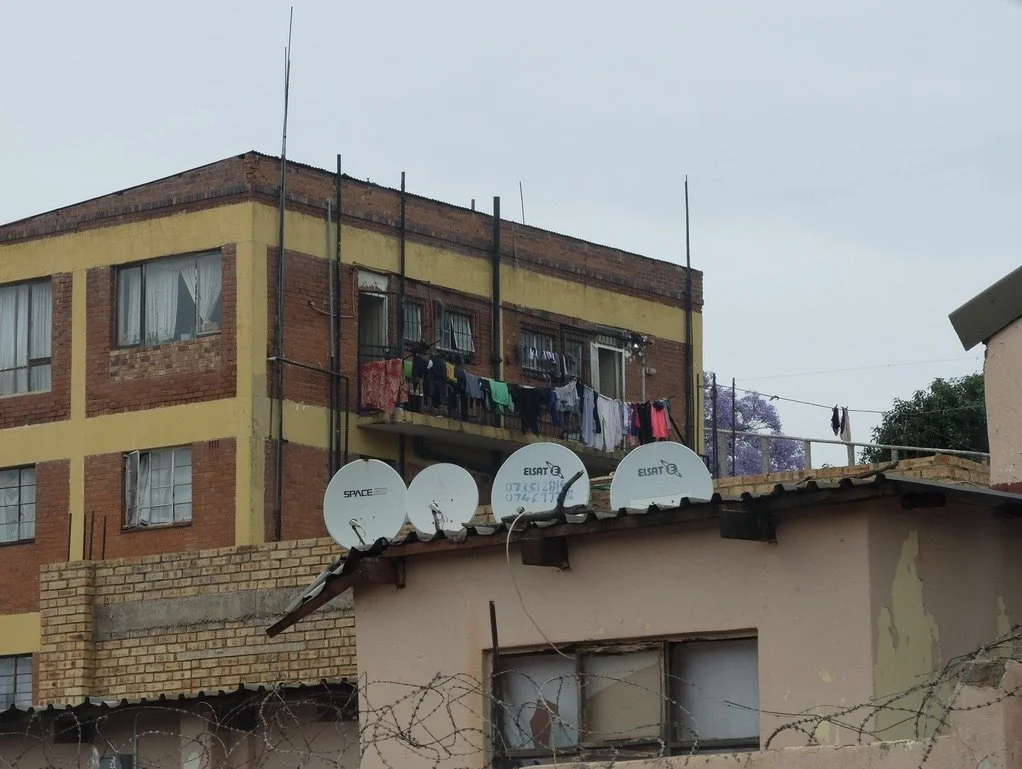
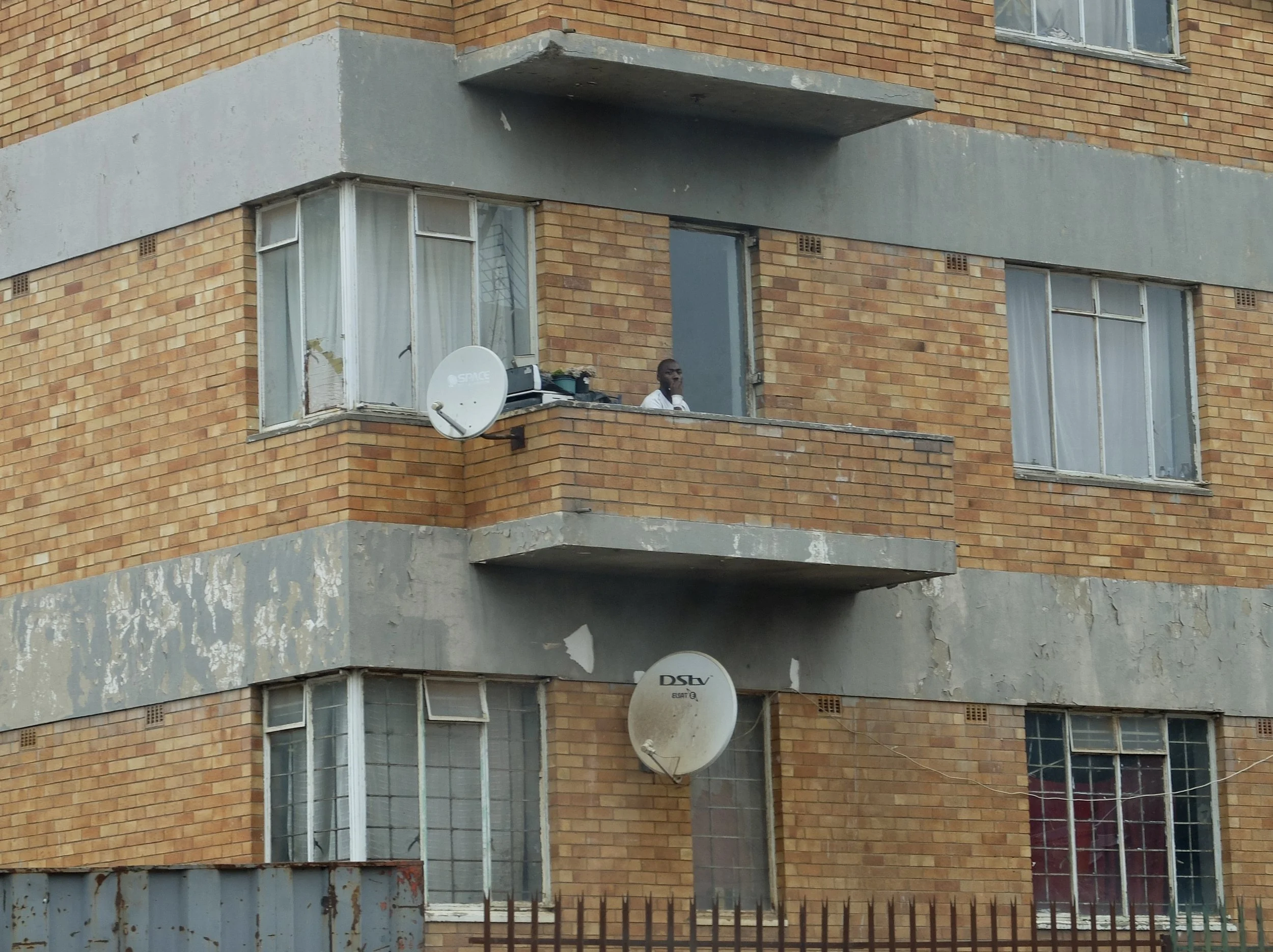
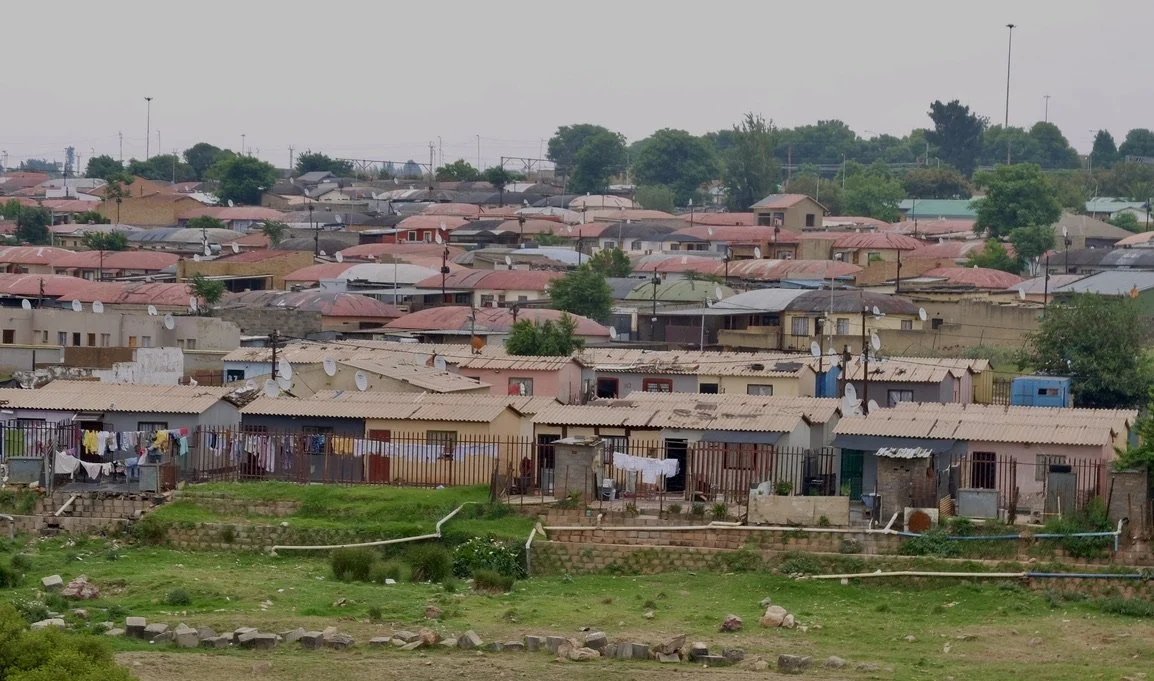
Under one of those cement roofs, four families might live without electricity, indoor plumbing or running water. The families couldn’t own the houses nor the land. If they made improvements, like a new stove & then the husband died, the wife would be removed to an “independent homeland” & get nothing from the house. Now there’s electricity & water (note the satellite dishes) & people can own the houses & land.
Essential reading to understand apartheid are Hilda Bernstein’s The World That Was Ours & Michener’s The Covenant. Reading these before traveling to South Africa is critical. It wasn’t until I had finished the books & experienced southern Africa that I realized how this preparation enhanced our journey. And how it was connected to what is happening now in the USA.
It was disturbing for us to discover the number of South African Whites, who when growing up knew of the racial divisions but had no idea of how terrible it was. A lot had to do with reporting in different languages.
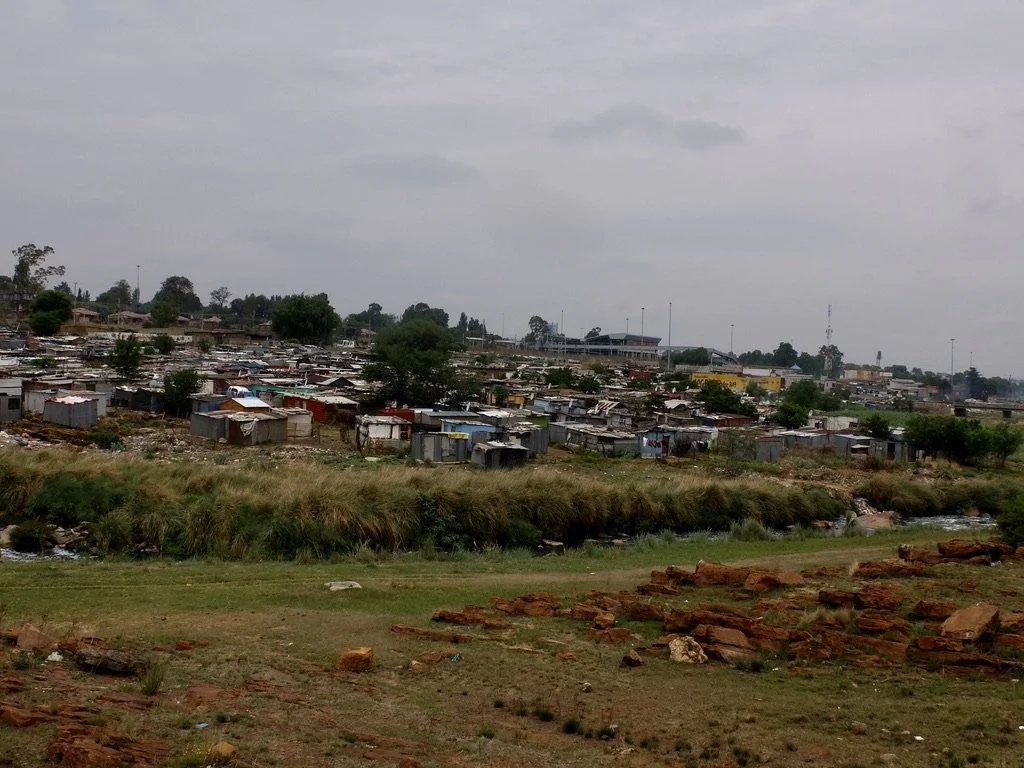
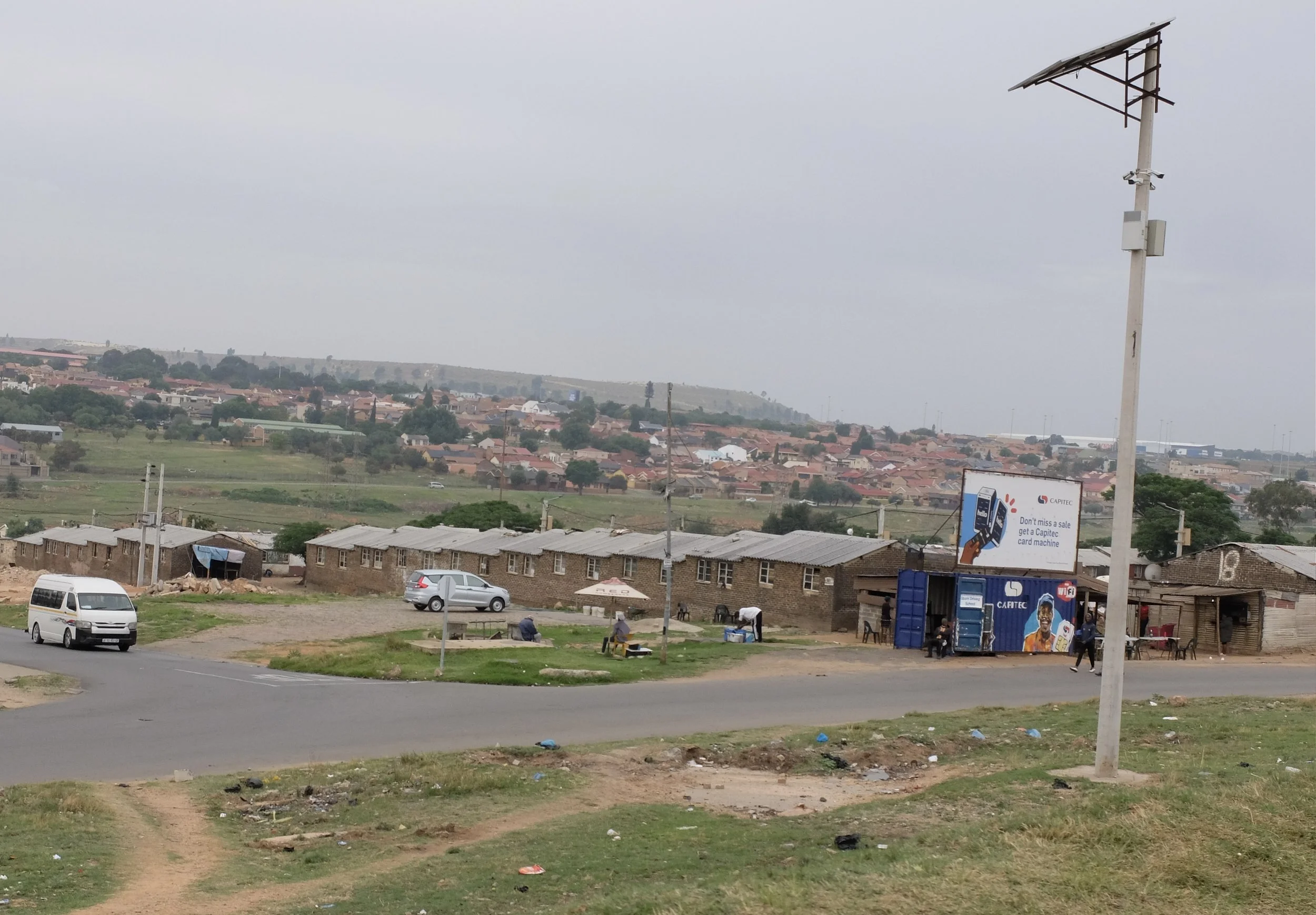
Gold mine tailings can be seen in front of these shacks. This area is temporary housing for immigrants. At least there’s water & electricity. The government is desperately trying to house these people, many coming from Zimbabwe to find work in S. Africa.
Joburg, ZA.
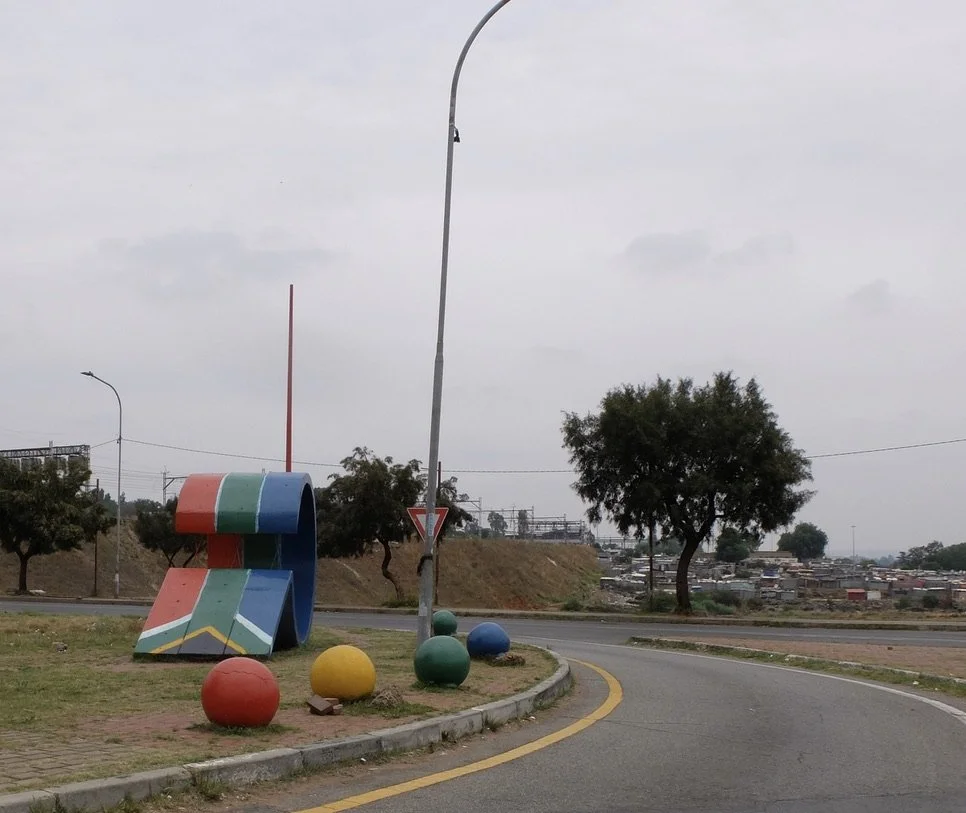
It’s like everywhere you turn, there are acres & acres of these shacks. I was intrigued by the roundabout art then noticed the shacks to the right.
Joburg, ZA.
A better house with a small business on the edge of Soweto, Joburg, ZA.
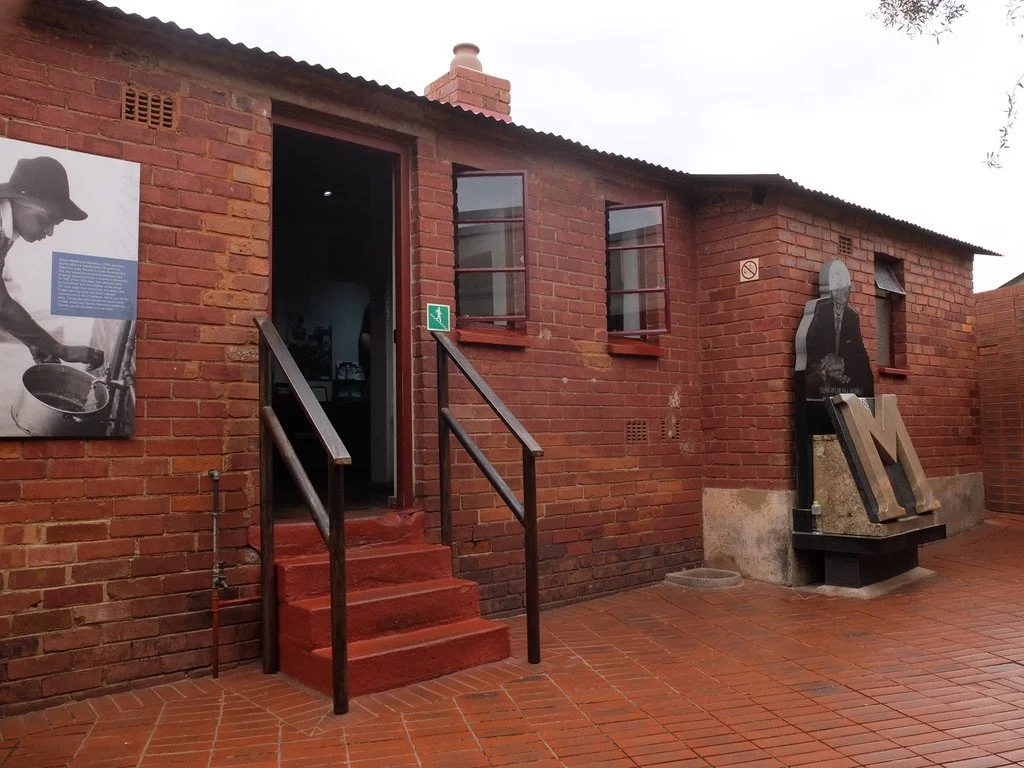
“The Nelson Mandela National Museum, commonly referred to as Mandela House, (https://www.mandelahouse.com/) is the house on Vilakazi Street, Orlando West, Soweto, South Africa, where Nelson Mandela lived from 1946 to 1962” It a short drive from the home of Hilda & Rusty Bernstein, close associates. When Nelson was imprisoned on Robbin Island, Winnie constructed a wall inside because people would often come by & shoot into the house. Bullet holes are visible.
Unfortunately the Apartheid Museum was closed the day we were in Soweto. But among the books, our guide Jacob, & the Hector Pieterson Memorial we were well-informed about the history of apartheid & its impact on South Africa & its neighboring countries.
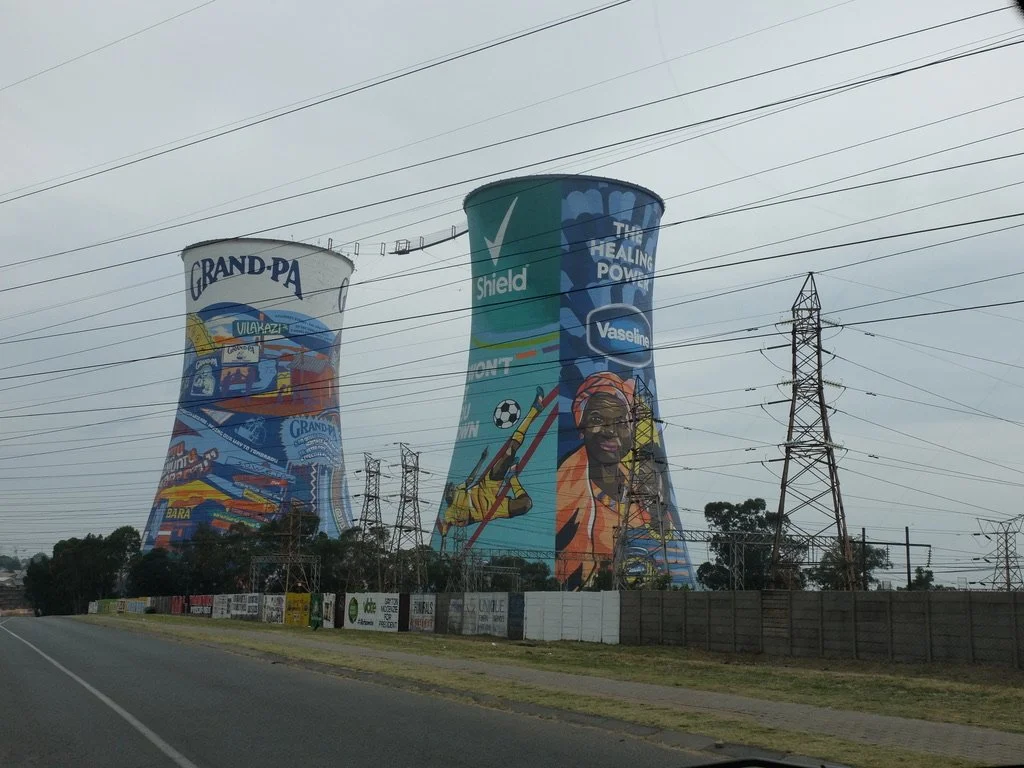
We took a pass but you can bungee jump between these two decommissioned cooling towers.
Joburg, ZA.
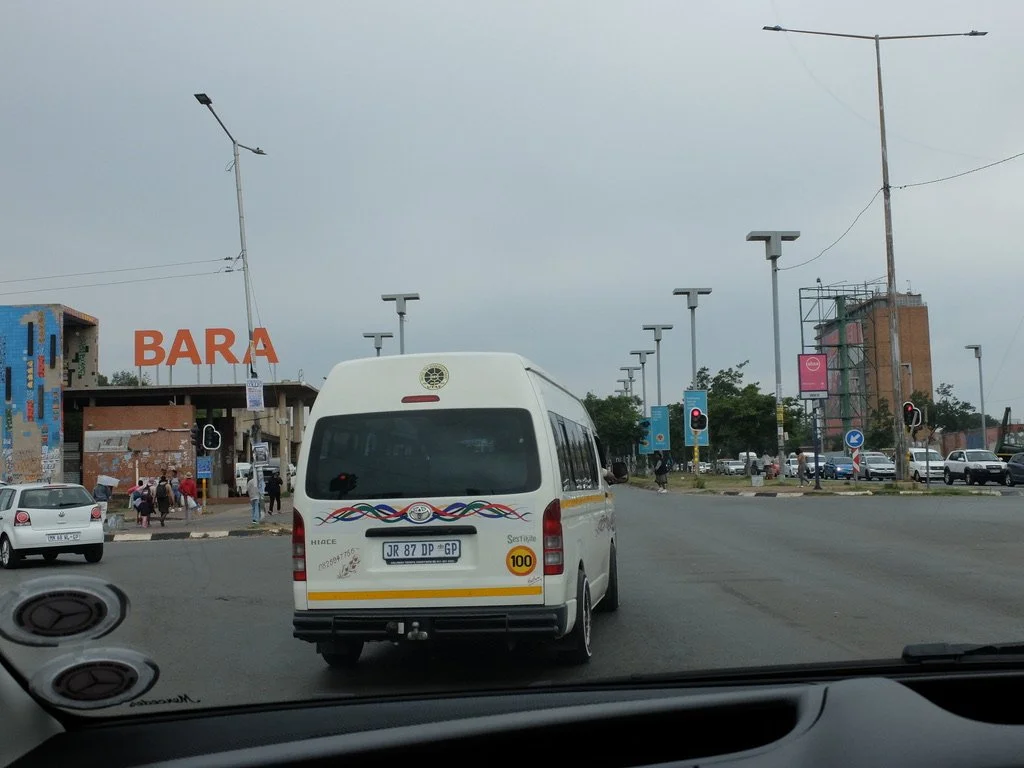
There is no mass transit system in South Africa; it’s too dangerous for the passengers. Instead, these vans which hold fifteen passengers, taxi folks around. Each driver has a route & has to stick to it. The round decal on top is their union; United Taxi Association Front. This one just left a depot where we were told were 50,000 such vans waiting to load up. They don’t leave until they are filled. Folks on the street use hand signals to indicate their destination. The vans seemed to follow their own rules of the road.
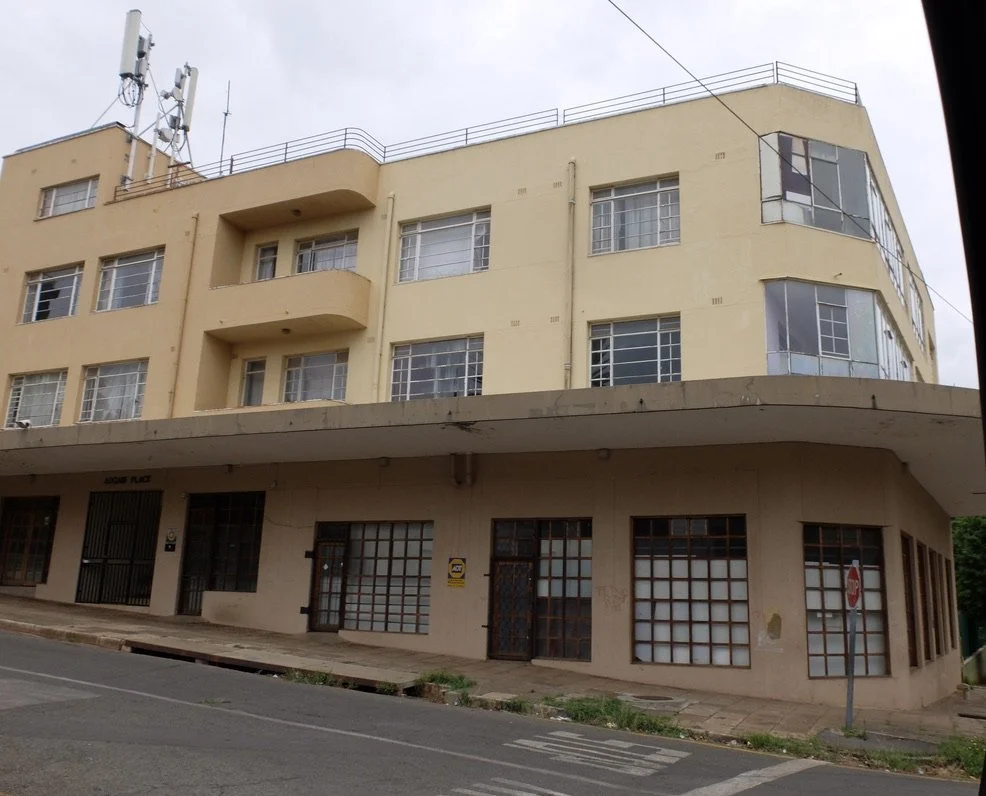
Hilda Bernstein wrote about these communal housings for single black men.
Showers, toilets, eating & sleeping were communal. It sounded awful.
Joburg, ZA.
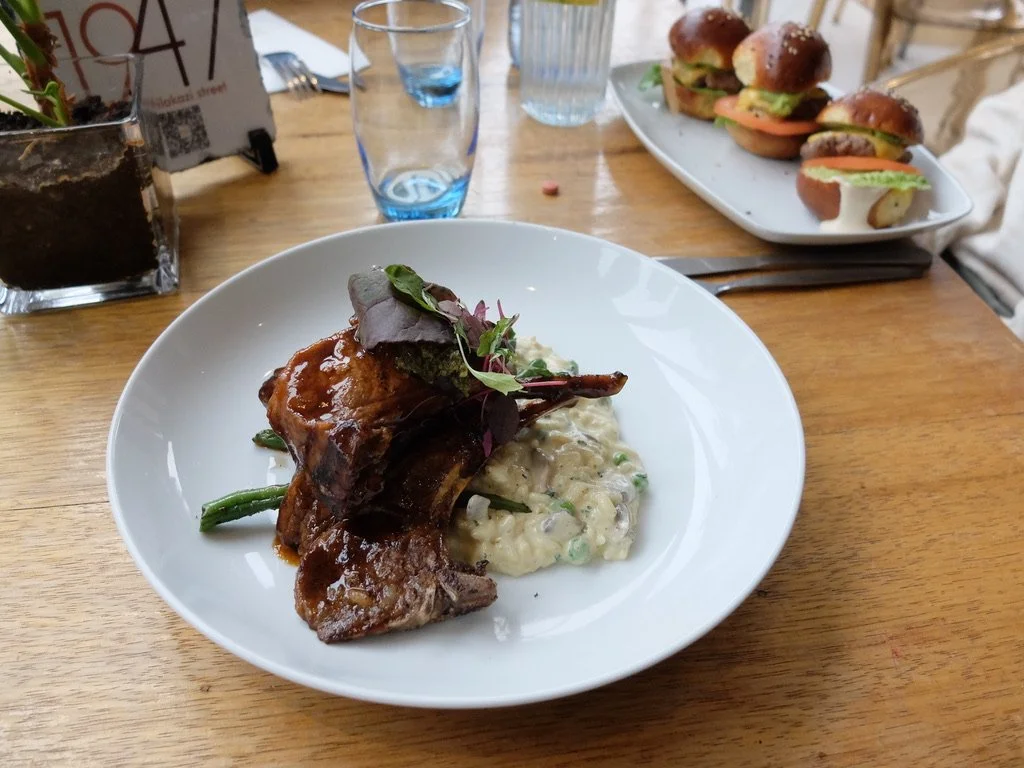
Now for some food.
Lambchops at 1947 on Vilakazi Street, Soweto, Joburg. SA.
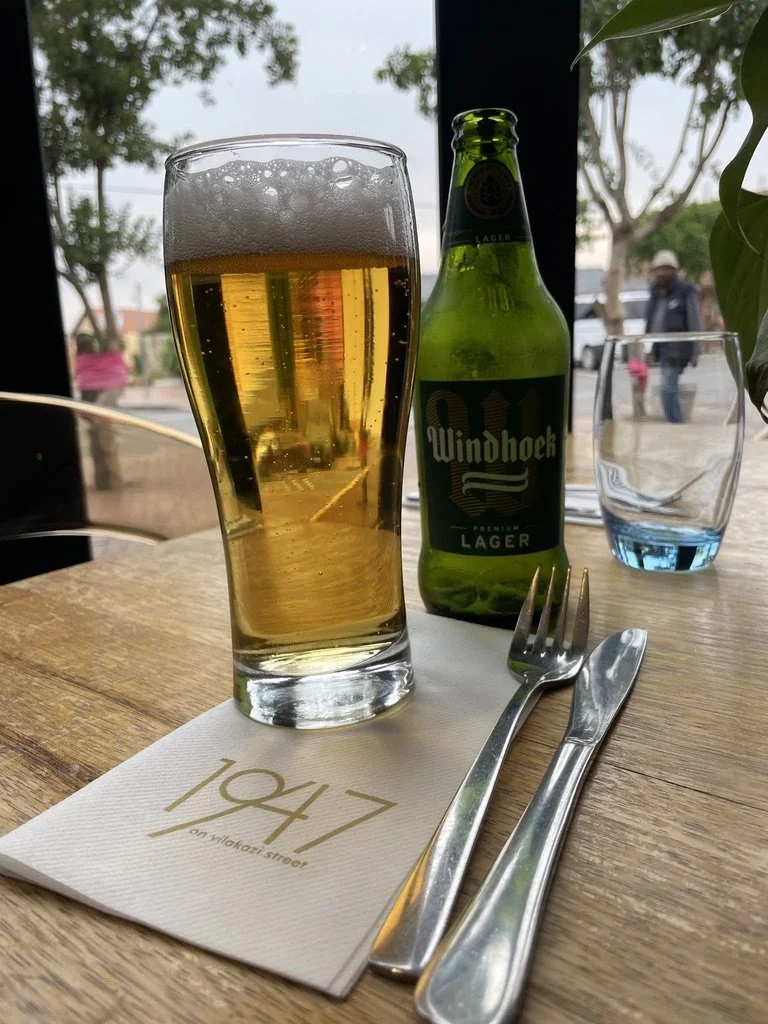
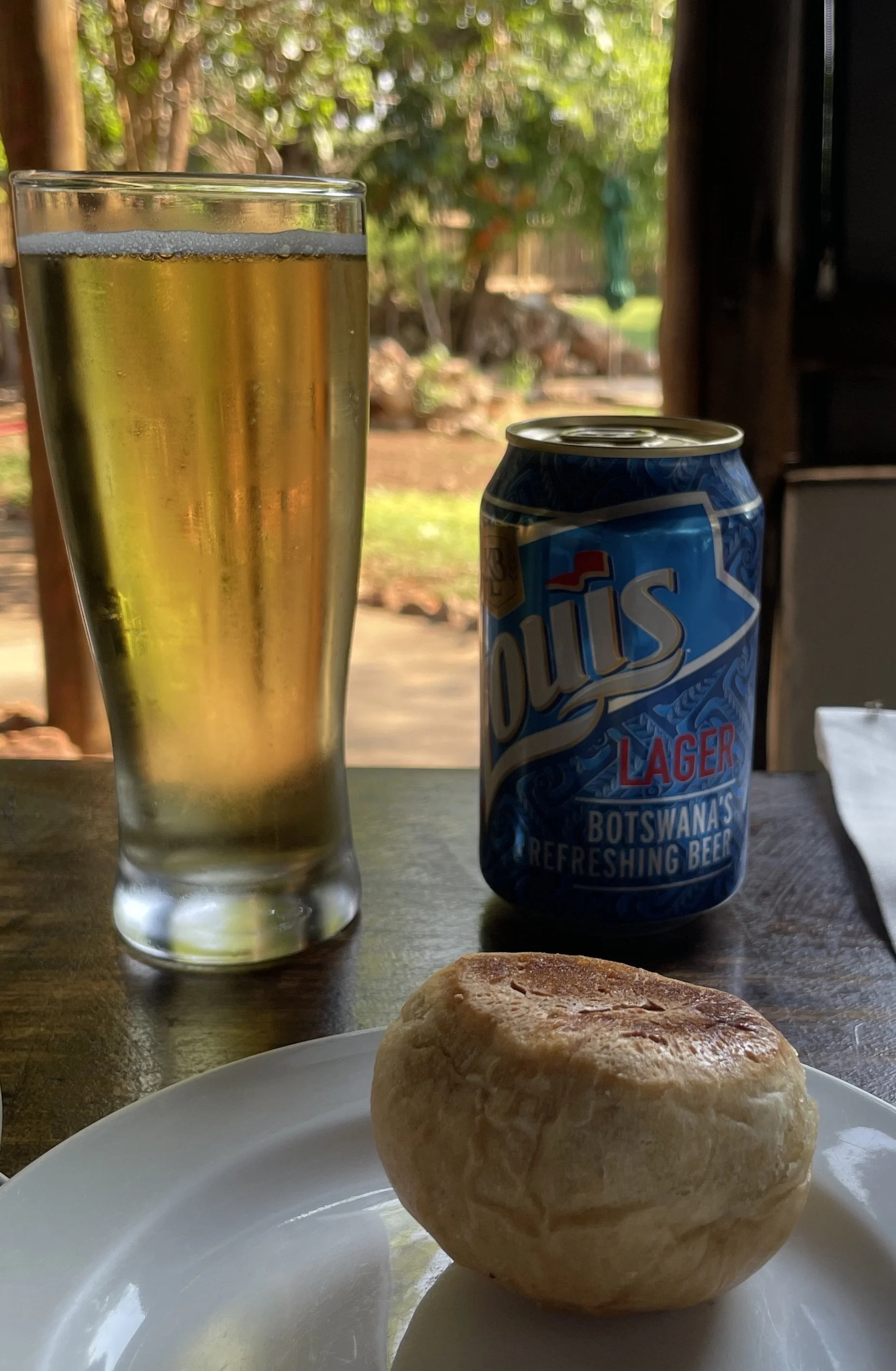
Almost all the beers I encountered were lagers.
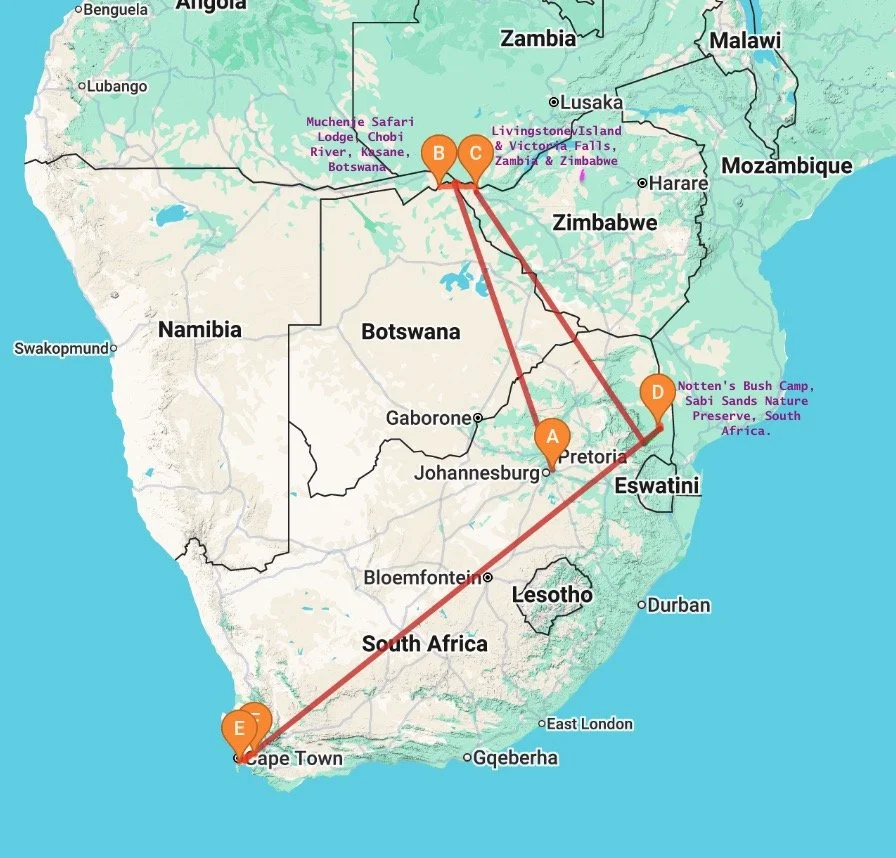
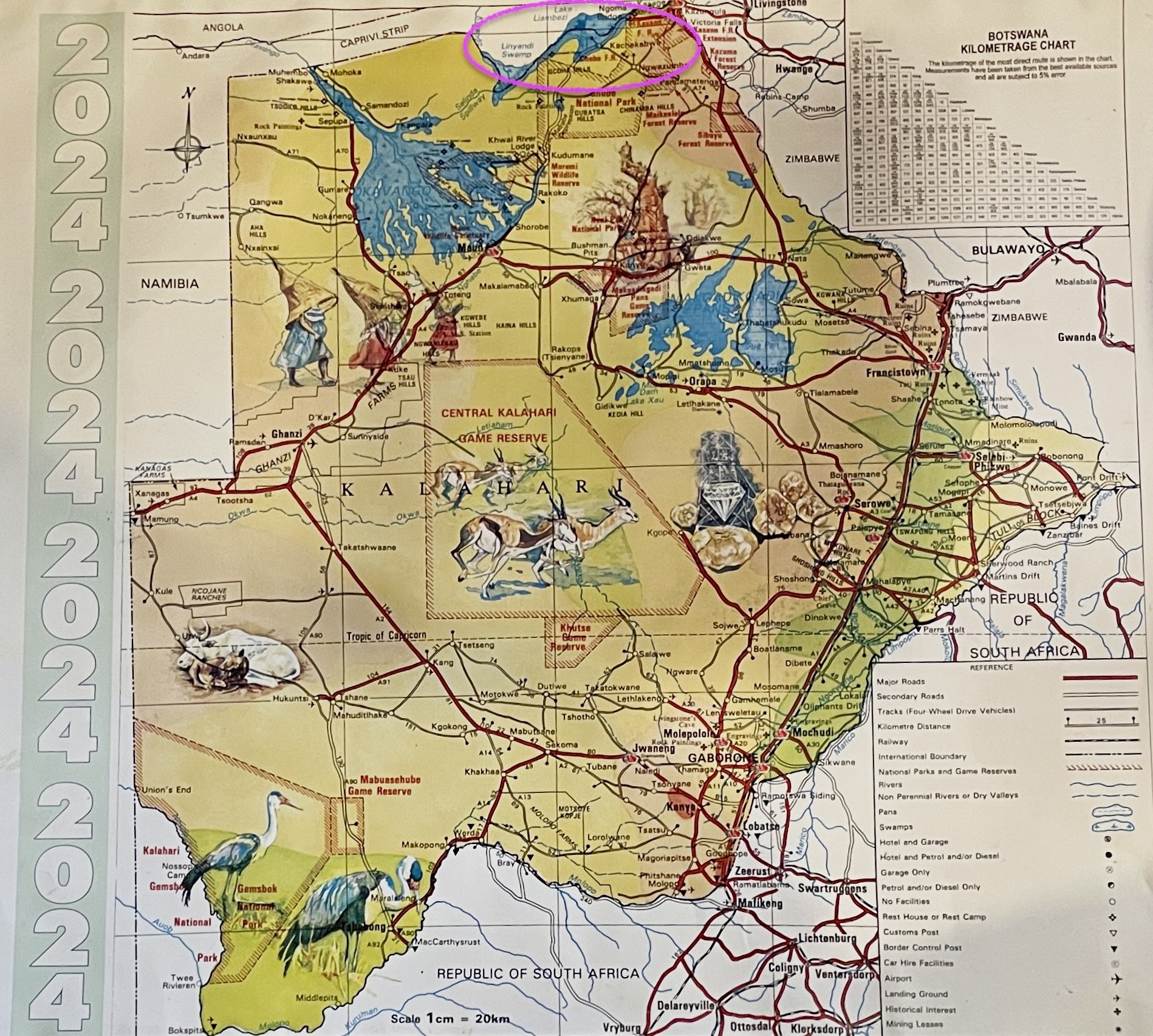
This one is from Namibia (see map next), formerly known as German South West Africa.
Alison Nolting, Of The Africa Adventure Co. said we had to get out & see animals!!
So off we flew from Joburg, ZA…
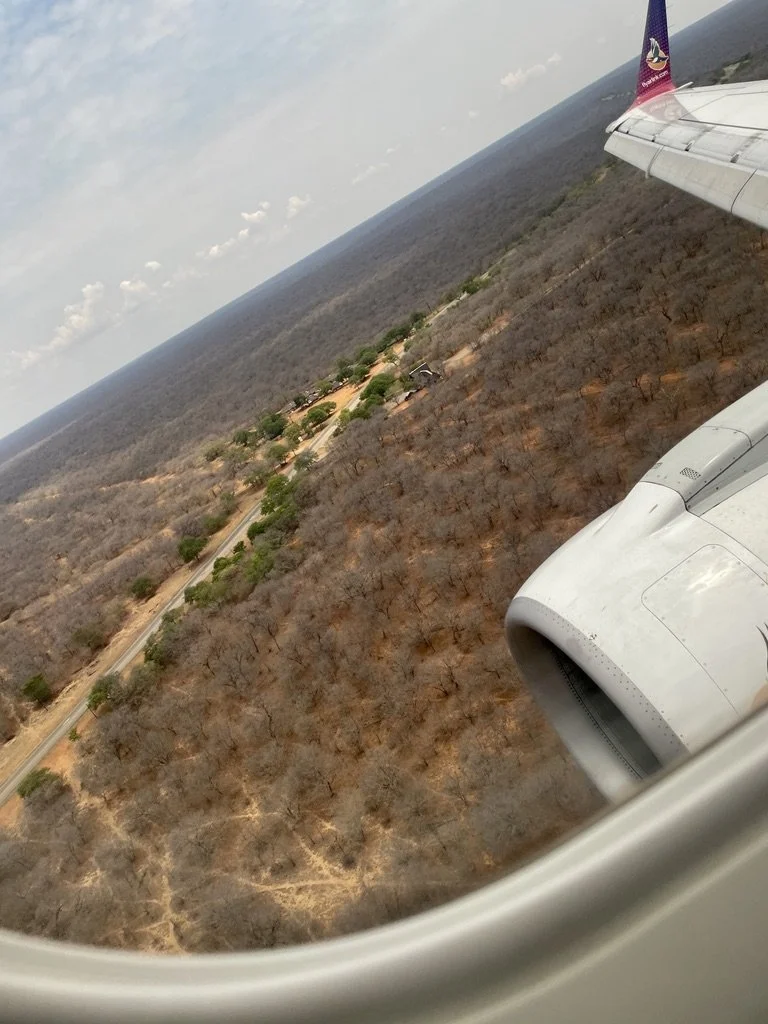
…to Kasane…
…in northeast Botswana.
And we immediately had a greeter!
This was our first introduction to baboons with whom we would be having a continuing relationship all the way down to almost the tip of Africa.
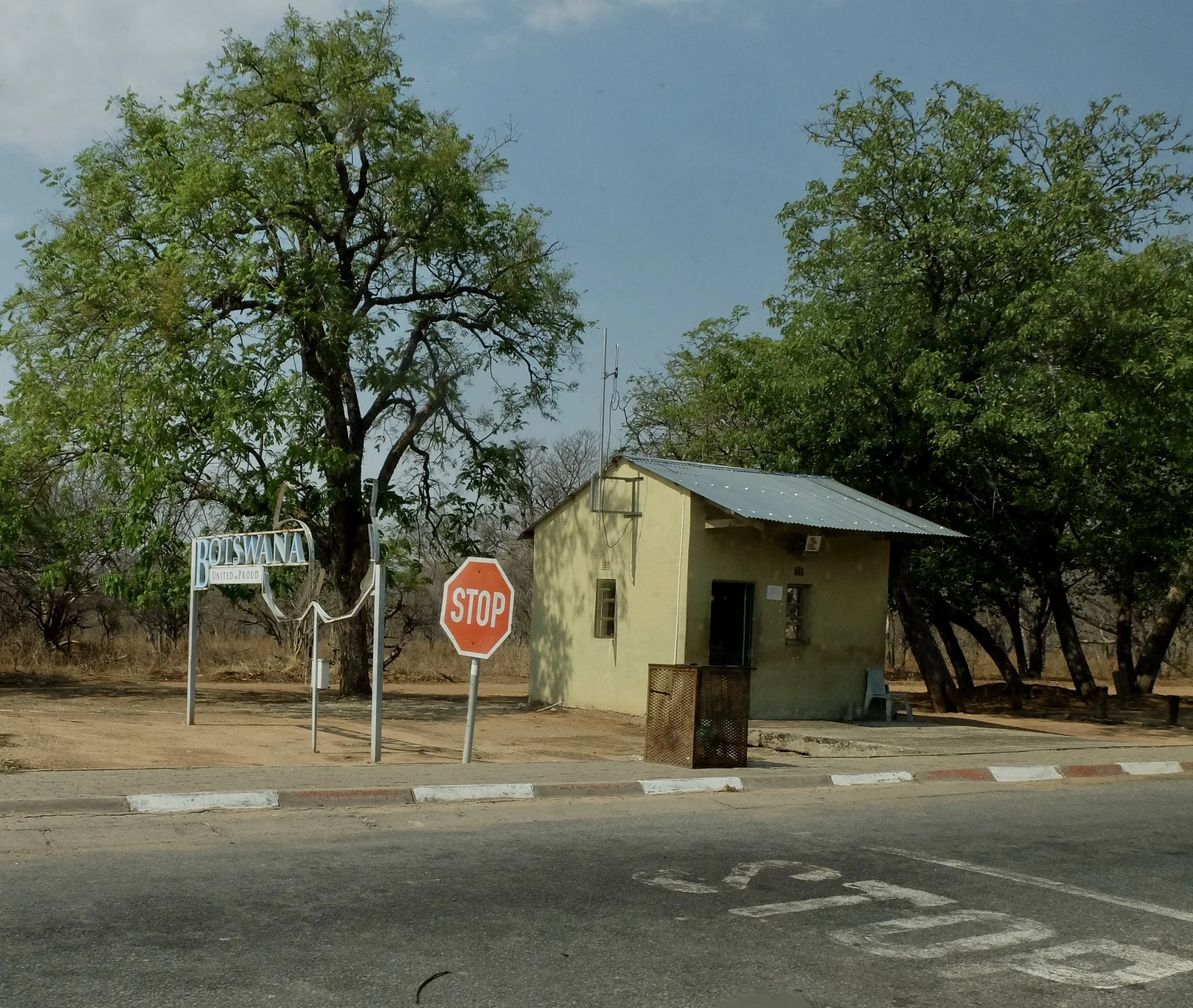
Shortly after the sign “Botswana - United & Proud” was installed, a troop of baboons tried to rip it apart. The powers that be left it as is.
We didn’t encounter elephants for a while. It had recently rained so they weren’t hanging down at the Chobi River.
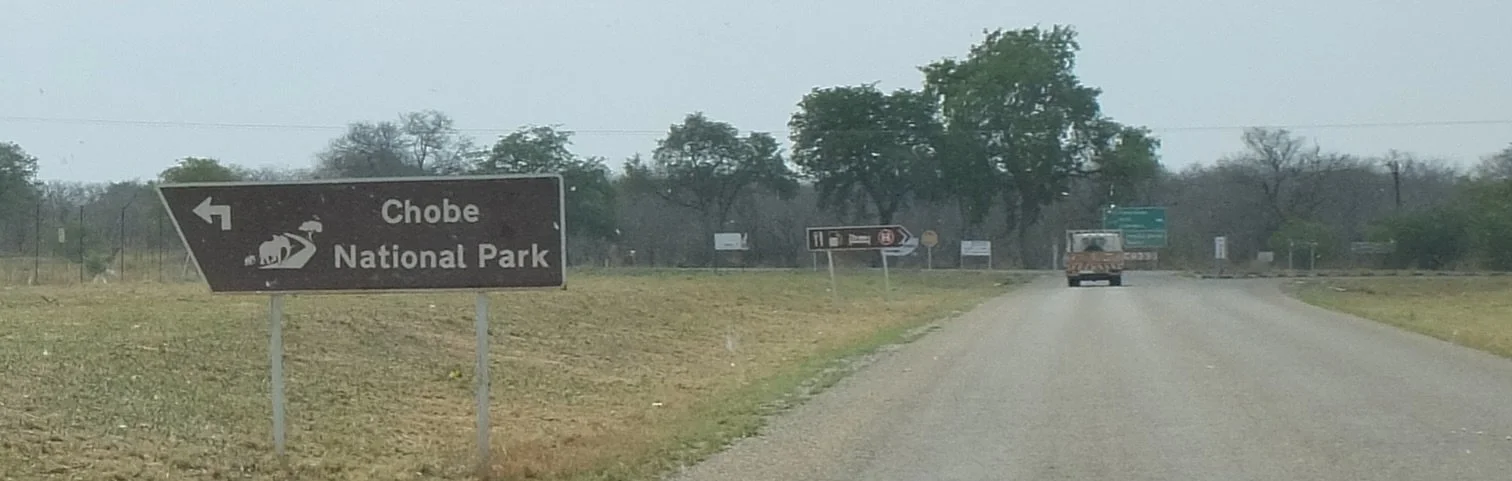
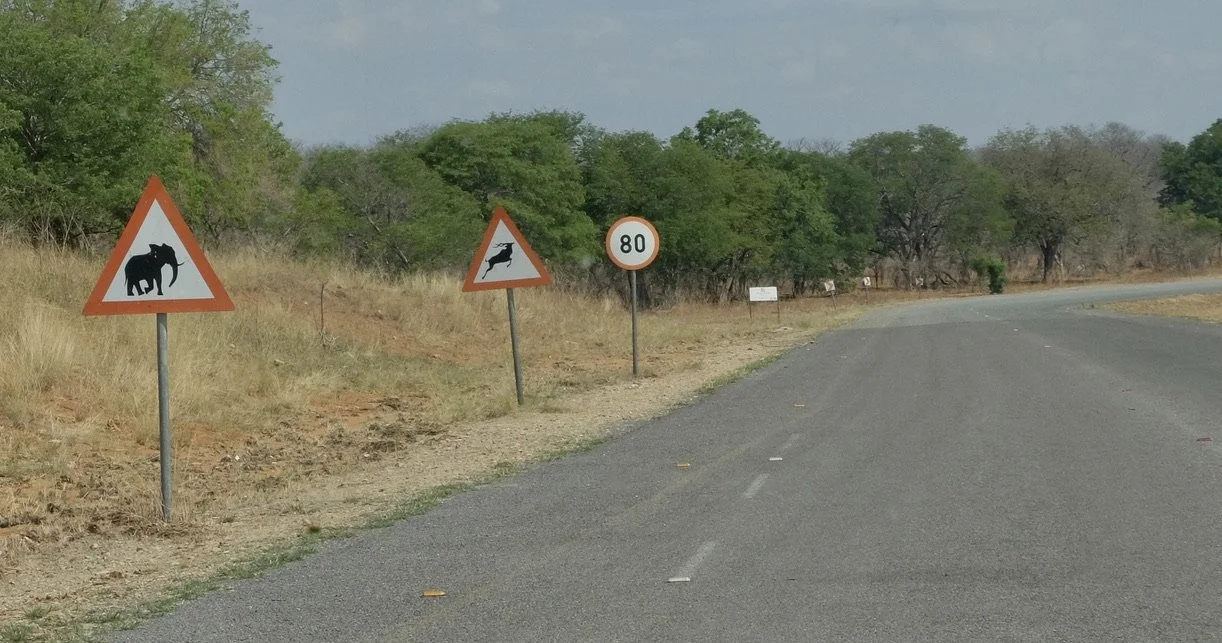
Kudus we saw aplenty. We even saw one jump across a road like shown on that sign.
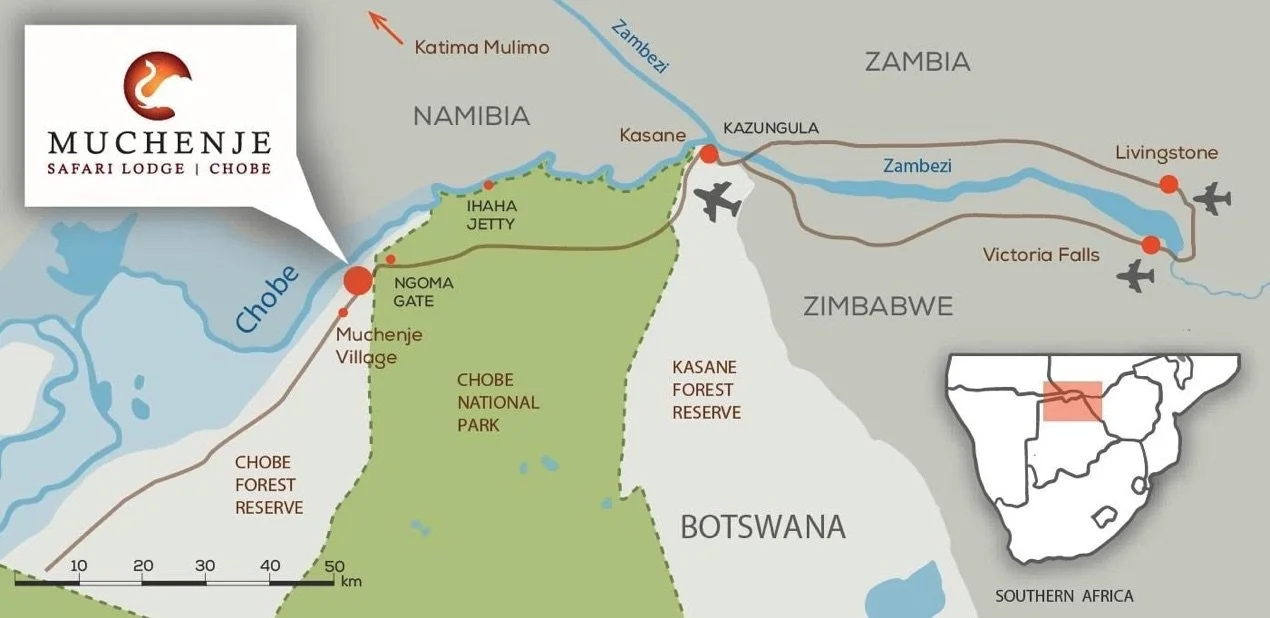
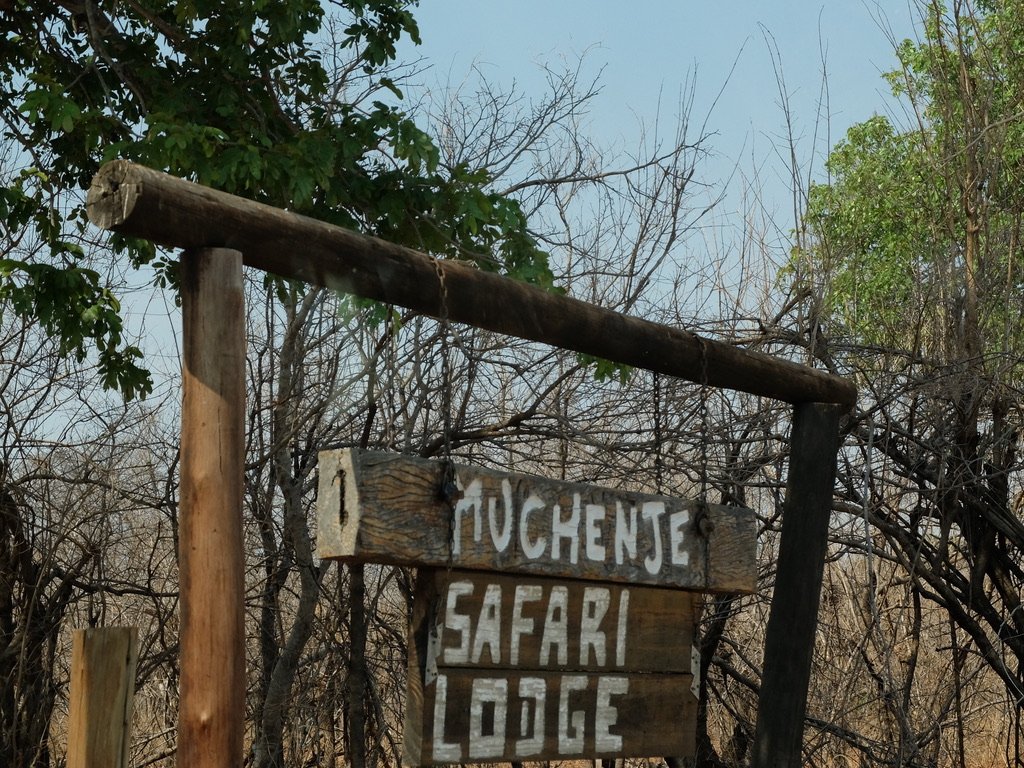
CHOBE FOREST RESERVE, Botswana.
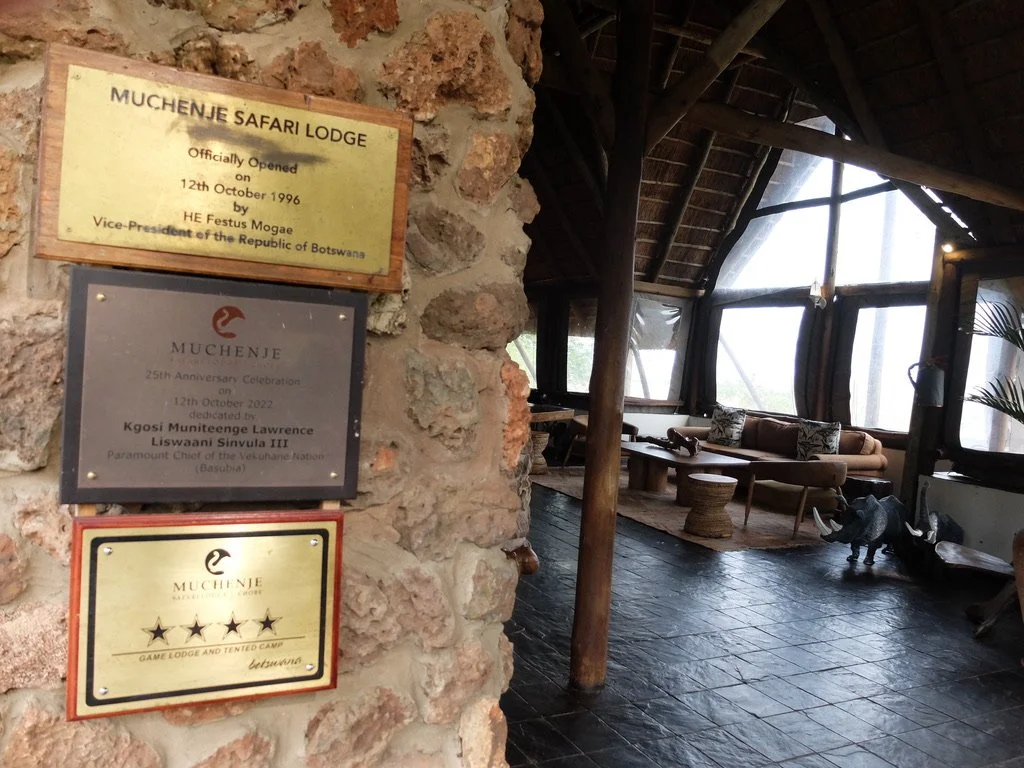
We were to spend three nights here.
First a quick snack & then…
…letting no grass grow under our feet, by 4:30 we were in a Land Cruiser, …
…being driven to a river boat landing on the Chobe River for some game viewing.
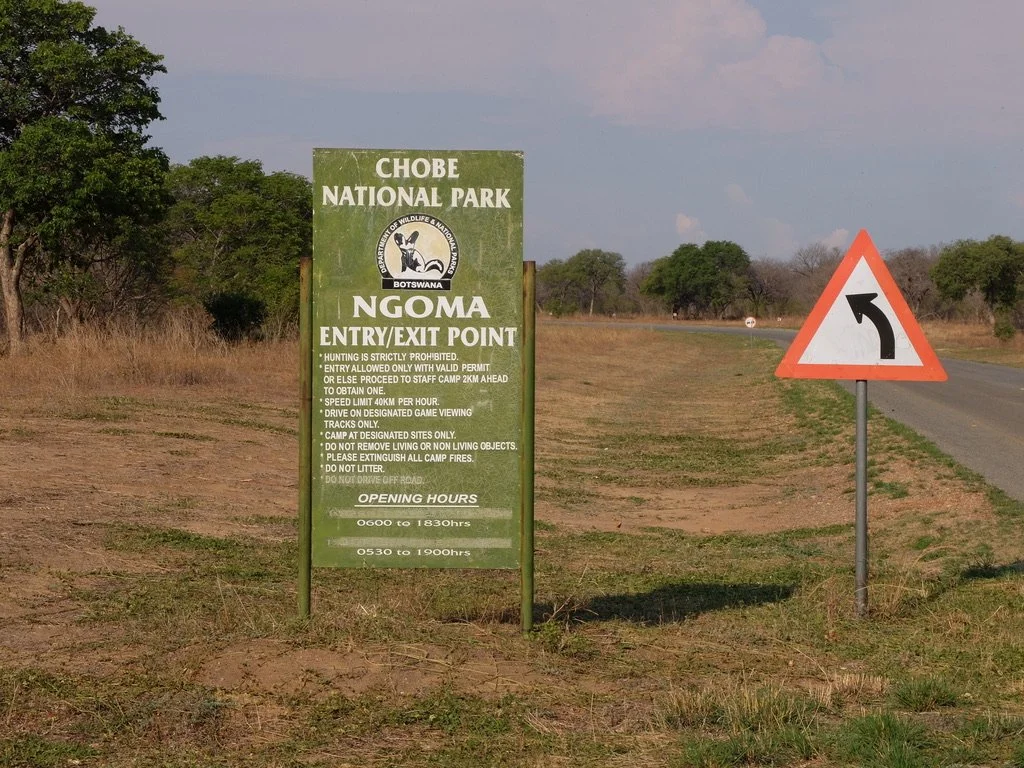
Chobe Nat’l Park, Botswana.
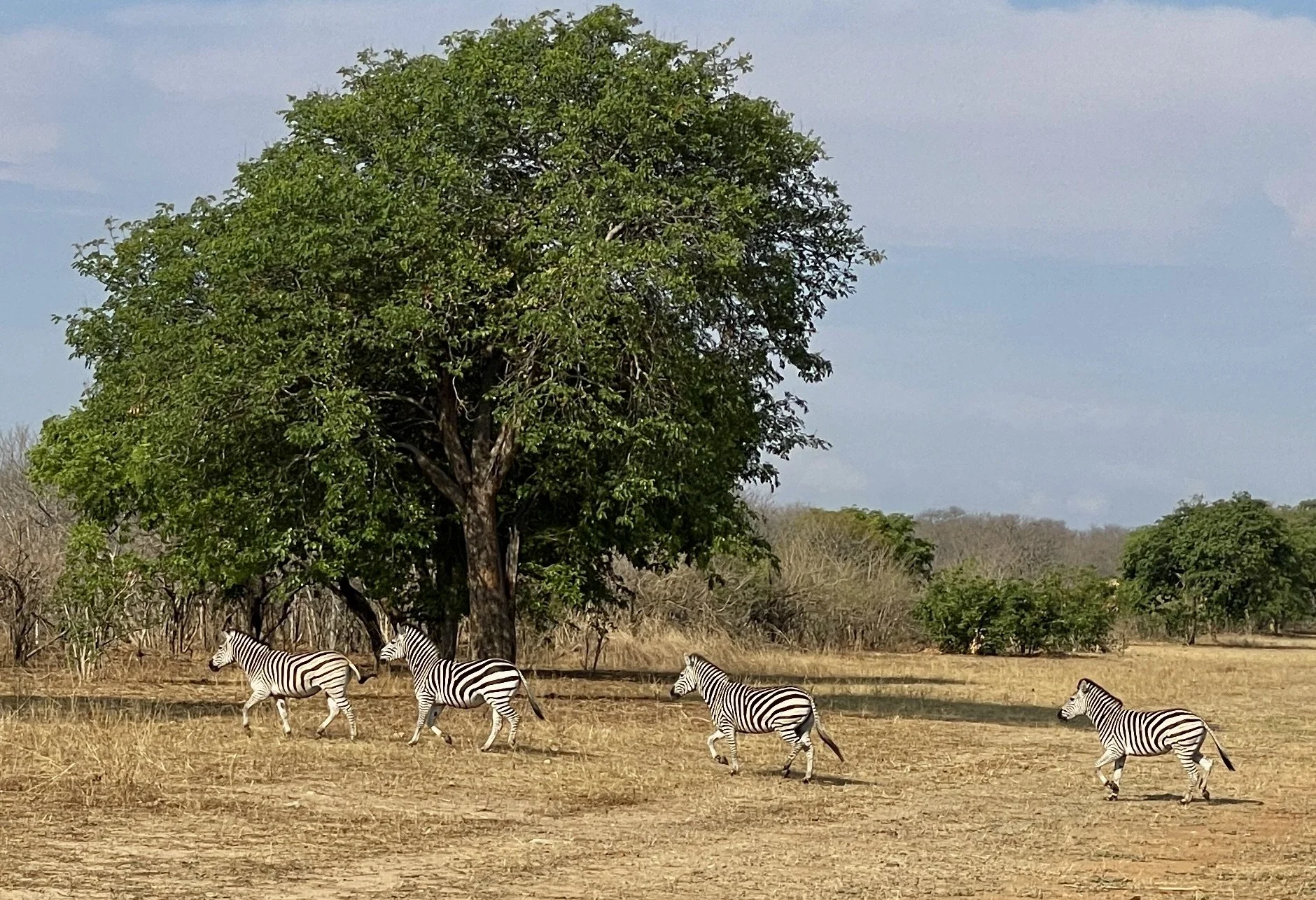
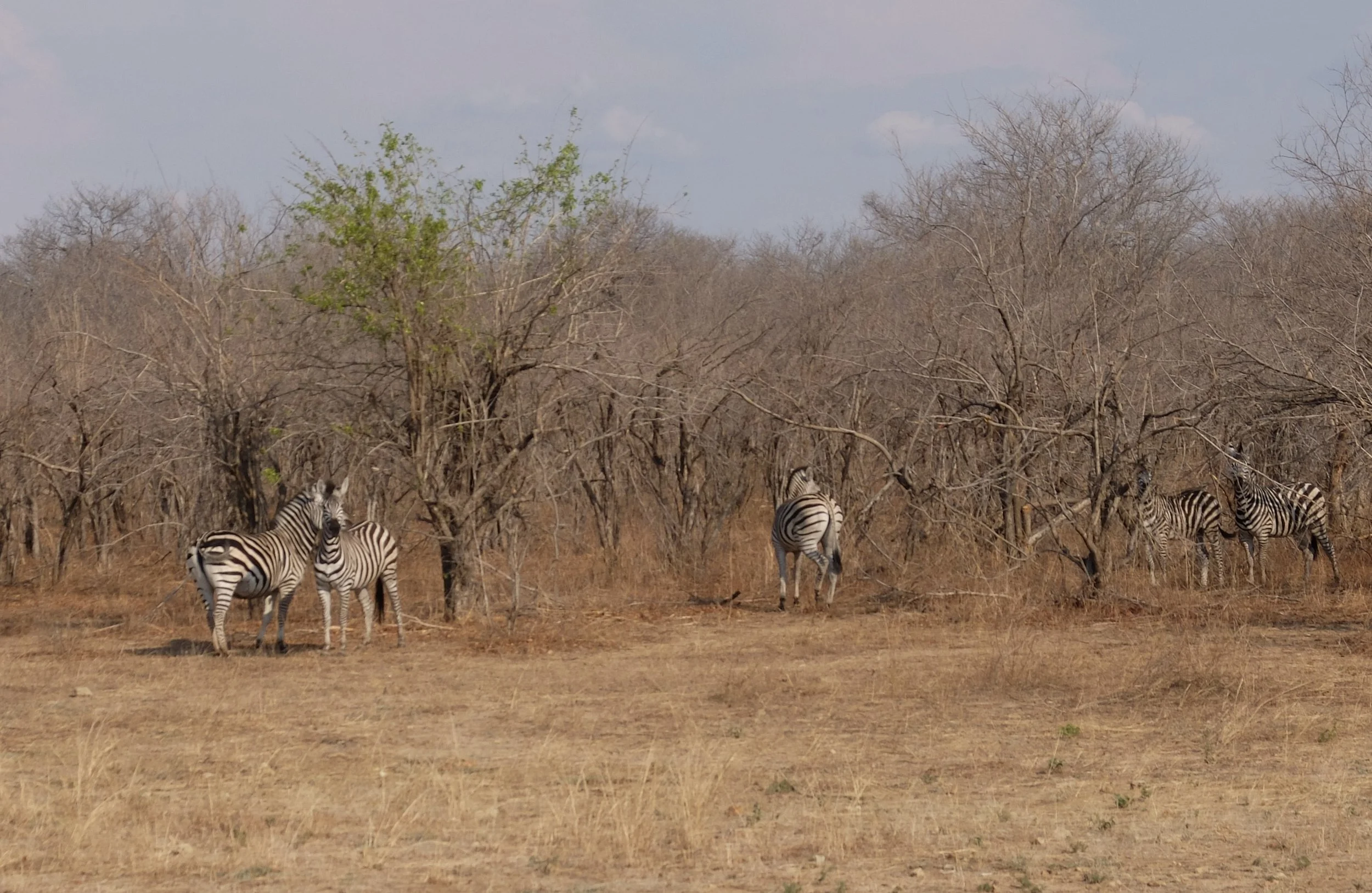
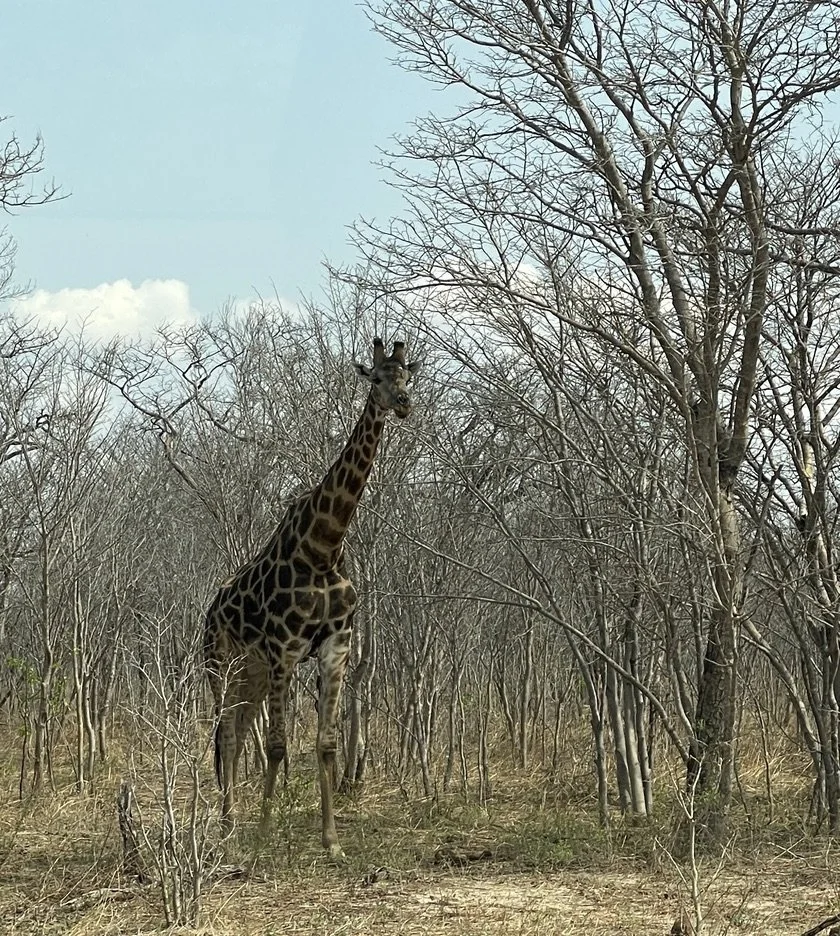
Along the way , some more greeting parties.
Are zebras black with white stripes or white with black stripes?
Anyway Nomi thought the stripes looked cute on their rears.
More meet & greet.
Chobe Nat’l Park, Botswana.
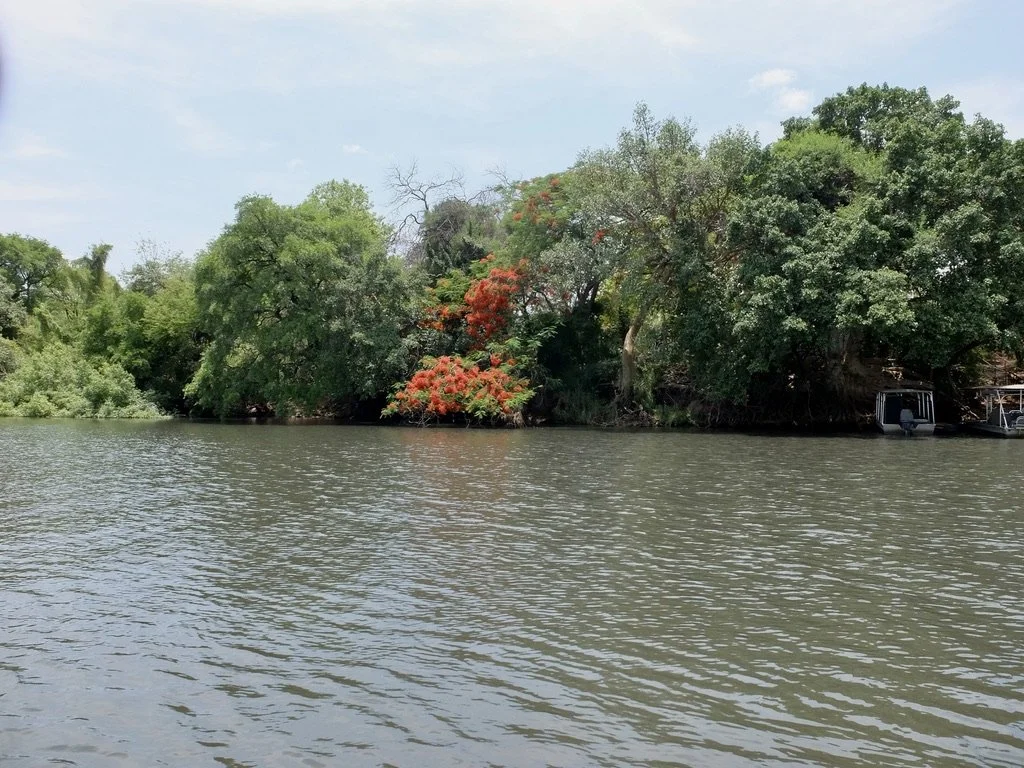
To the right of that Delonix regia - flamboyant tree, was our boat landing, the Ihaha Jetty. It was an extremely steep, rocky path down & back up but I had good strong help.
Chobi River, Chobe Nat’l Park.
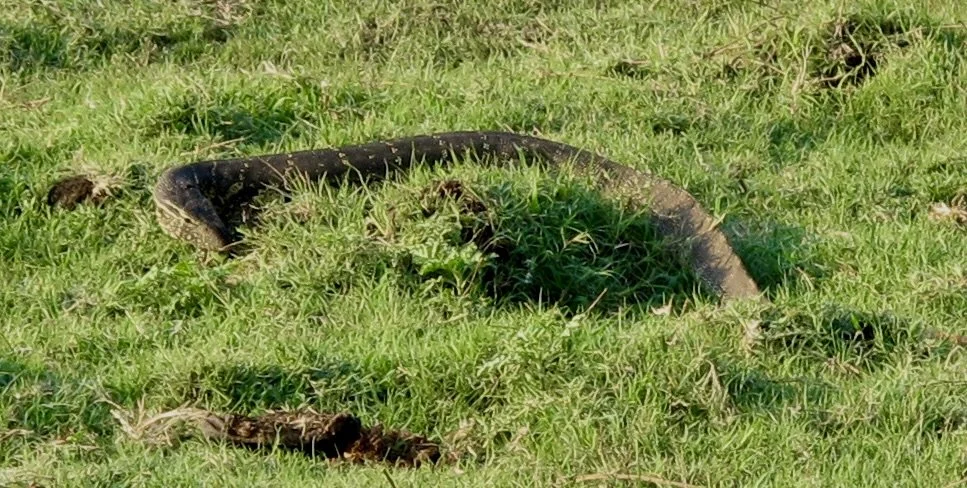
Some big thing slithering along.
Chobi River, Chobe Nat’l Park, Botswana.
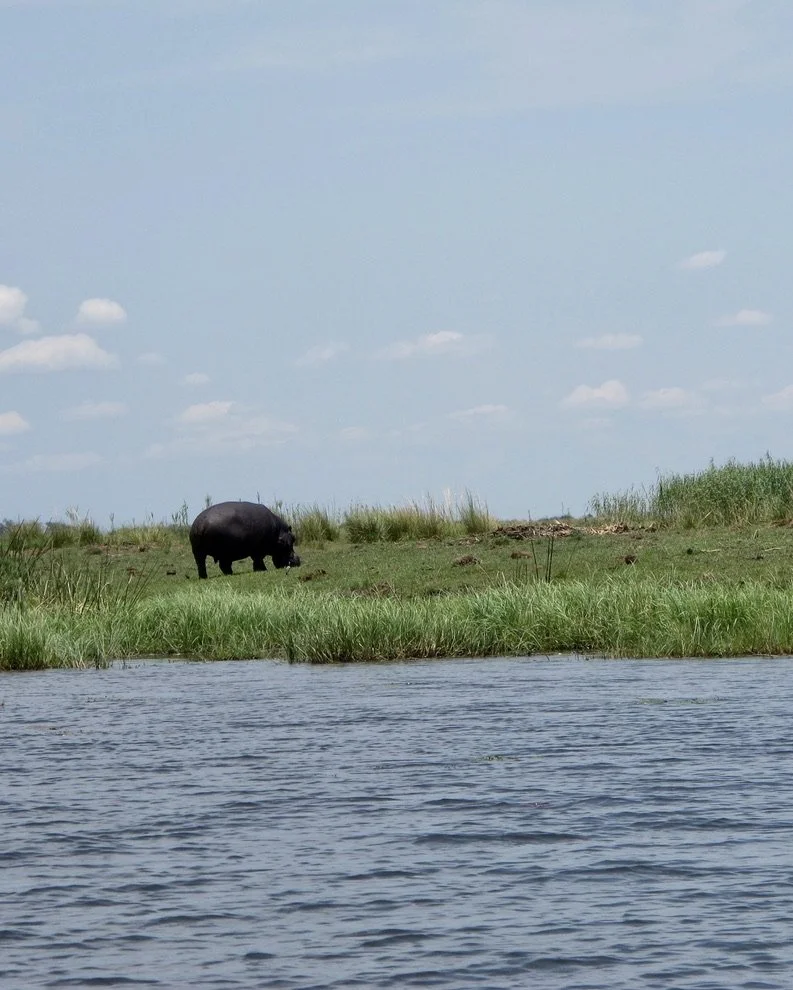
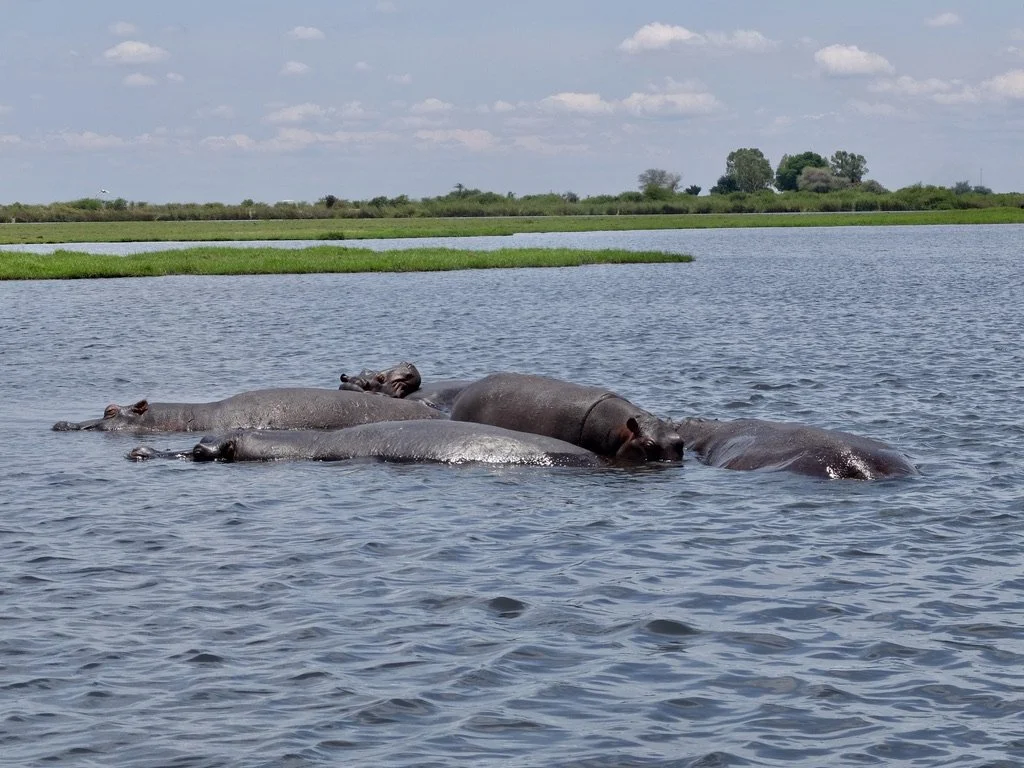
1st glimpse of hippos.
Chobi River, Chobe Nat’l Park, Botswana.
After reading Mahlangeni: Stories of a Game Ranger's Family by Kobie Kruger, we knew how dangerous hippos could be.
Chobi River, Chobe Nat’l Park, Botswana.
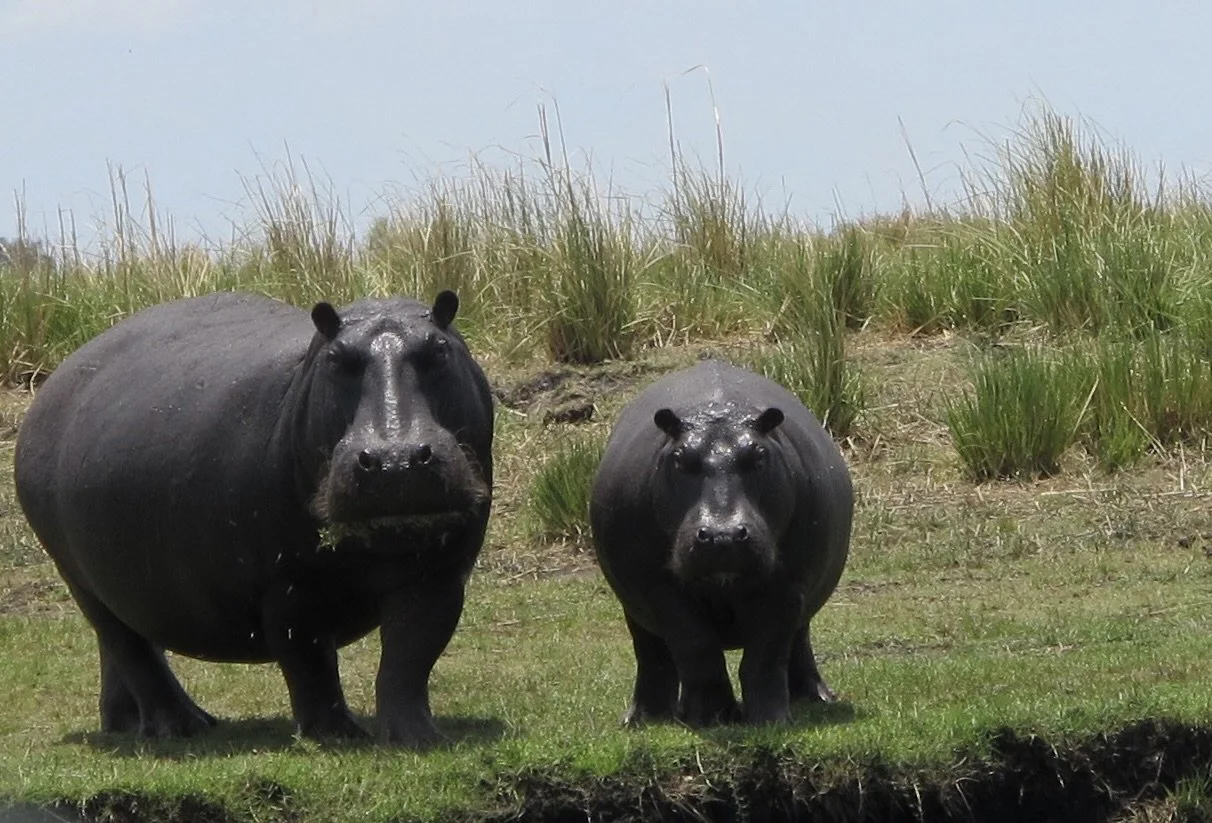
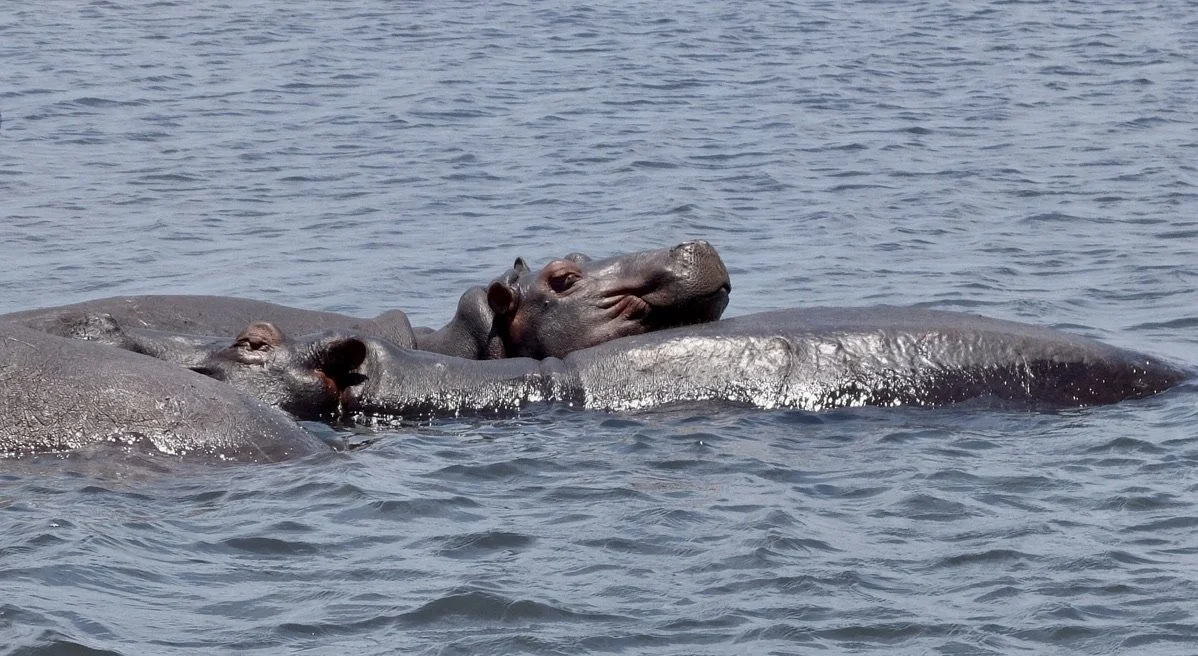
But when I saw these two I thought of Jim Marshall’s George & Martha children’s books.
Chobi River, Chobe Nat’l Park, Botswana.
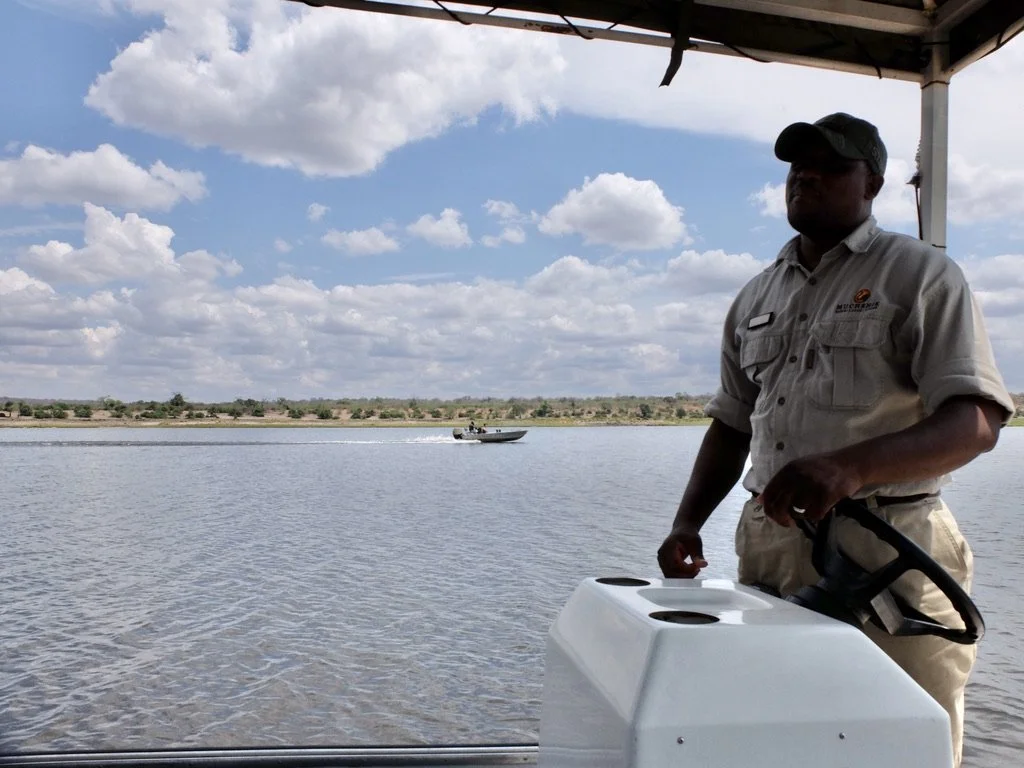
K.B. knew where the animals where, brought us close enough to but far enough away to feel safe,
Chobi River, Chobe Nat’l Park, Botswana.
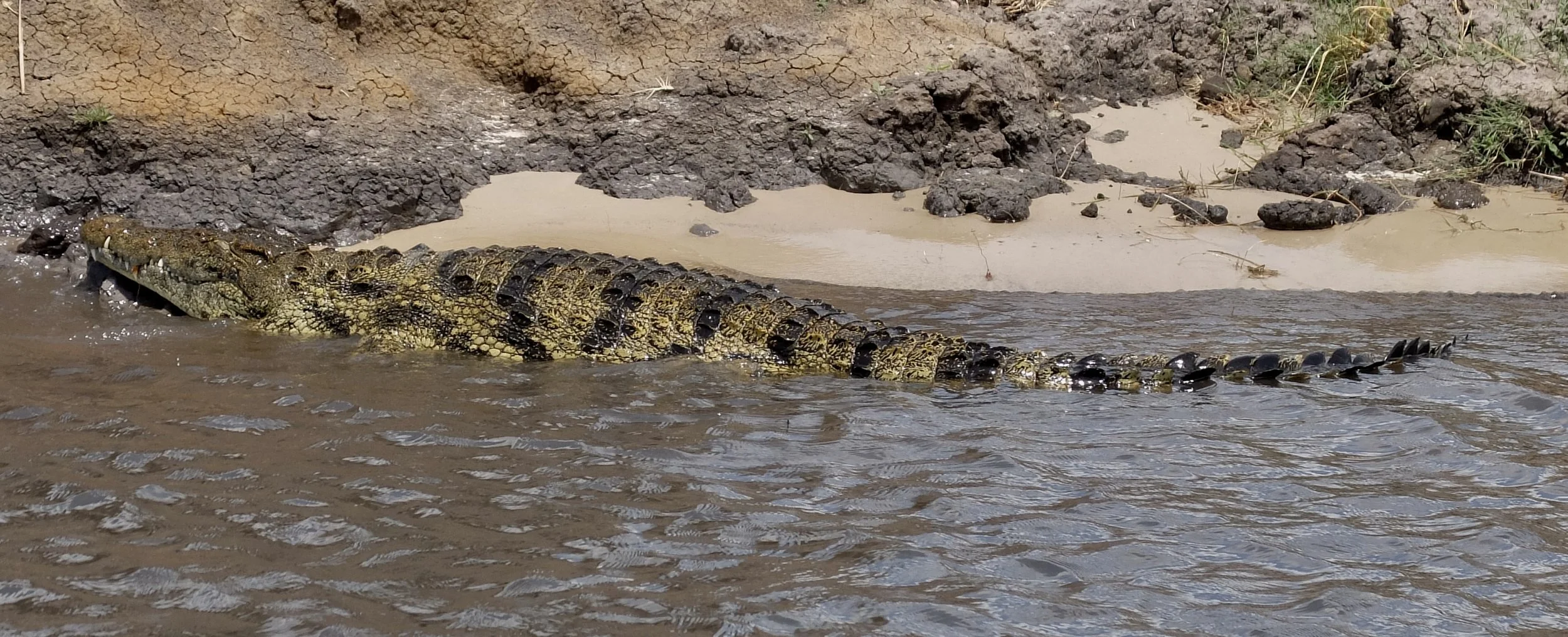
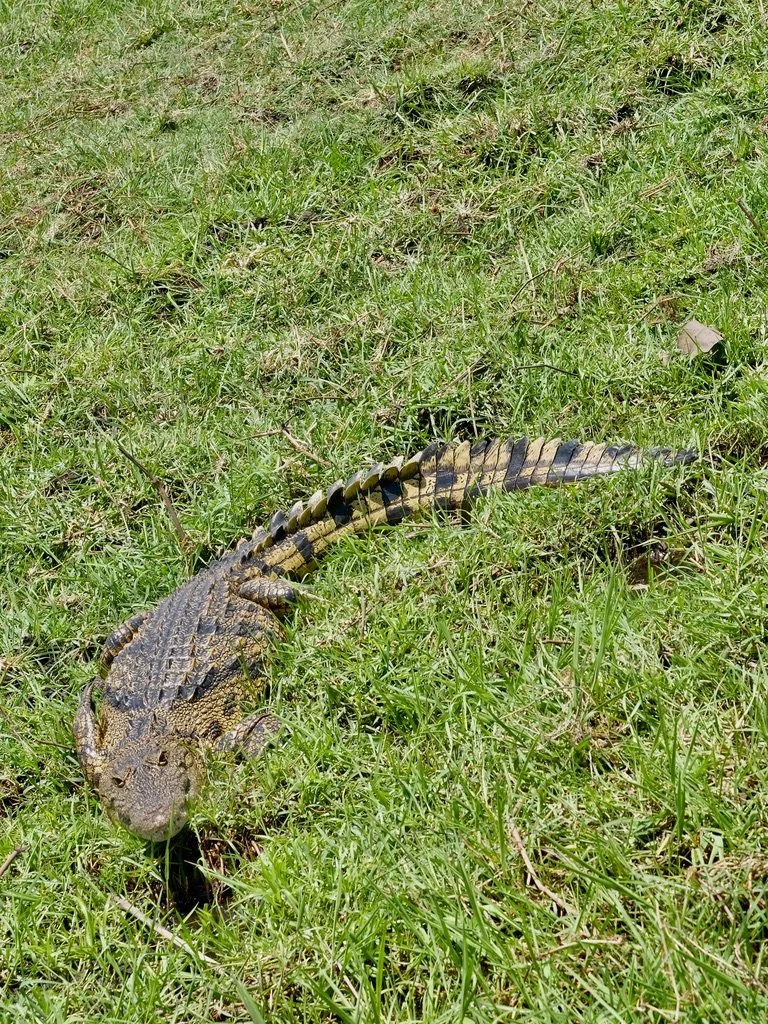
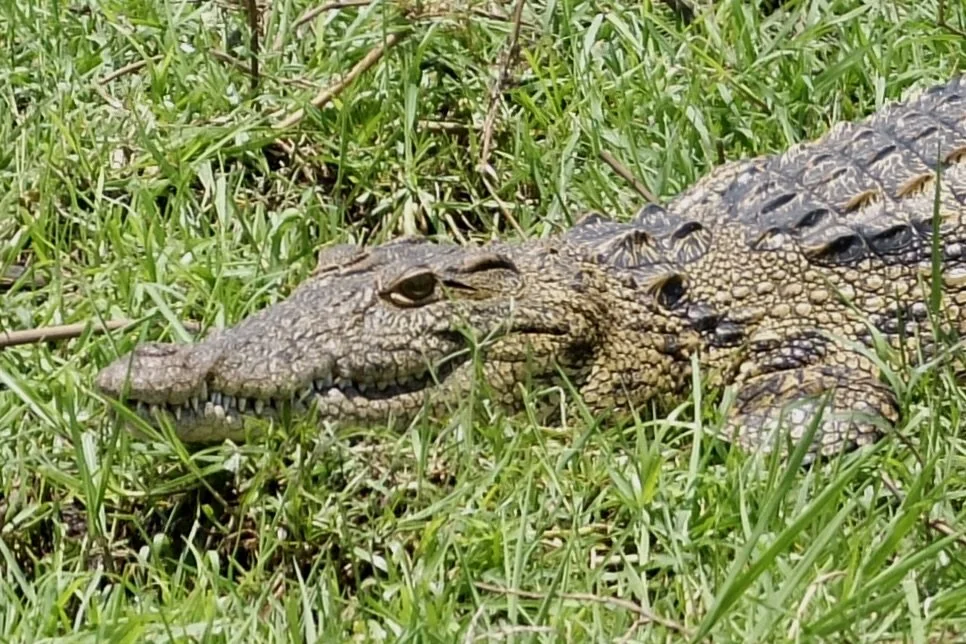
Crocodile.
Those teeth are something else.
Chobi River, Chobe Nat’l Park, Botswana.
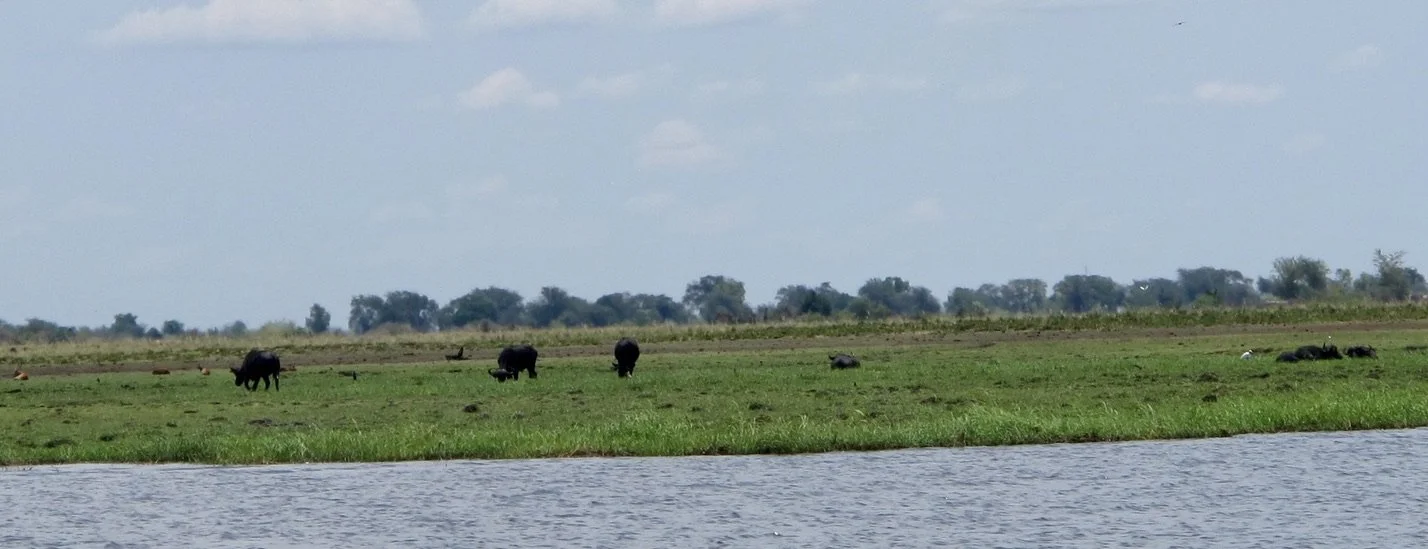
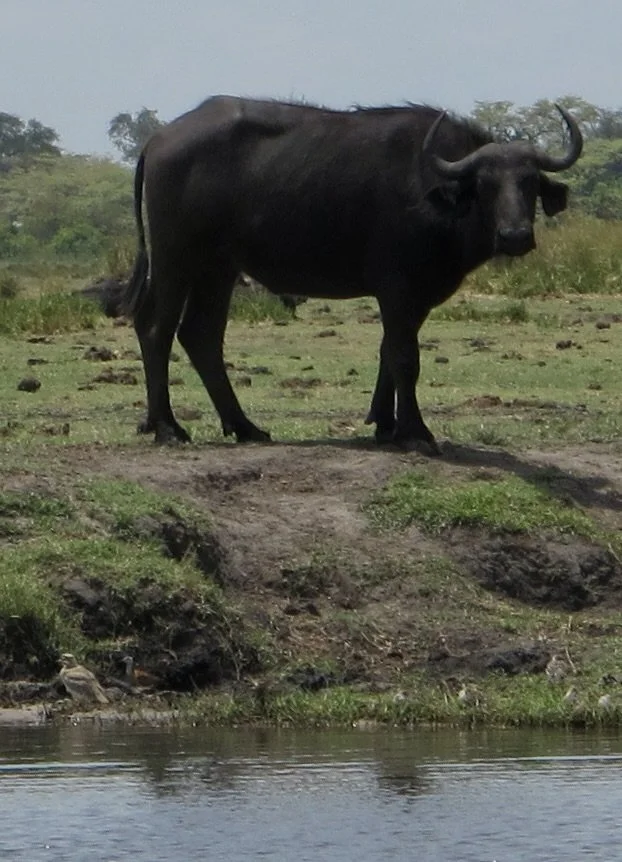
African buffalo.
Chobi River, Chobe Nat’l Park, Botswana.
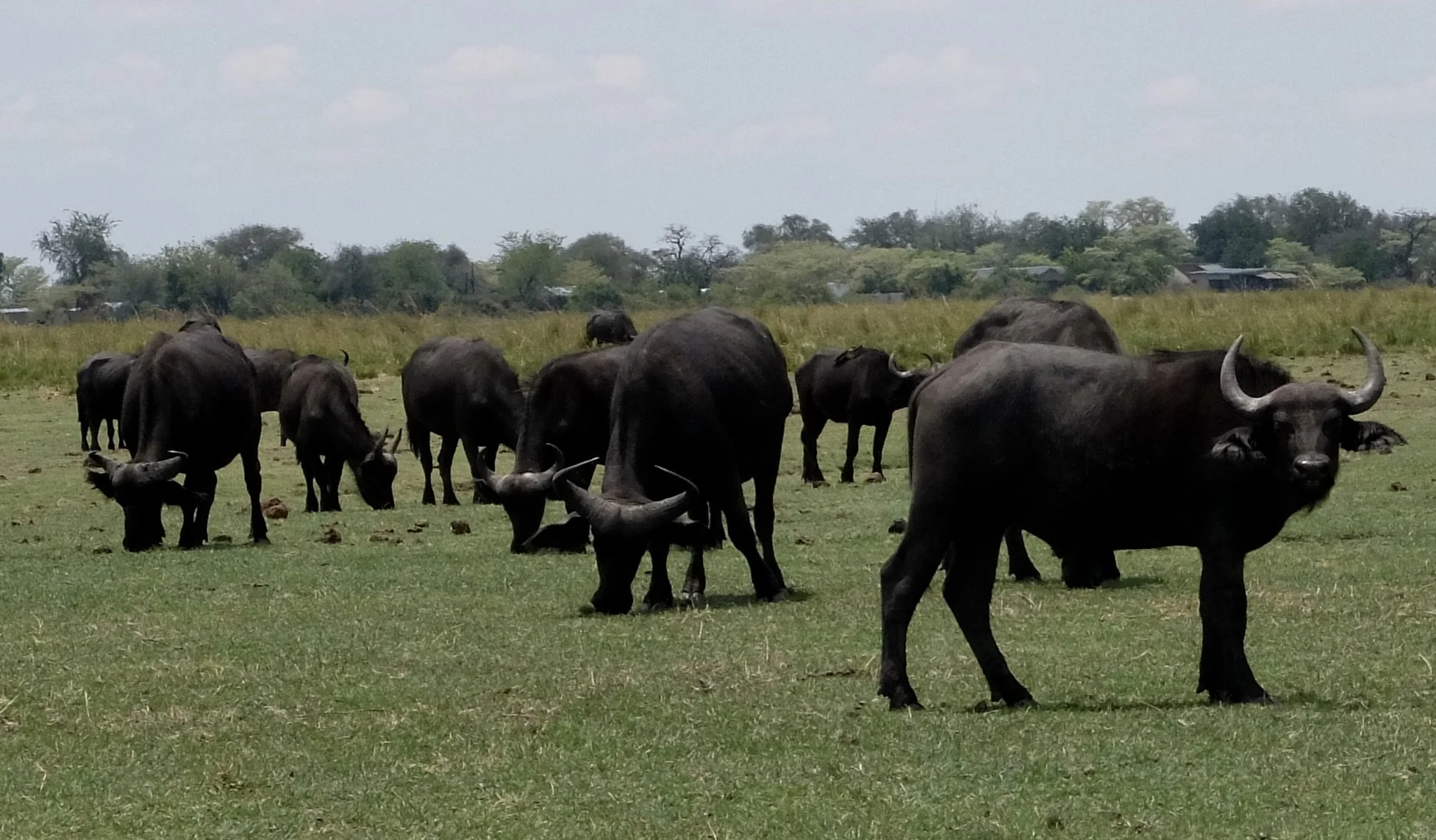
African buffalo.
Chobi River, Chobe Nat’l Park, Botswana.
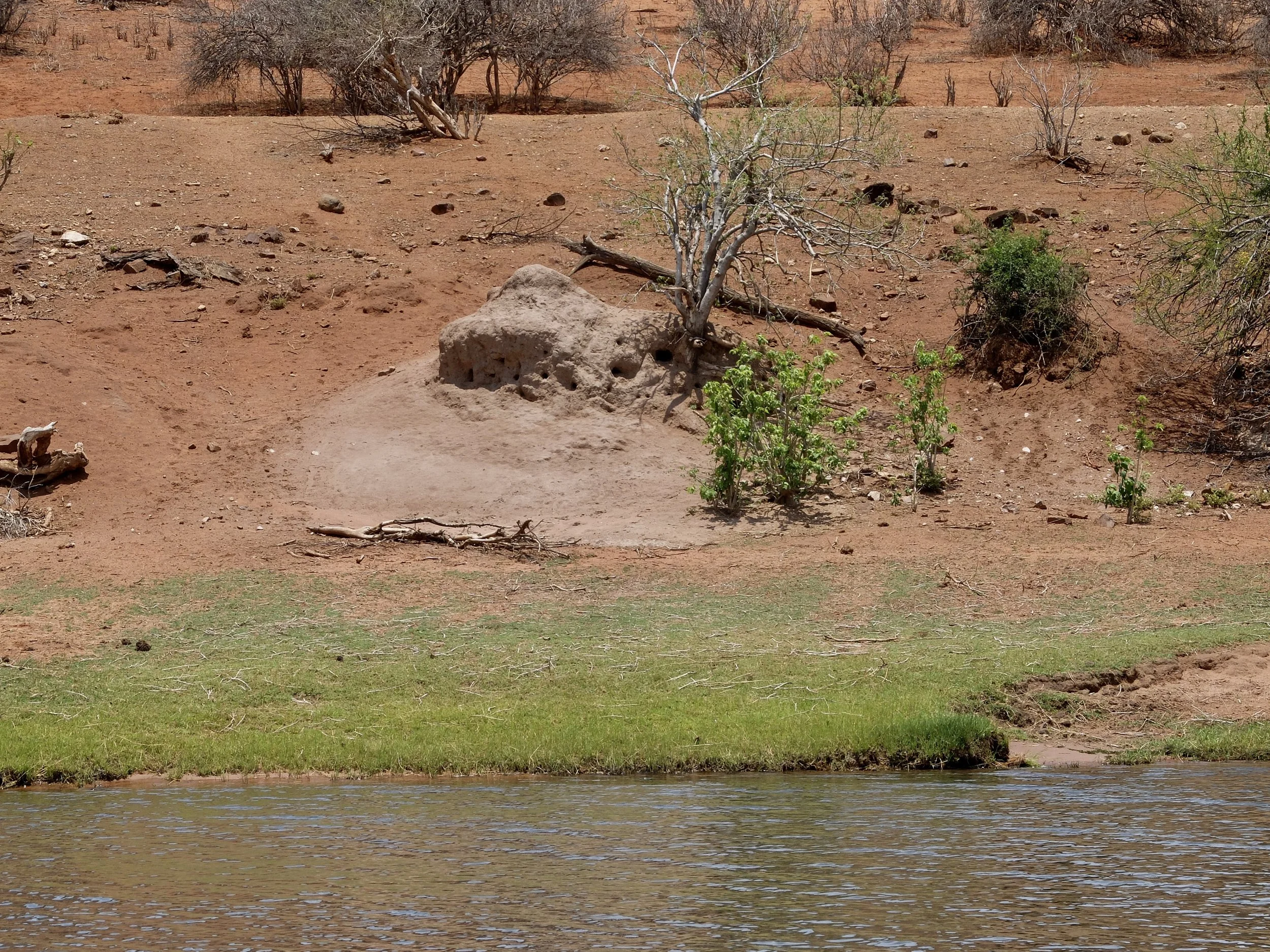
When the queen dies, the termite mound is abandoned. Plants & other animals move in. We saw mounds more than triple this size..
Chobi River, Chobe Nat’l Park, Botswana.
In Sabi Sand Preserve, ZA a termite mound that started but for some reason aborted.
Chobi River, Chobe Nat’l Park, Botswana.
Chobi River, Chobe Nat’l Park, Botswana.
Chobi River, Chobe Nat’l Park, Botswana.
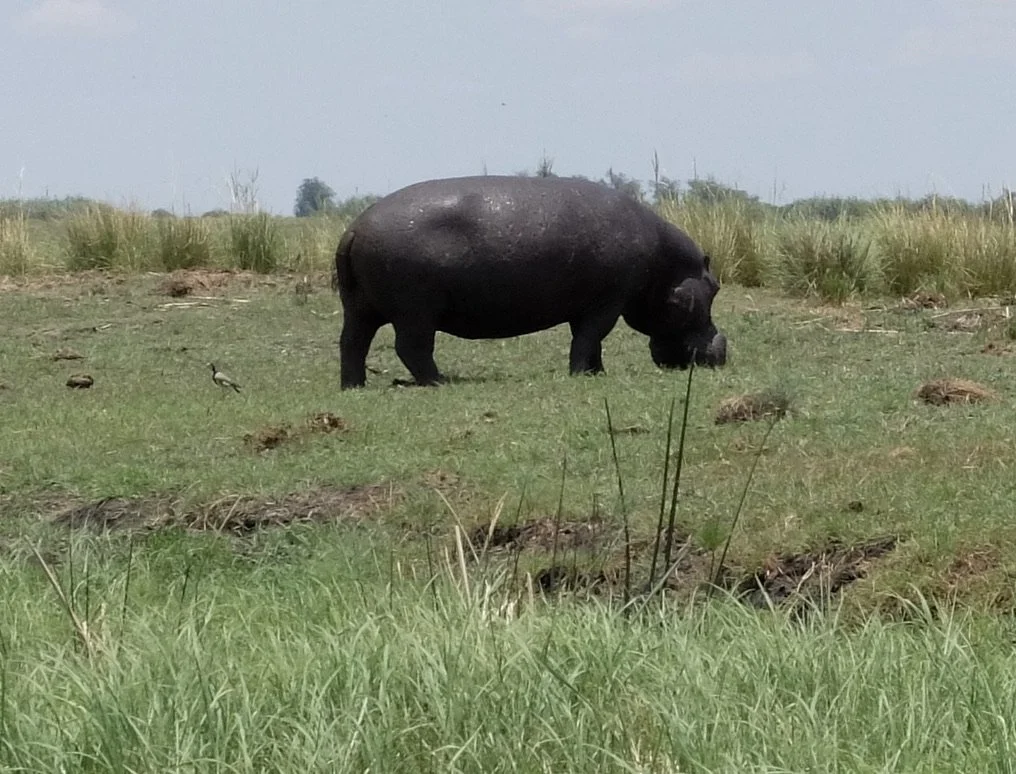
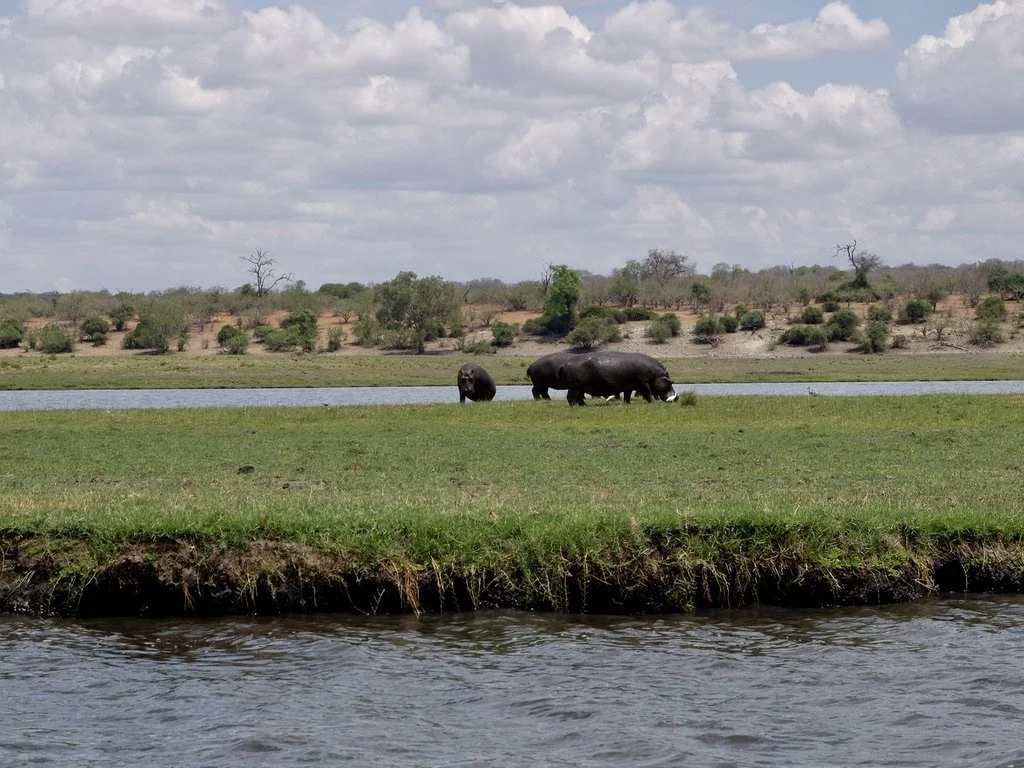
Those big bulky hippos didn’t to have any trouble getting out of the water onto land.
Chobi River, Chobe Nat’l Park, Botswana.
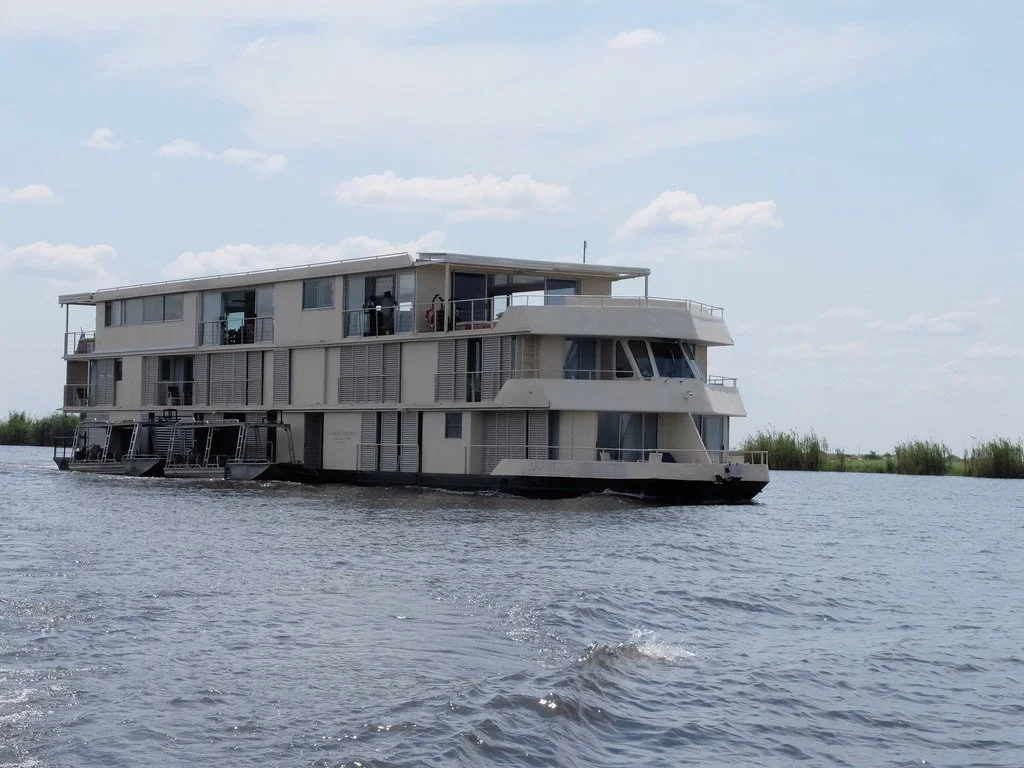
One can take a luxurious river cruise & step right outside of your cabin into the crocodile infested river.
Chobi River, Chobe Nat’l Park, Botswana with Namibia across the water.
Here’s lookin’ atcha!
Chobi River, Chobe Nat’l Park, Botswana.
Chobi River, Chobe Nat’l Park, Botswana.