It had been a long trip to get here but we left Autumn in Marin California to enter Springtime on the Chobi River in Botswana. Flowers & trees were blooming & there were newborn & young animals to be seen.
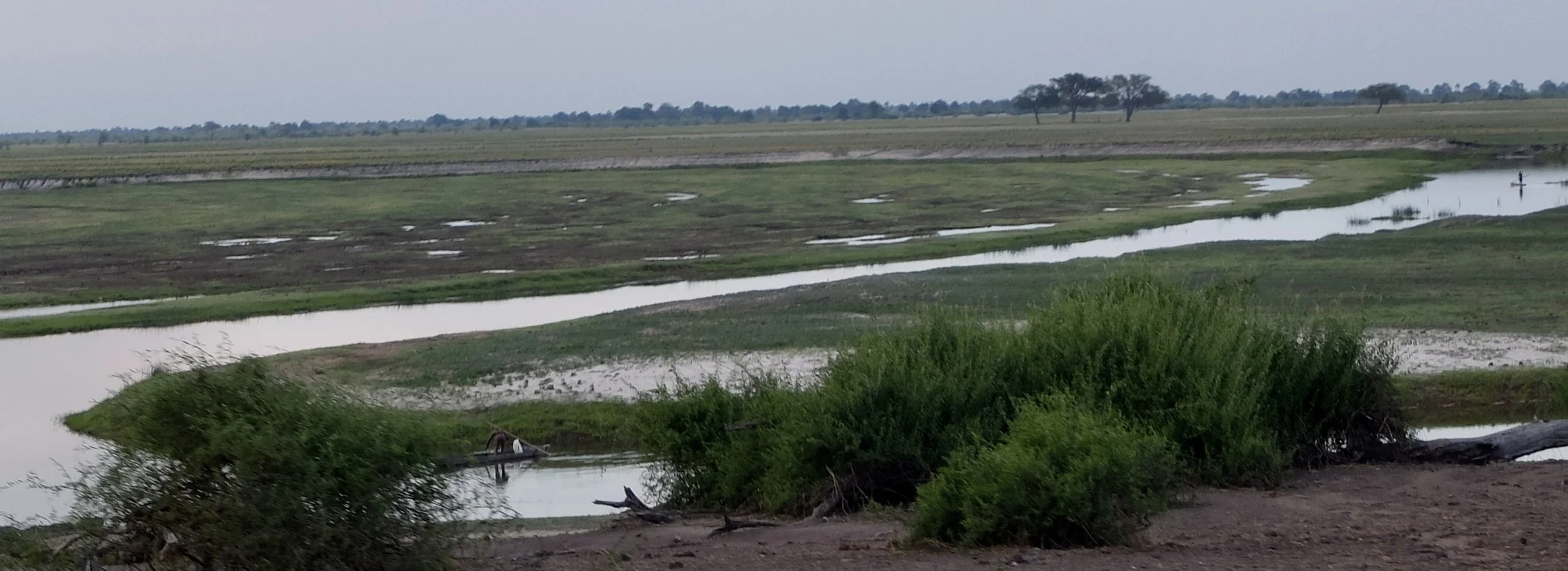
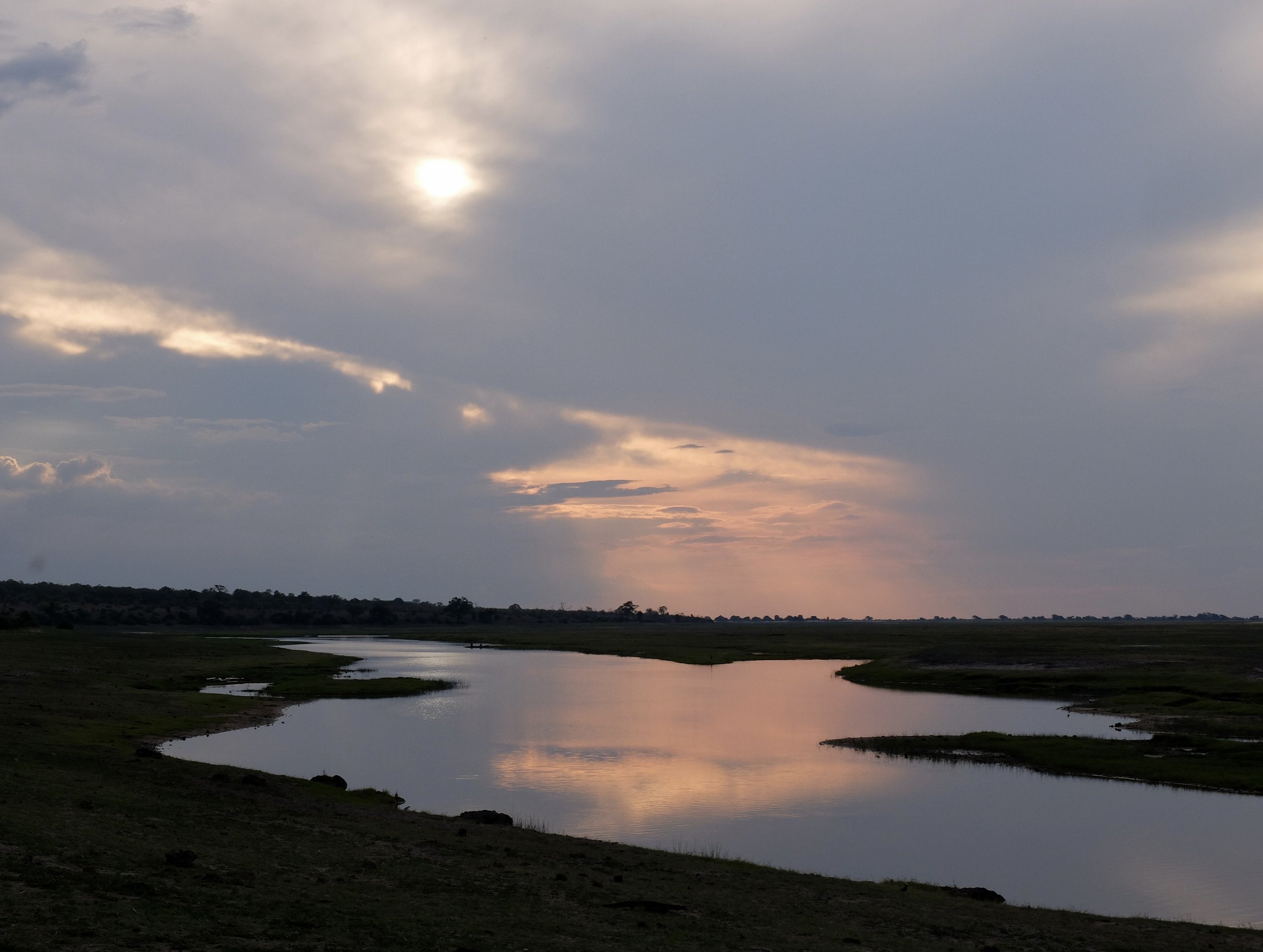
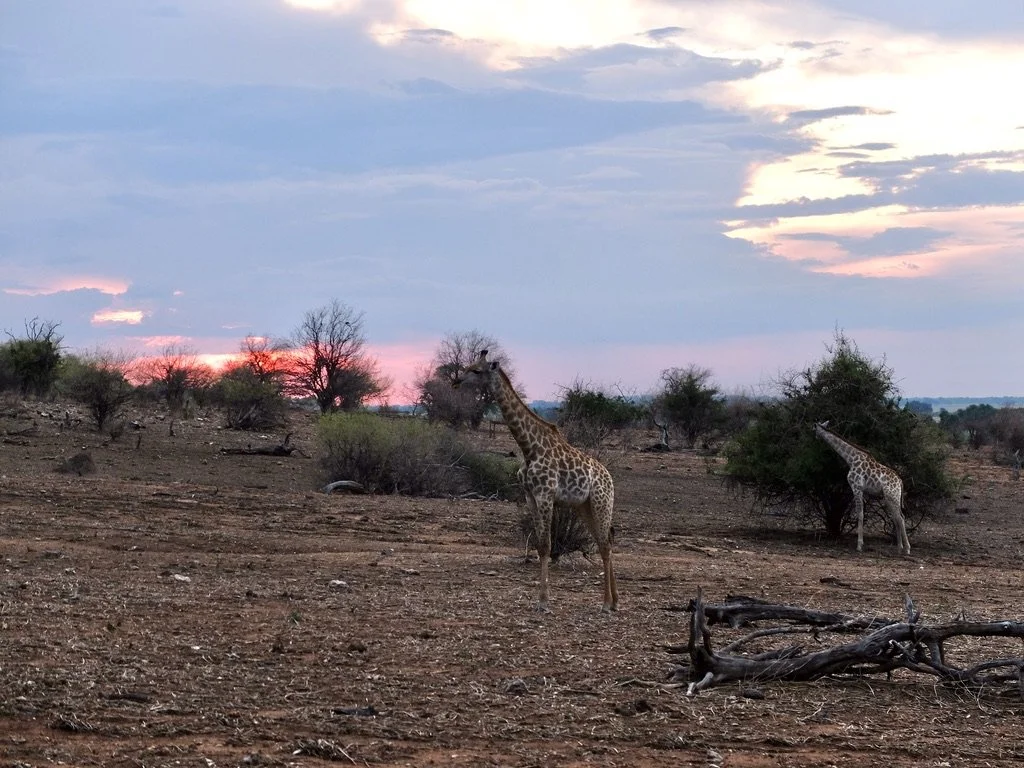

It had been a long trip to get here but we left Autumn in Marin California to enter Springtime on the Chobi River in Botswana. Flowers & trees were blooming & there were newborn & young animals to be seen.
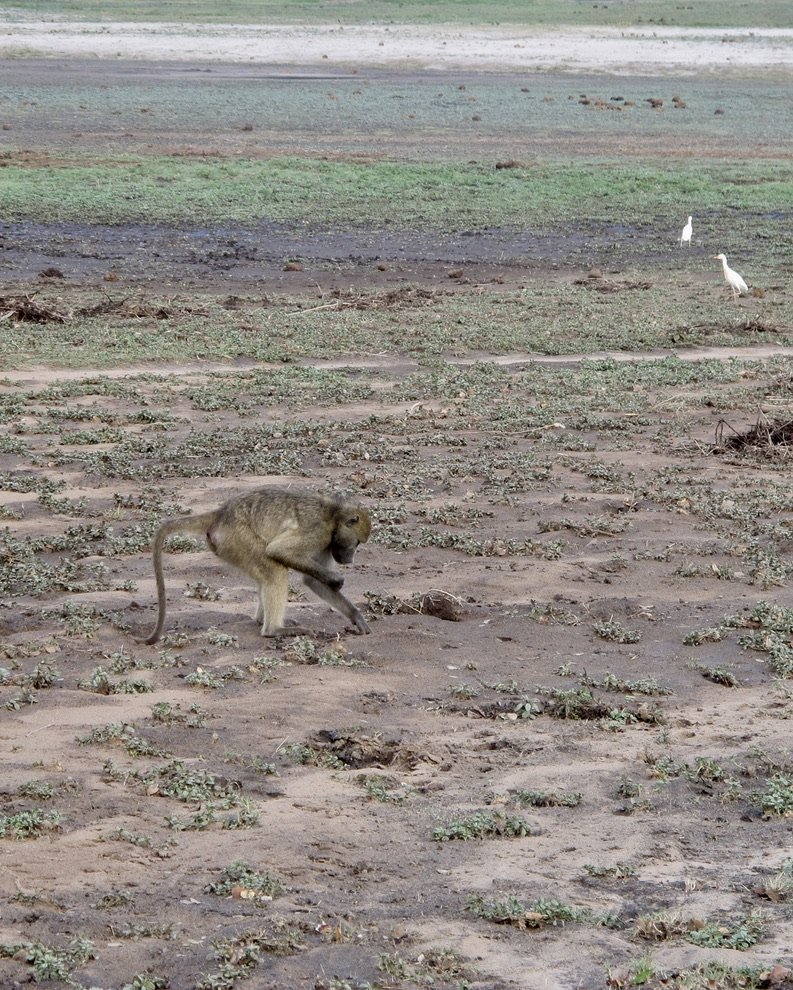
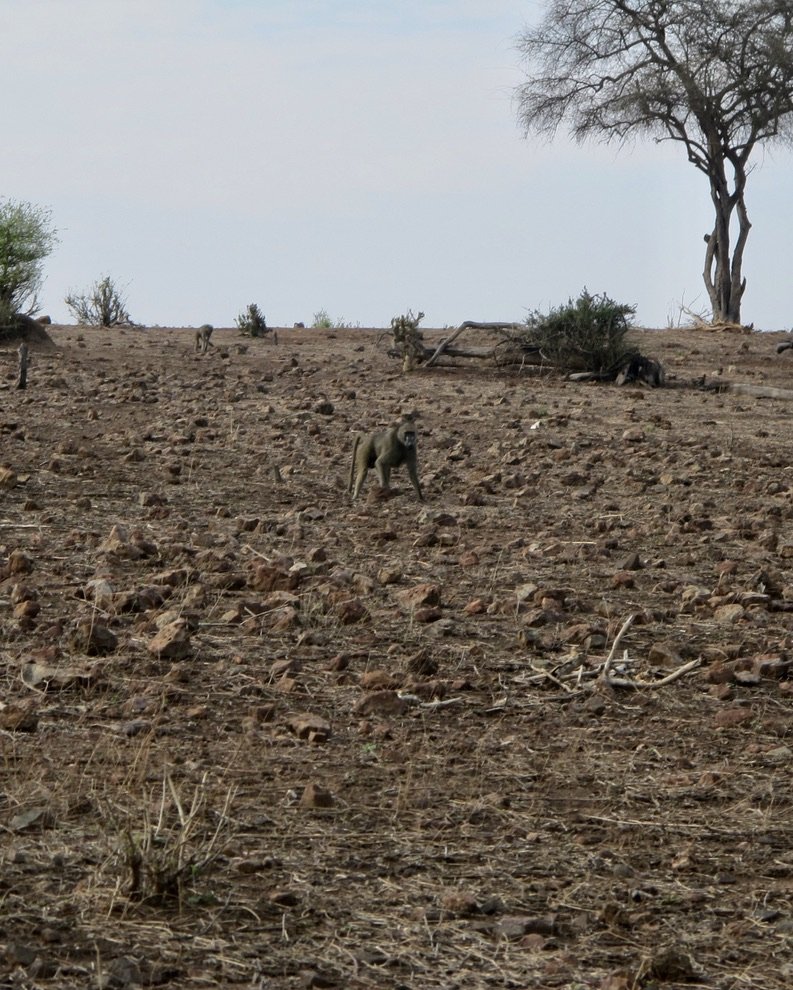
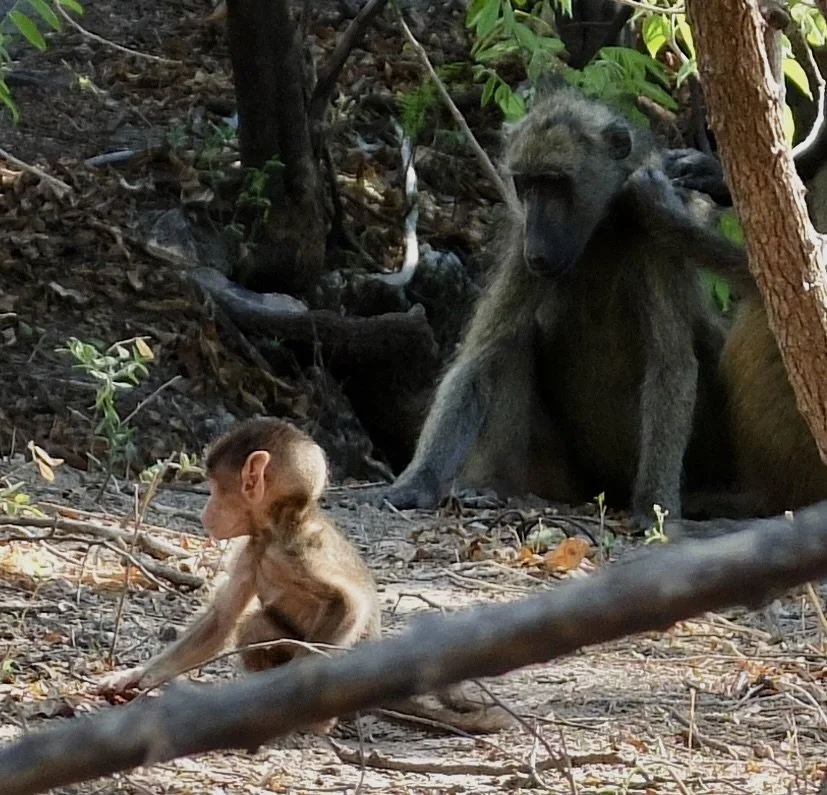
At 4:50 AM Nomi asked “Is that a basketball game on our thatched roof?” I peeked out the curtain onto the deck & saw a troop of baboons clamoring down from our roof.
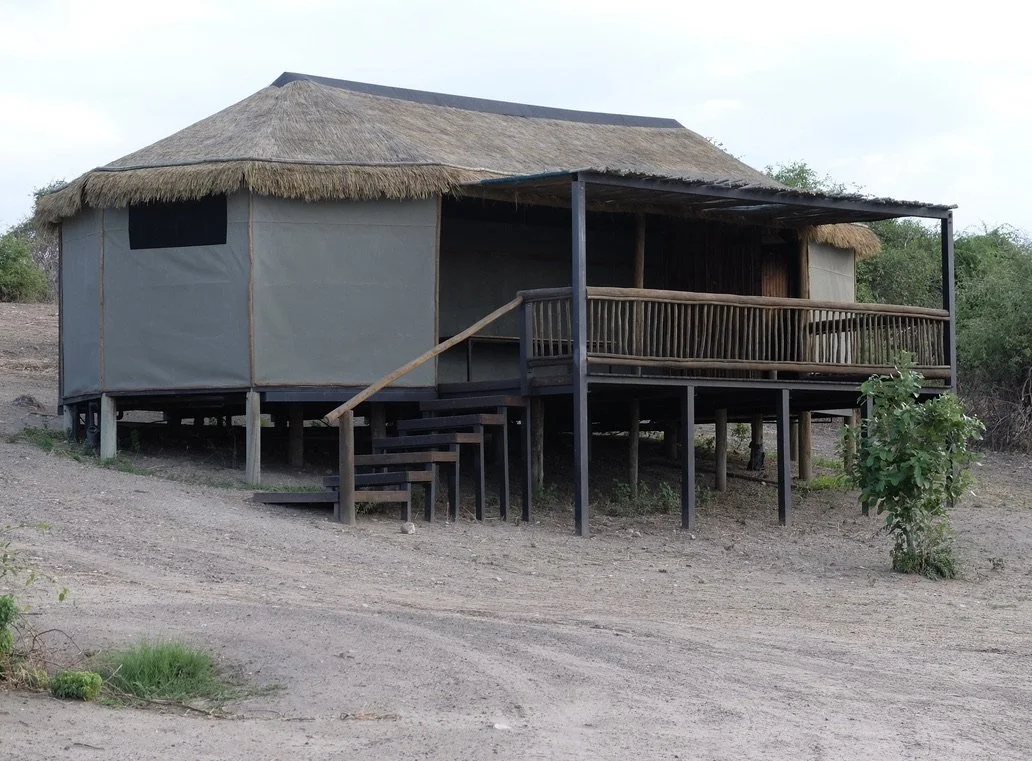
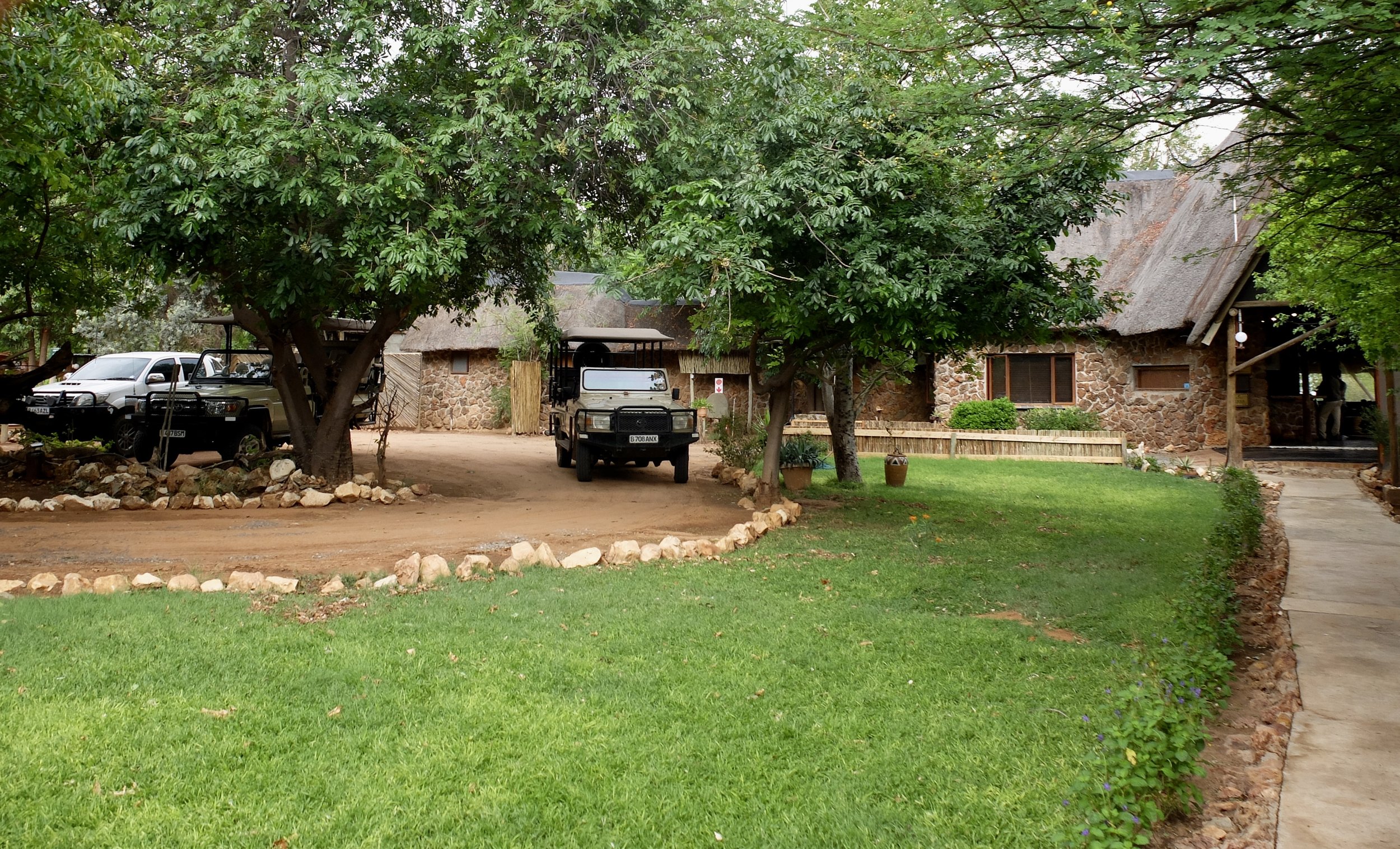
Muchenje Safari Lodge, Chobe, Botswana.
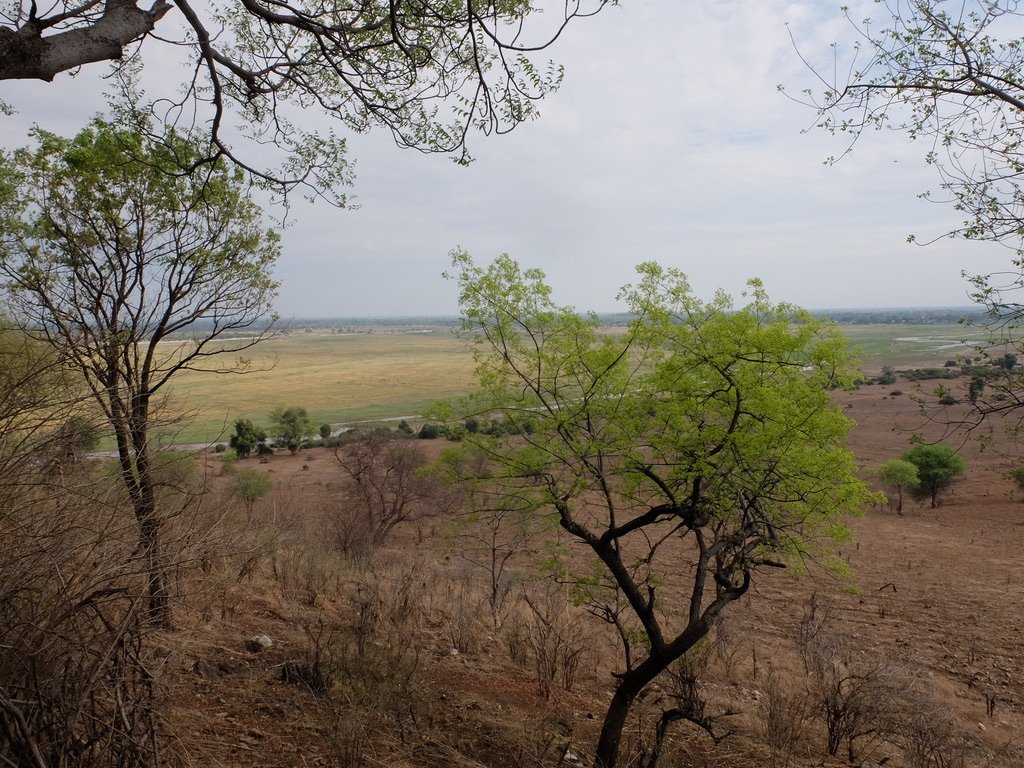
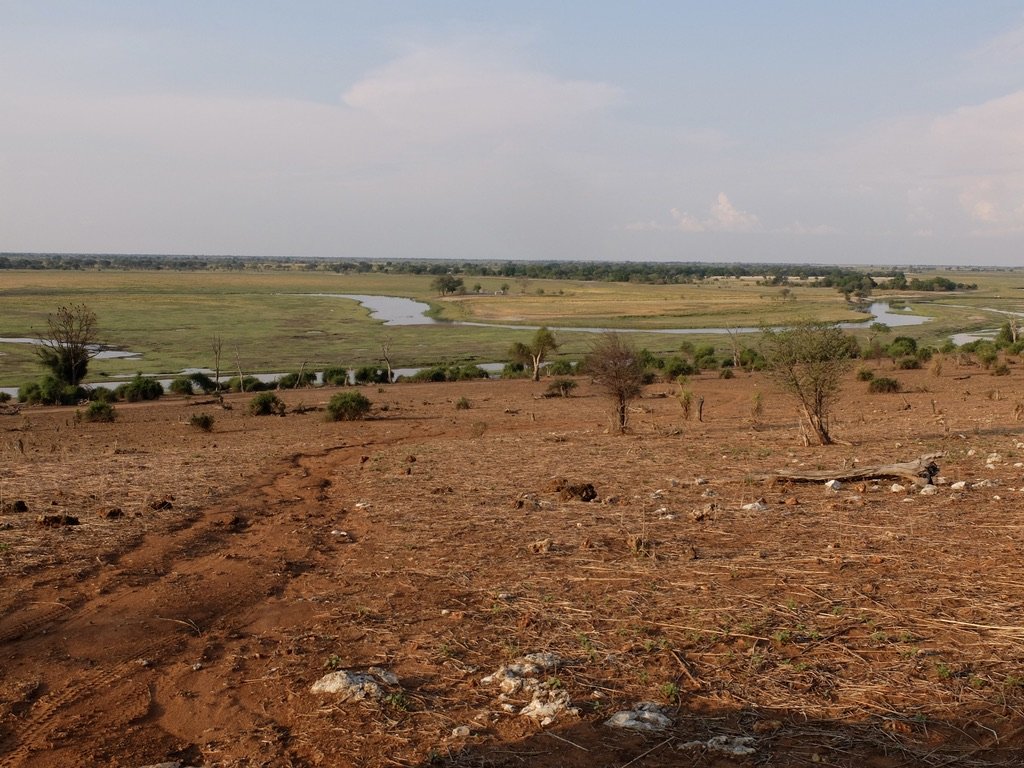
This was an approach down to the Chobi River with Namibia on the other side.
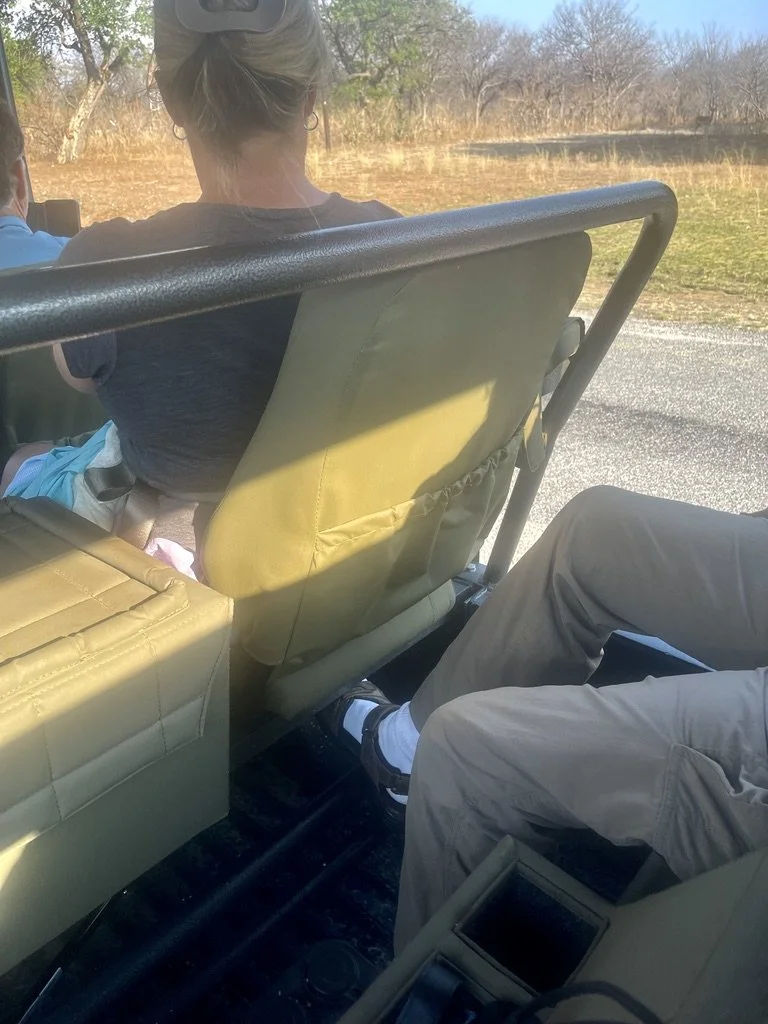
We had neither seat nor shoulder belts. At one point, I was not paying attention to the gully we were entering & must have been lifted a foot off my seat before coming down & feeling my vertebrae realign.
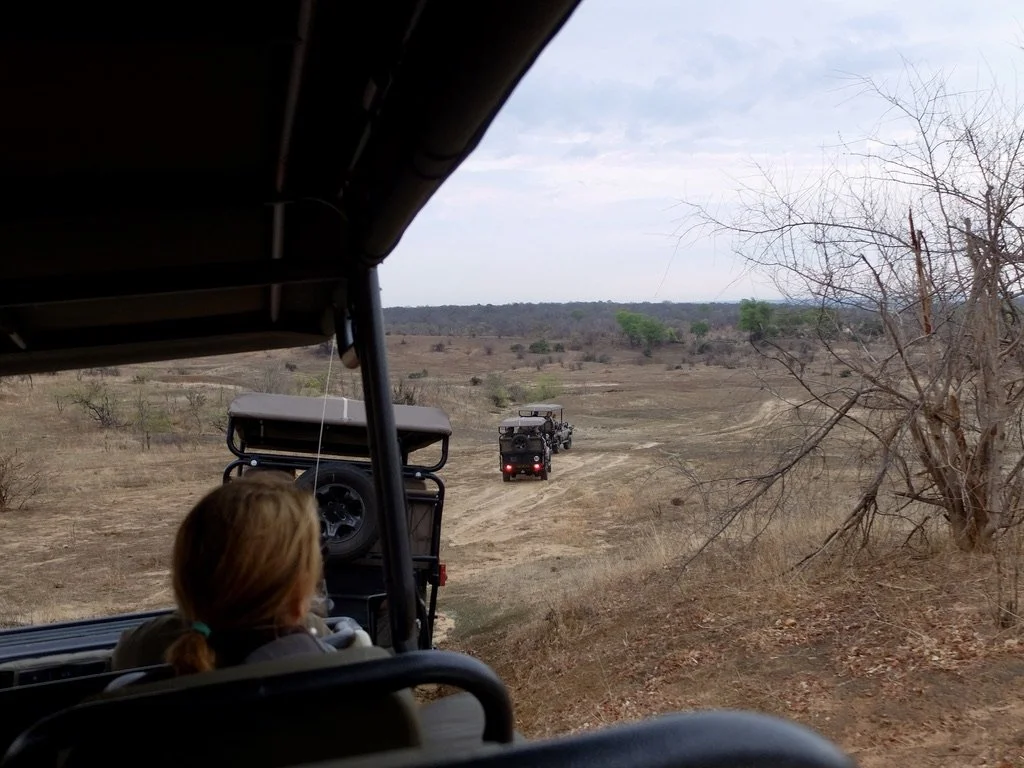
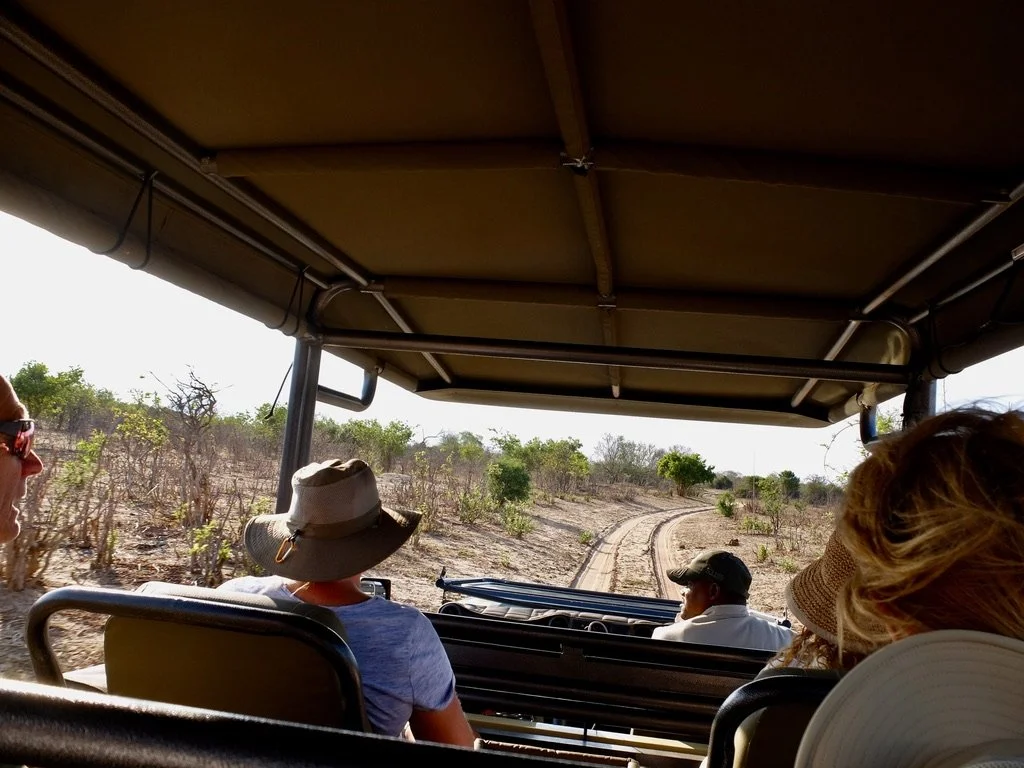
After a rusk* dipped in coffee or Rooibos (roy-bus) tea it was 5:30 AM & we settled into our Land Cruiser for some game viewing.
I surprised everyone by climbing right up into a top seat. I had plenty of leg room & a place to raise & rest my healing leg as needed.
*”Rusks is the anglicized term for beskuit and is a traditional Afrikaner breakfast meal or snack…since the 1690s as a way of preserving bread, especially when traveling long distances without refrigeration.” I had read about them in Michener’s The Covenant. They are like my mom’s mandel brot but even denser.
Wild (painted) dog den. It was surprising to see one here. We’ll see more another day but not until Sabi Sands Preserve.
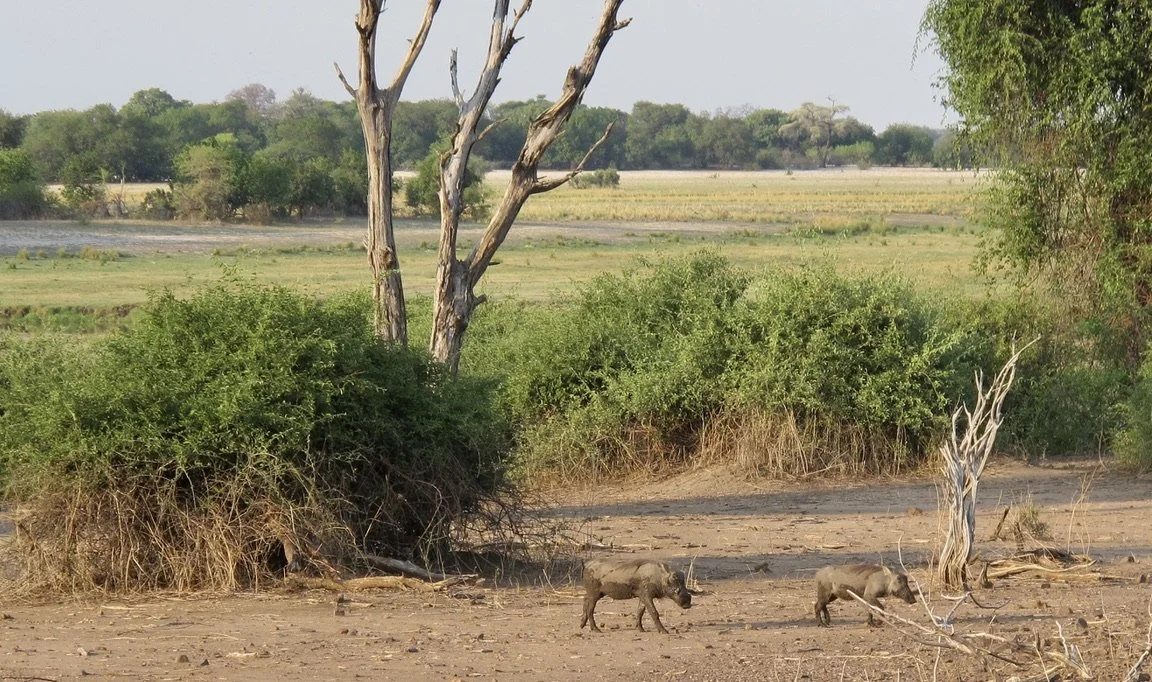
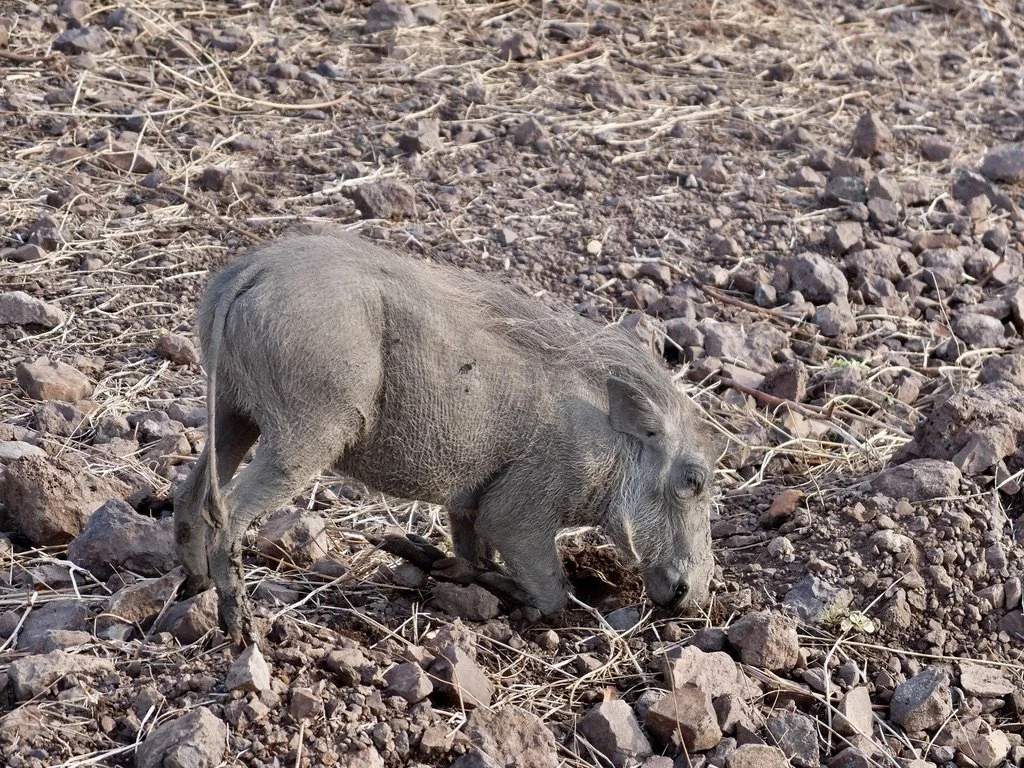
Warthogs or as they were referred to “warties.”
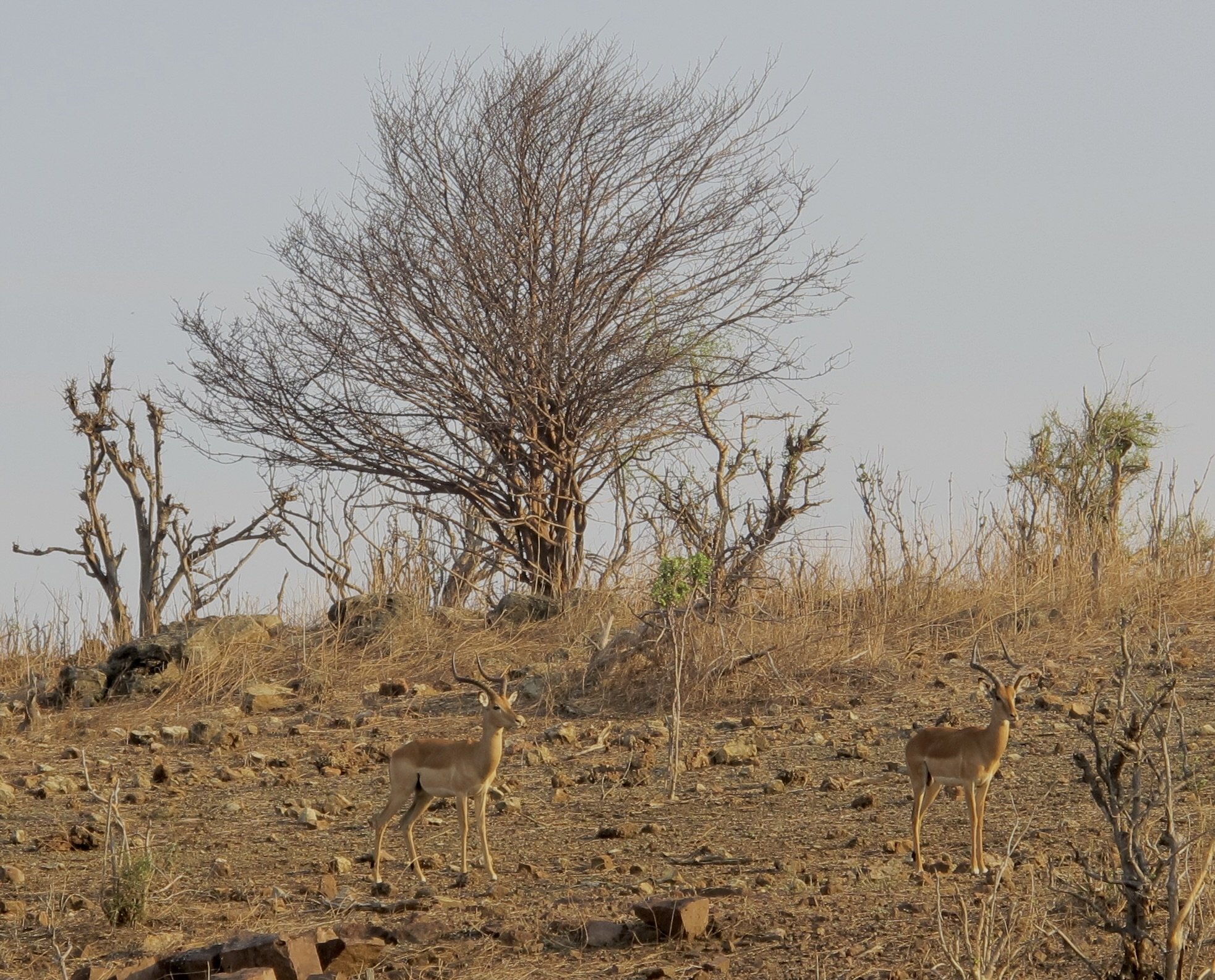
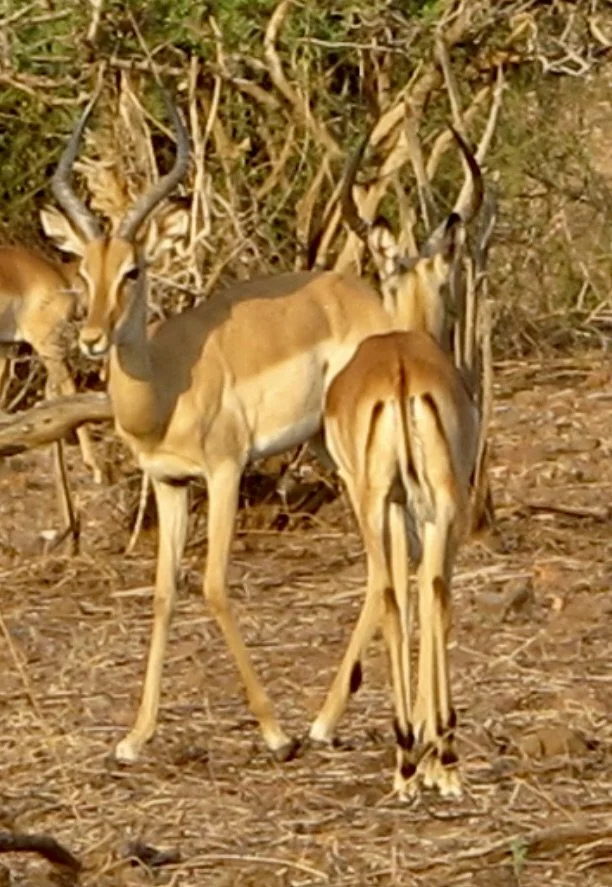
Common male impalas with their horns matching the shape of the surrounding scrub brush,
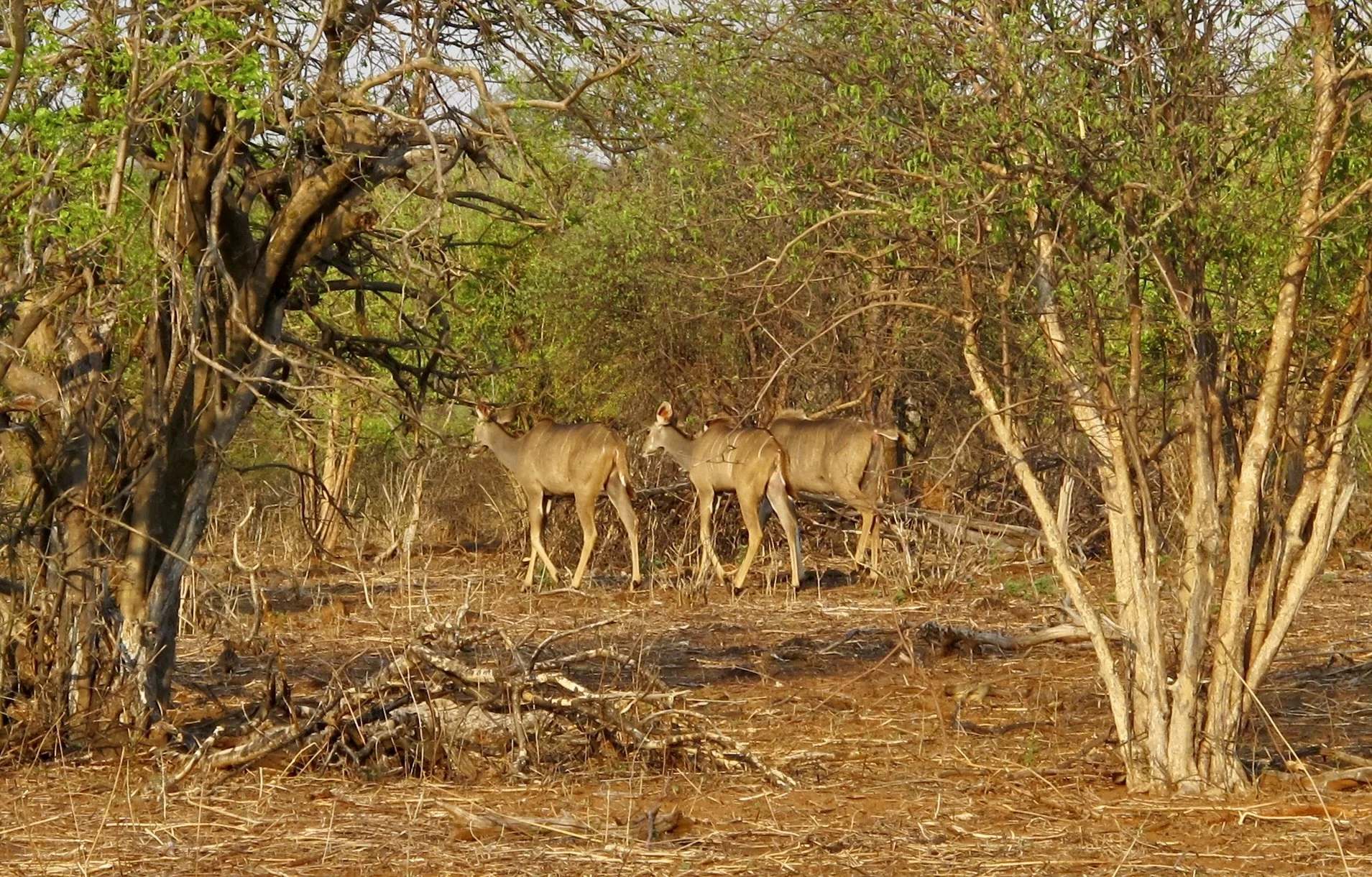
Young greater kudus.
The “….striped flanks aide to camouflage by breaking up their body outline in dense vegetation.”
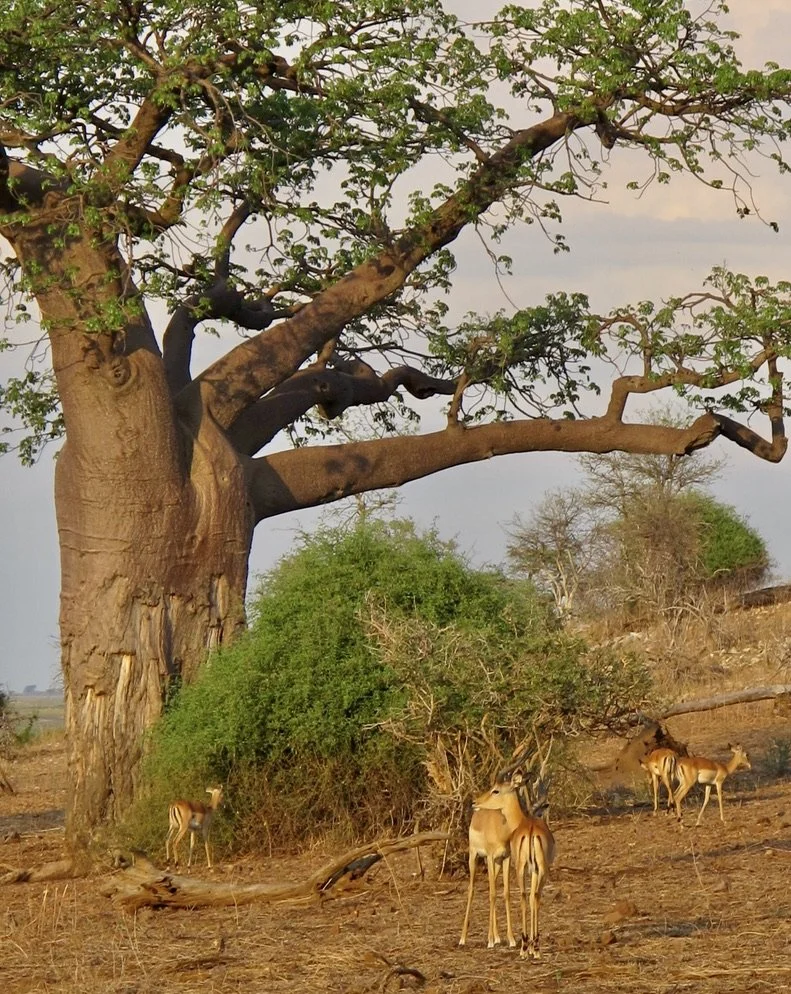
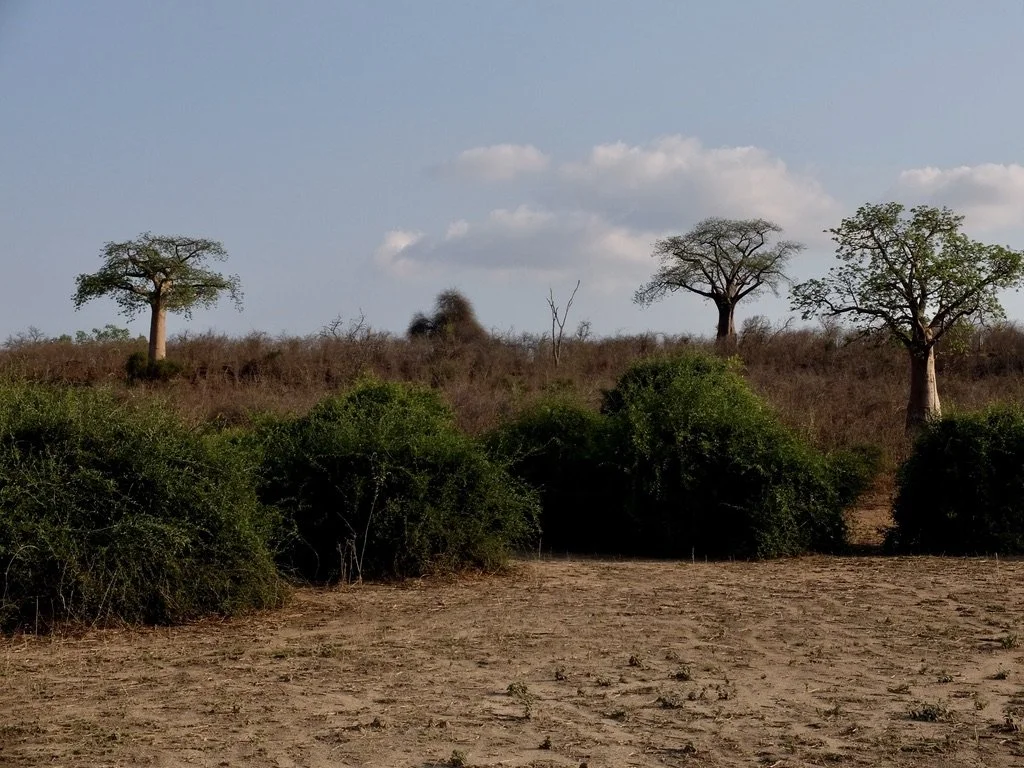
A small herd of common impalas under the baobab tree or “Upside down tree” which can live for over 1,000 years. Elephants love their smooth bark & pulp fiber & in their love, often destroy baobabs.
We soon found the common impalas to be “a dime a dozen.” They are the most abundant & adaptable of the African antelope.
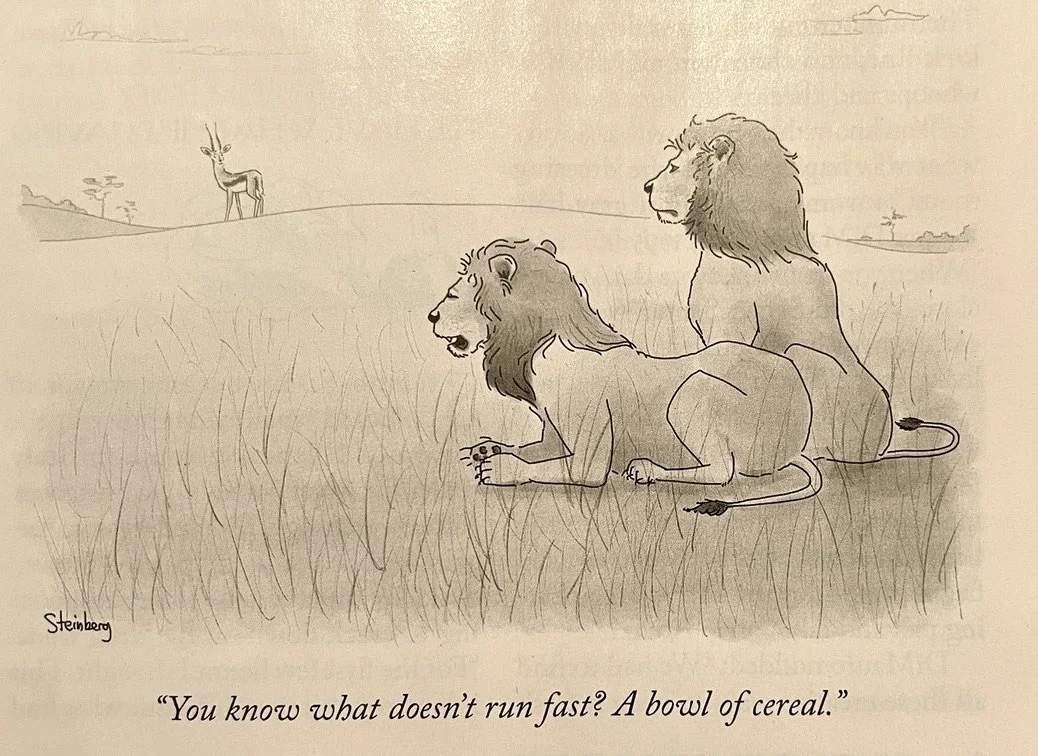
Our guides told us that they were fast food for lions as noted by the “M” marking on their rear, for McDonalds,
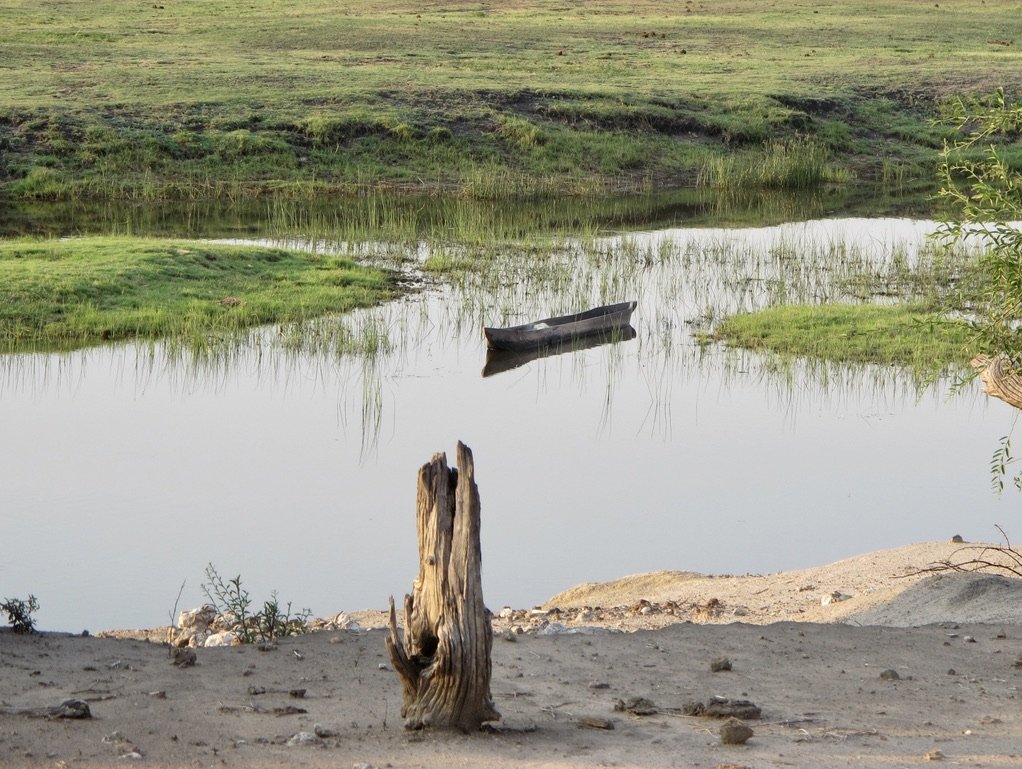
Abandoned? dugout canoe (mokoro).
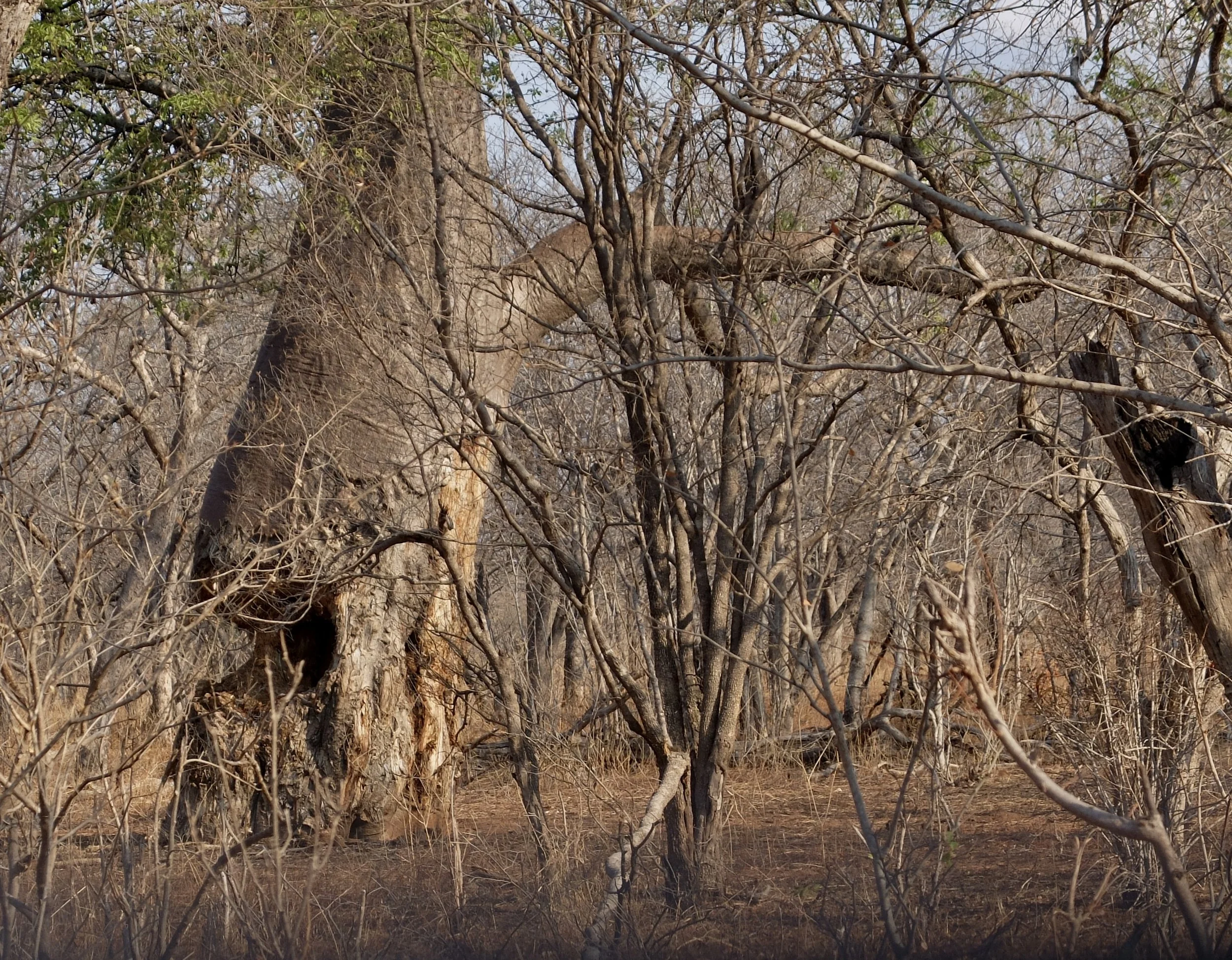
Elephants just love the bark of the baobab tree. The holes they create are then used as burrows for other animals or for storage spaces by locals. Eventually the baobab collapses.
Baobabs.
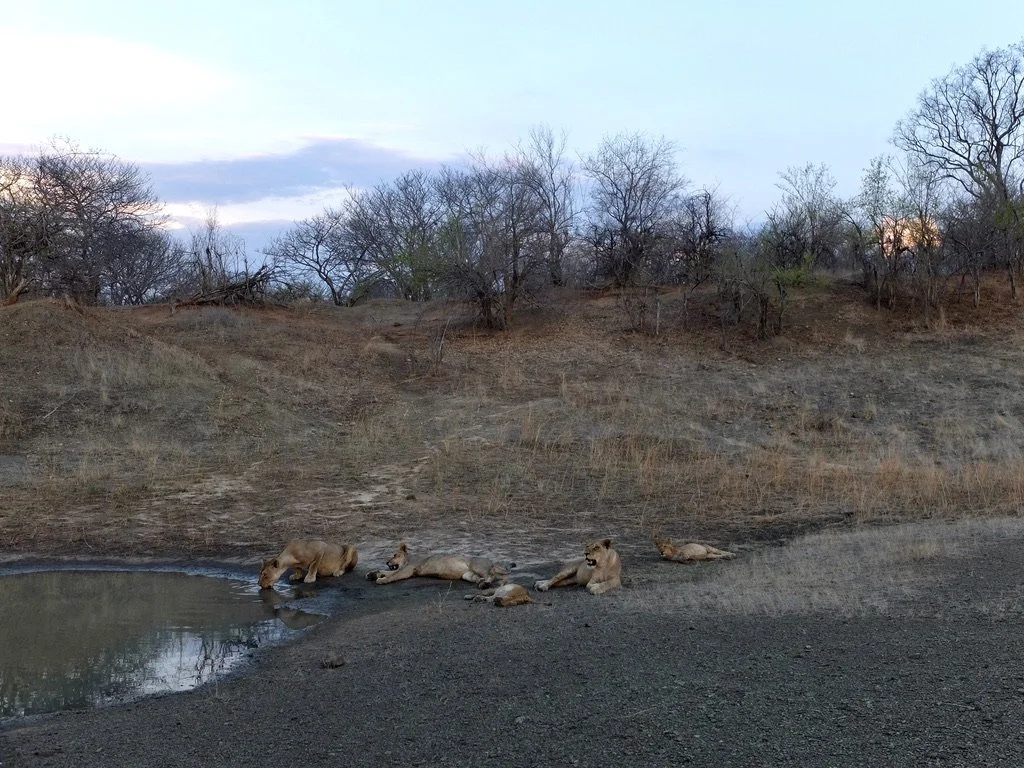
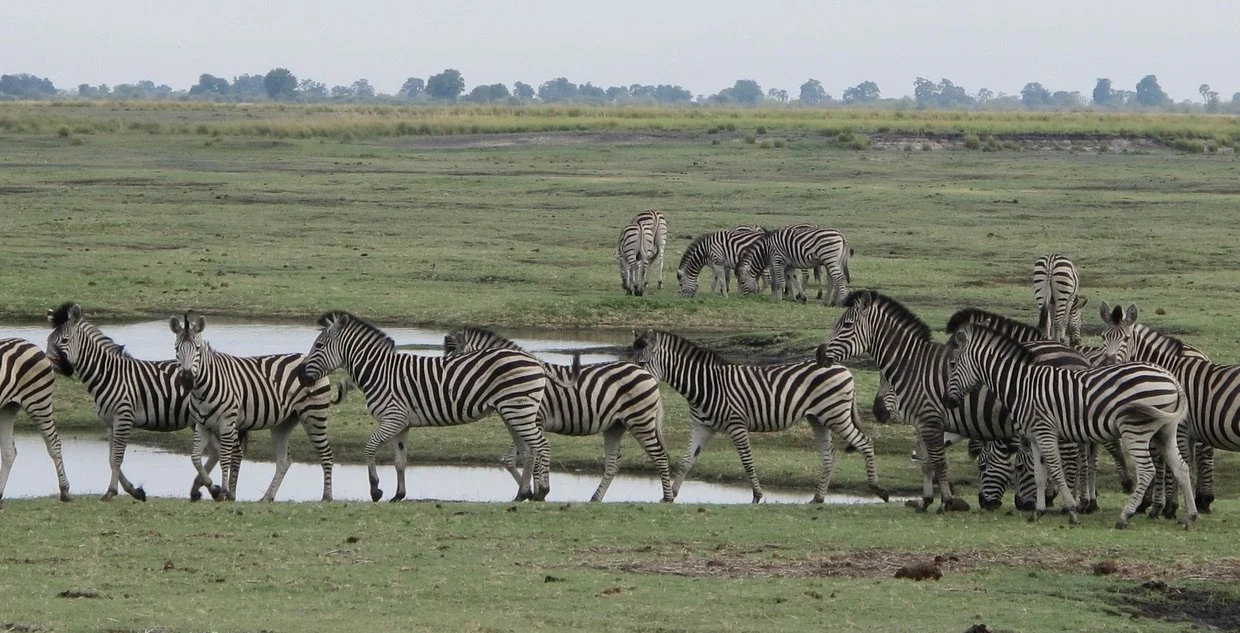
By the watering hole.
By the watering hole.
The watering hole.
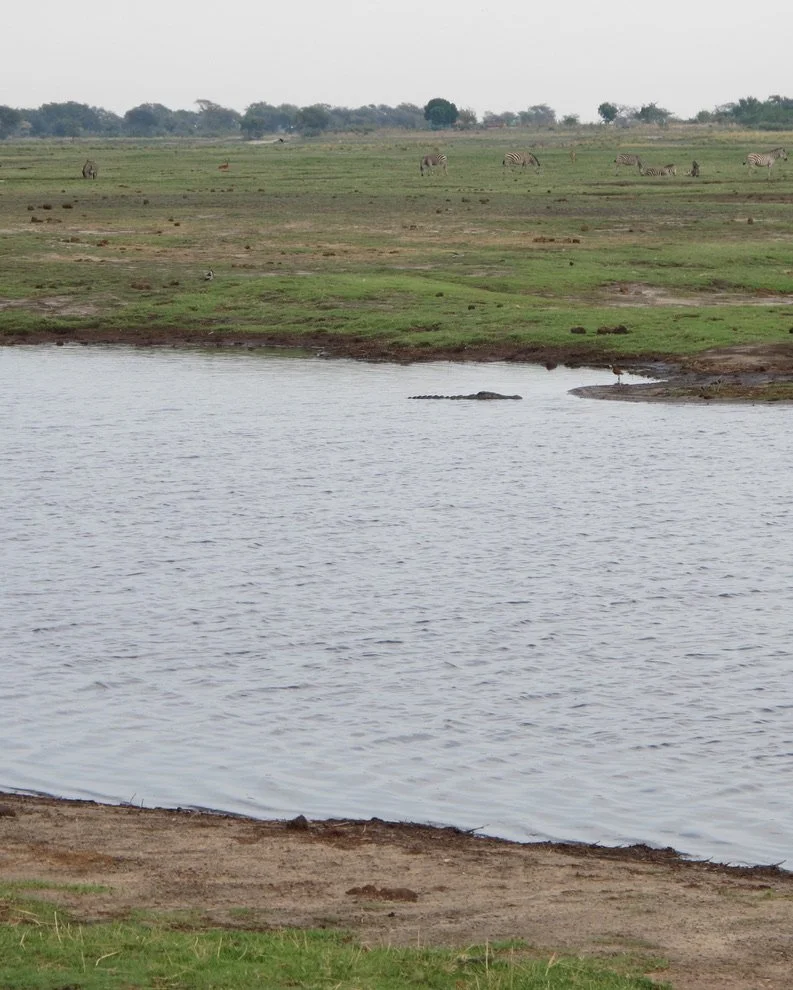
A crocodile patiently waiting…
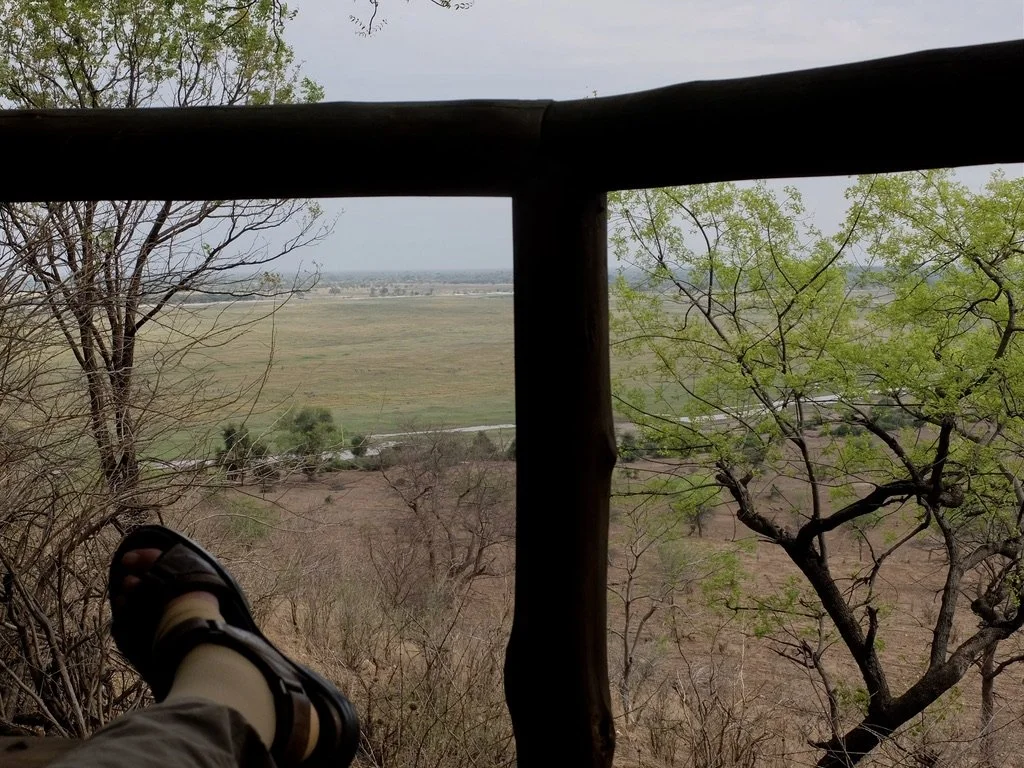
With good binoculars we could see this herd from our deck at Muchenje Safari Lodge.
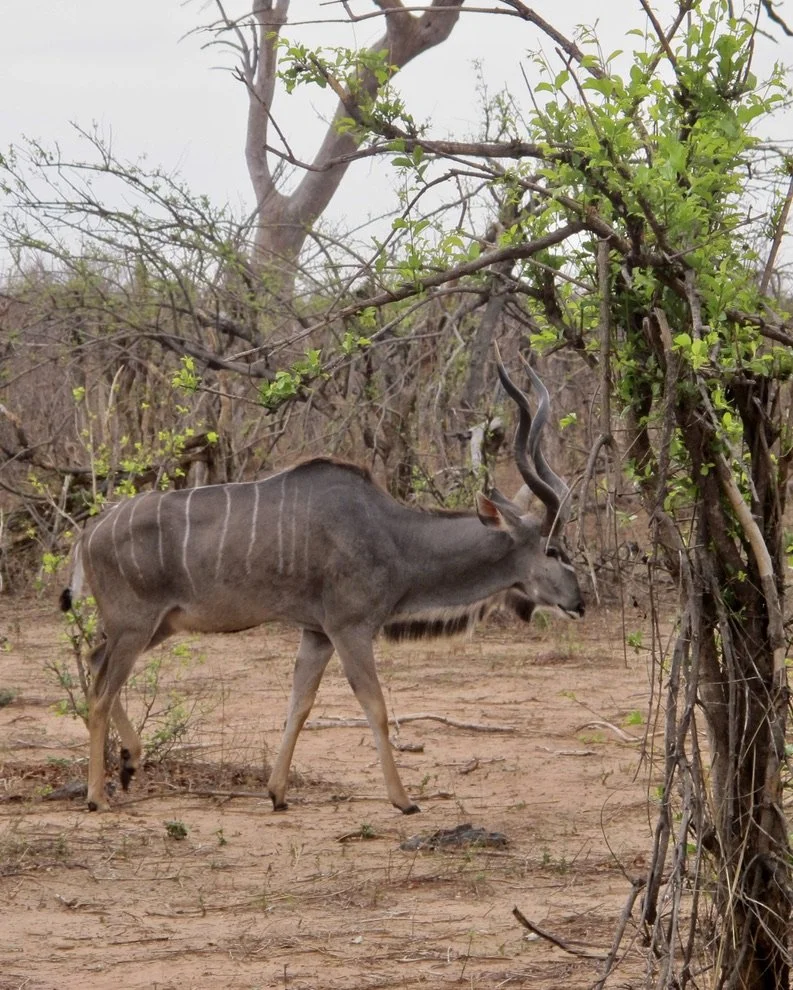
Greater kudo, an antelope..
-
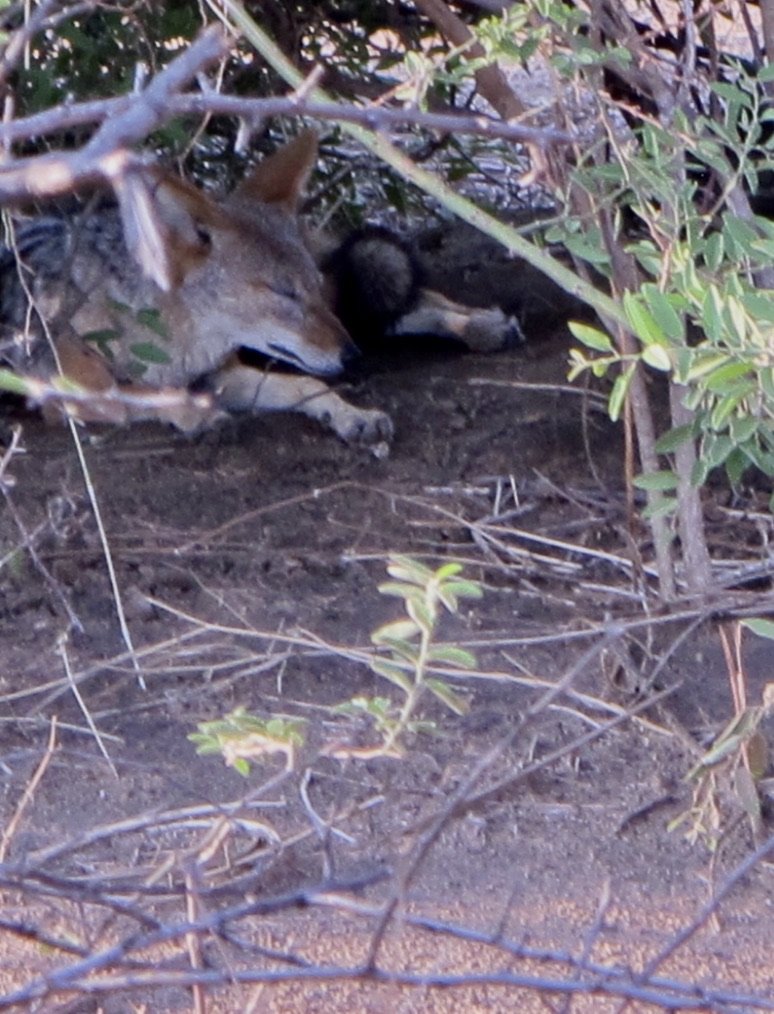
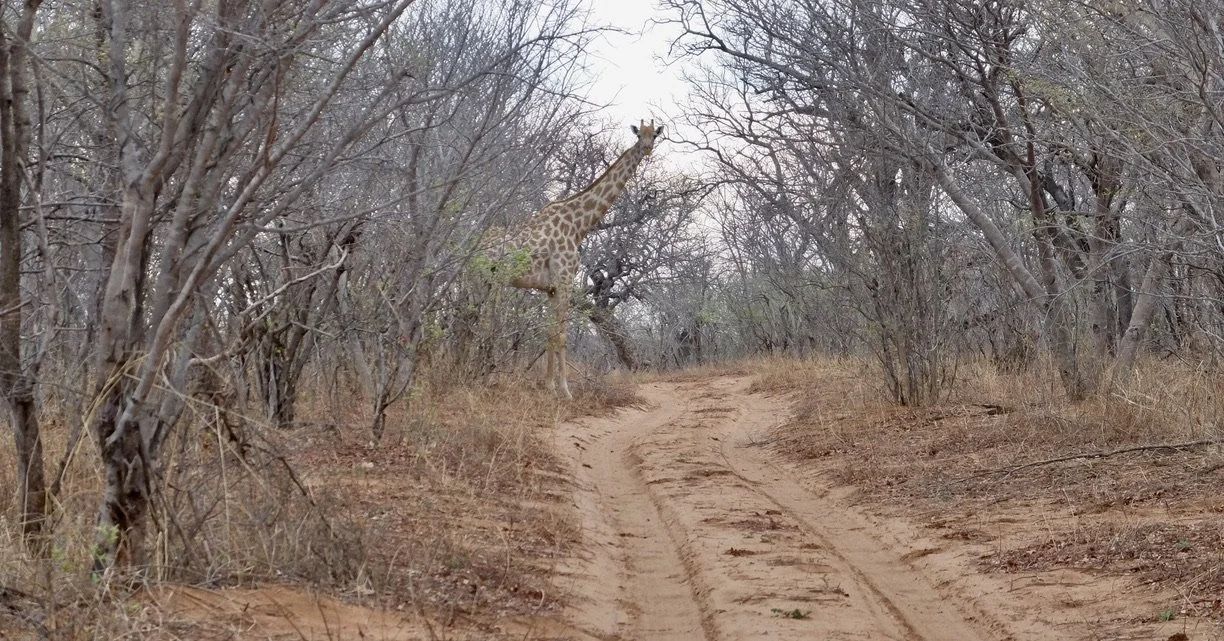
Great camouflage.
It had rained the day before. That was good for us as it kept the dust down but the elephants didn’t need to come to the Chobi riverbank. It would be days before we saw one.
But, we knew they were ariund. One of the folks in our lodge was leaving & wanted to shower but there was no water. She was so upset. Turns out an elephant had walked on & crushed a pipe!
If a guide had spotted a pride or some other grouping of animals, the coordinates were sent out to other groups on safari. But only a limited number of Land Cruisers would be allowed around the animals.
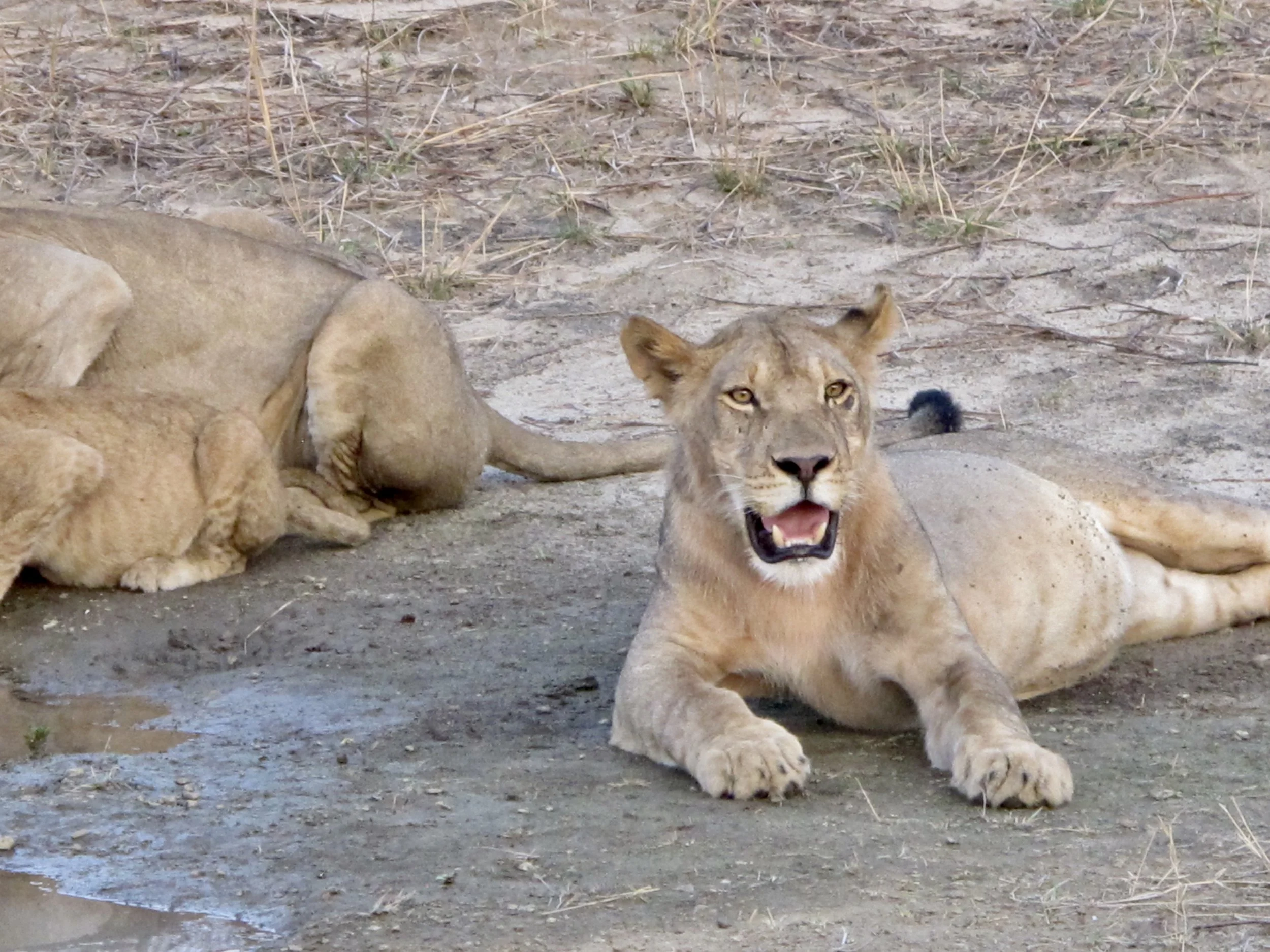
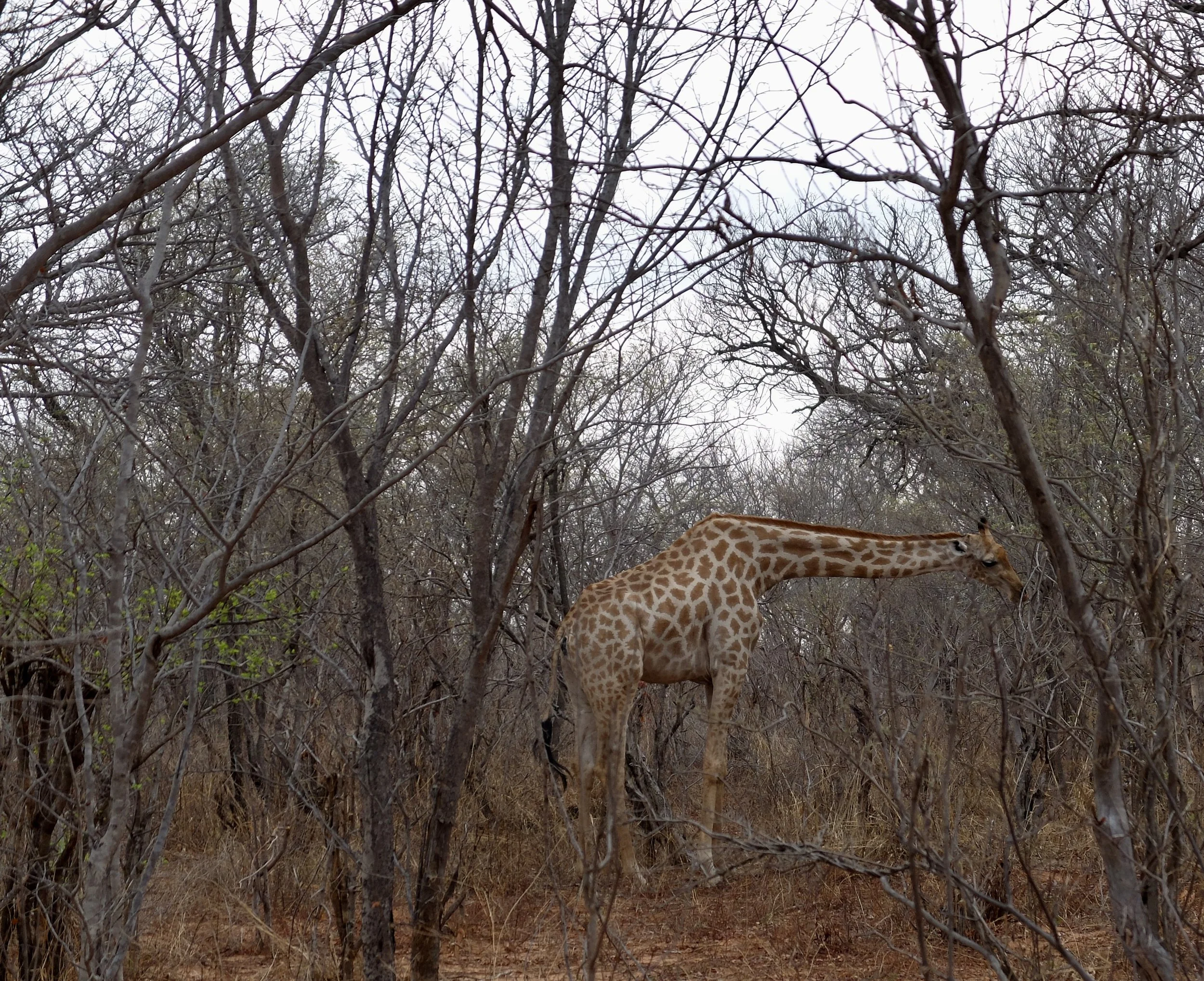
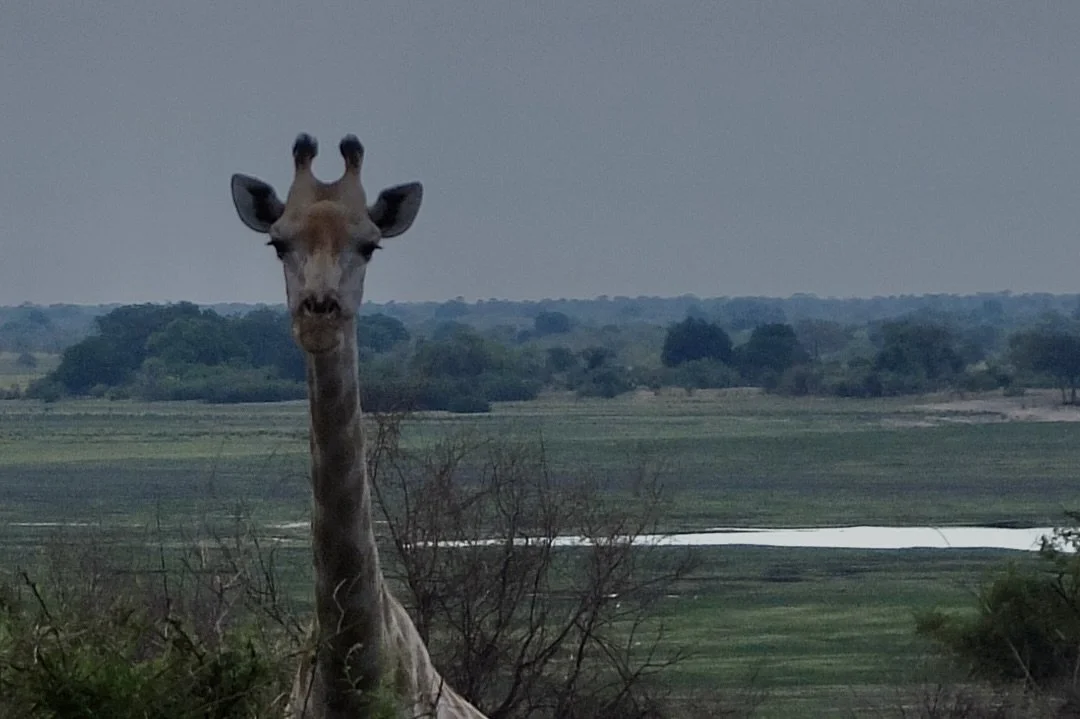
Well, hello there!
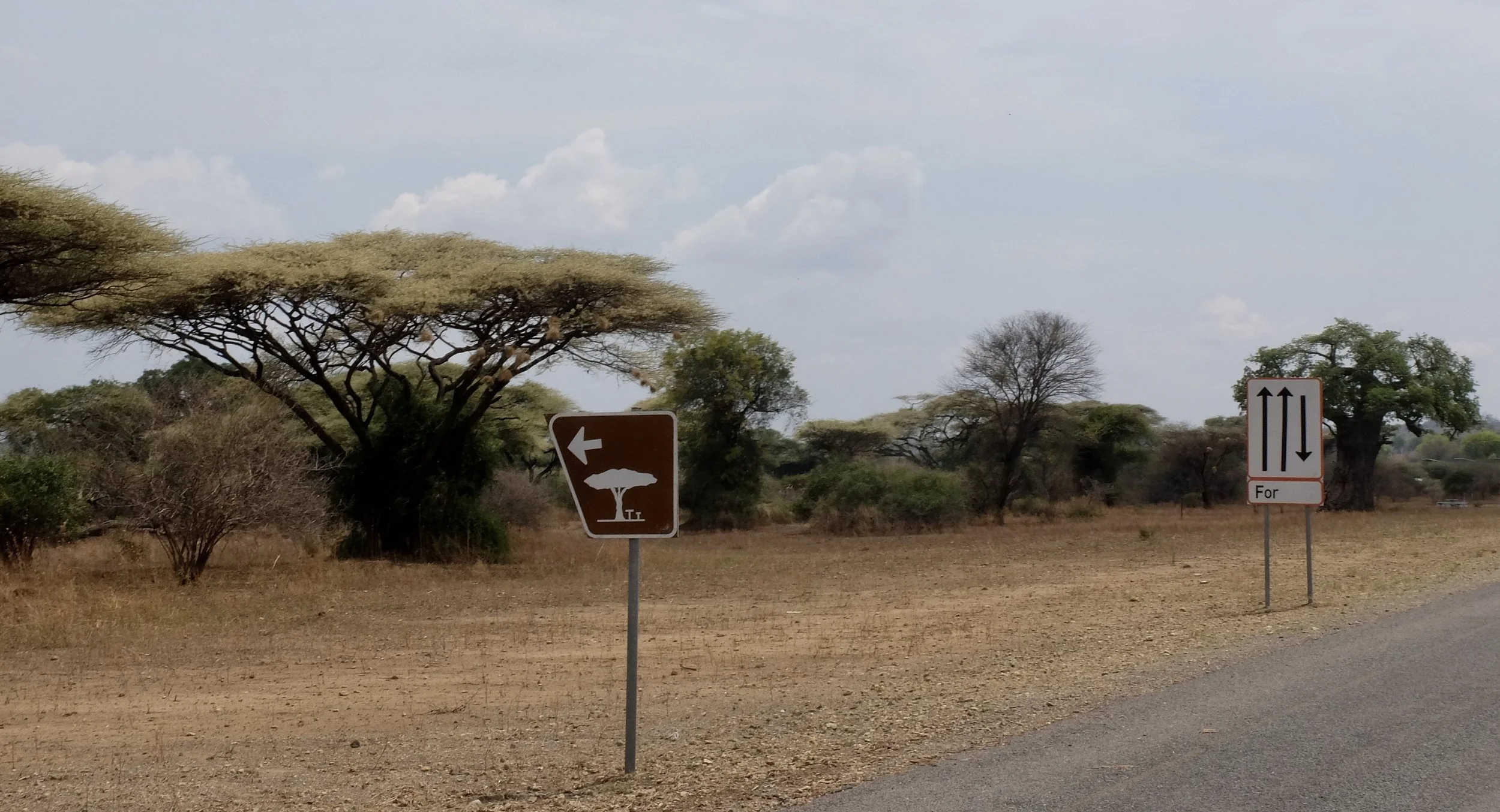
A “two spoor road.” See next caption.
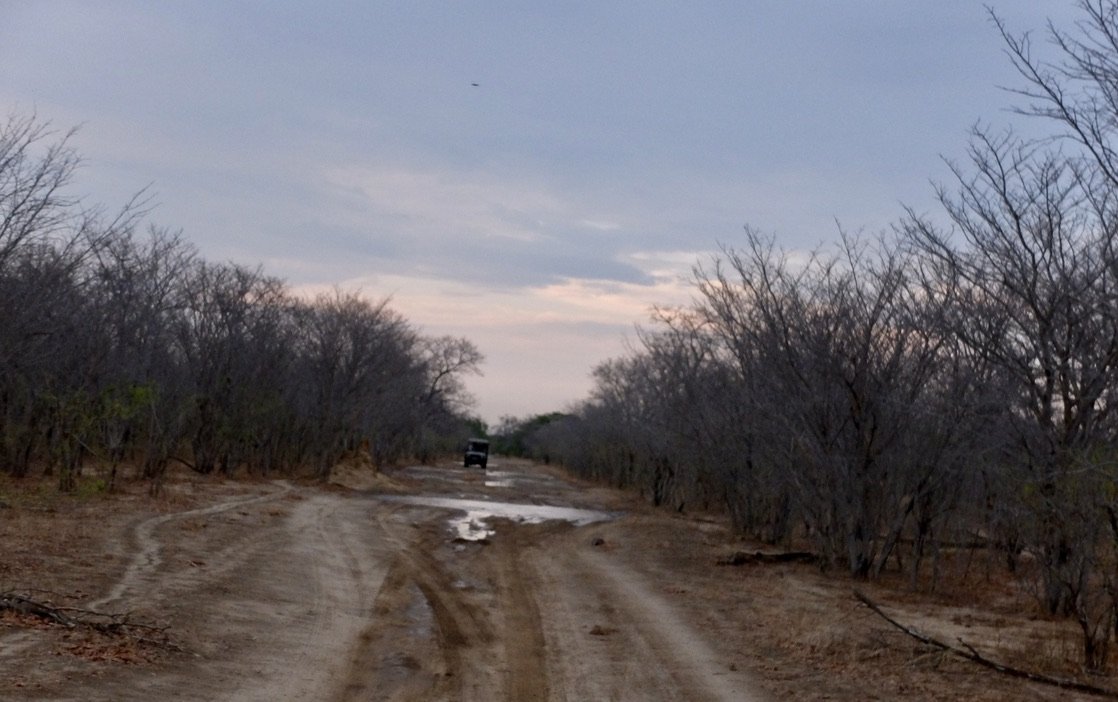
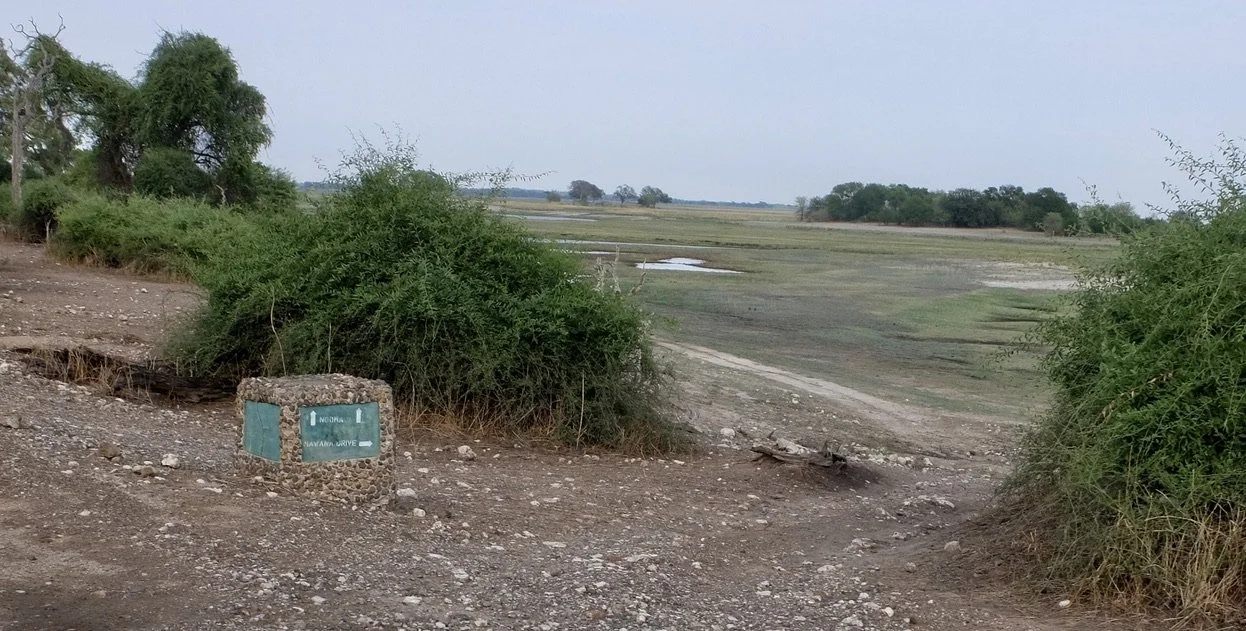
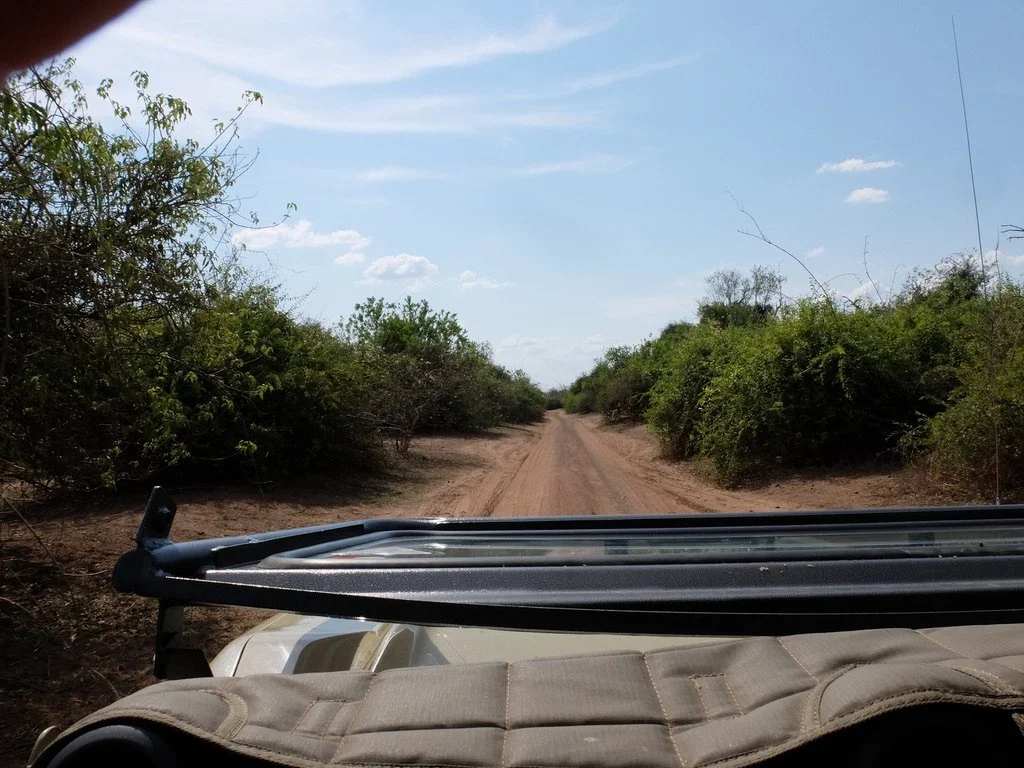
There were markers for the tourists. Folks can drive around in their own cars. Because it is a Nat’l Park they are supposed to stay on the main, marked roads only. “Always stay on designated routes and avoid venturing off the two-spoor track roads.” (Legal places where people have driven enough times to form a "road" created by repeated vehicles following in the same tyre tracks as before; the "spoor”. This usually results in two distinct tracks with a raised center divider between them.) Our drivers went wherever the animals were.
One could spend the night out in the wild. We noticed a lot of people camping at public campsites. The brochures admonished…
…not to go off exploring at night…
A “wartie.”
Off for our evening game viewing.
It was suggested that I sit in the front passenger seat. I loved it with the dropped windshield but it was too uncomfortable for my leg.
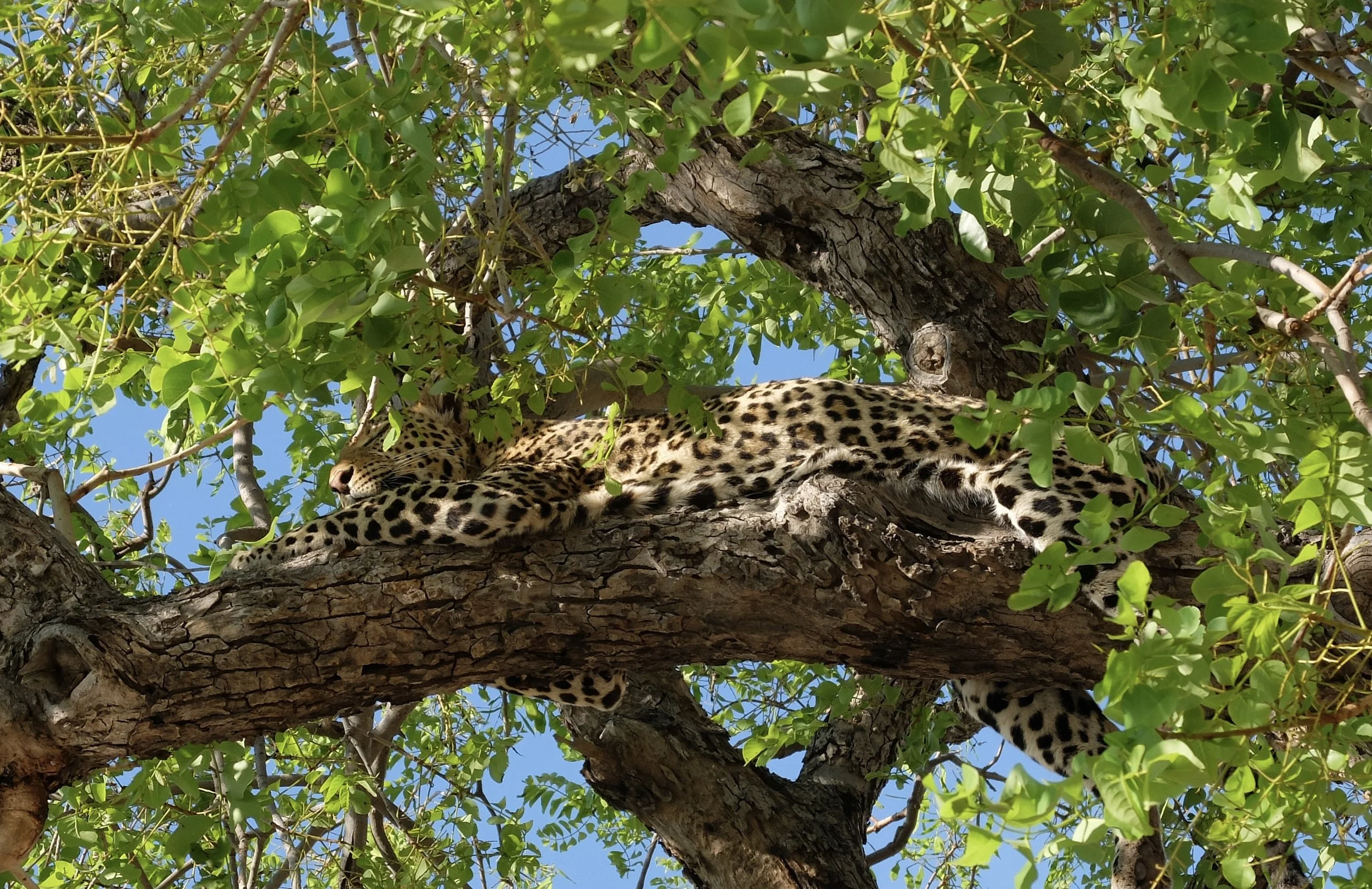
We had been told that there were leopards in the area. They are solitary creatures.
-
A newborn.
Now this says Africa!
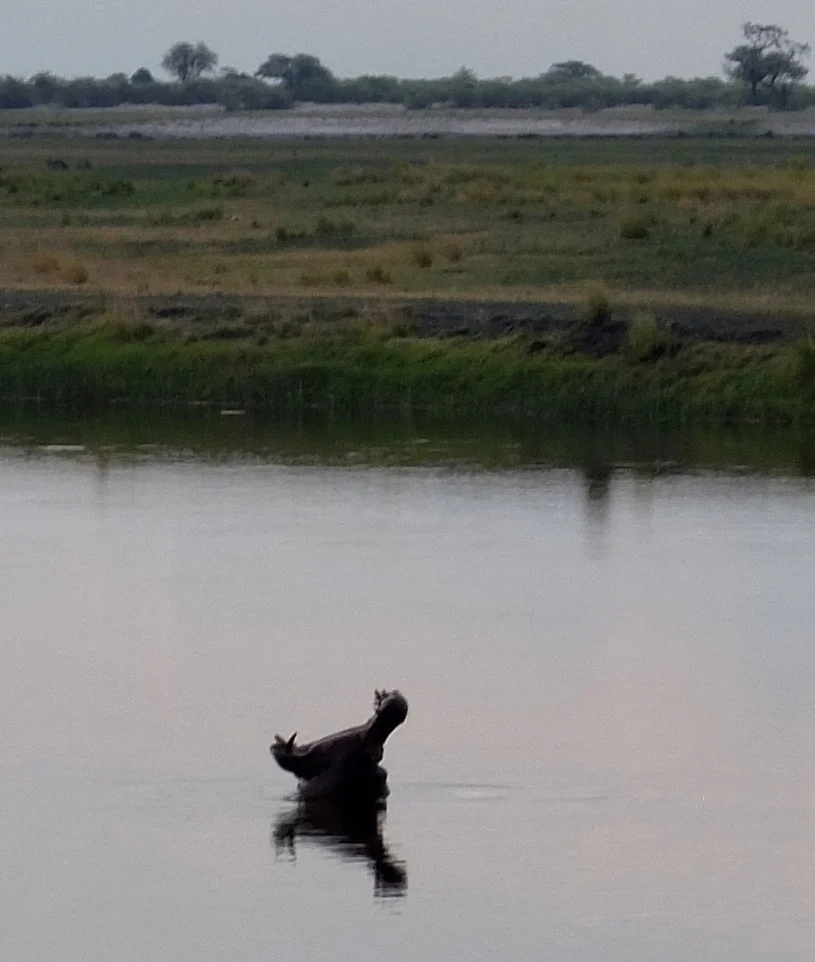
This was the only time we saw people in the river. Then men were in mokoros; dugout canoes. We hoped that they were minding the crocodiles.
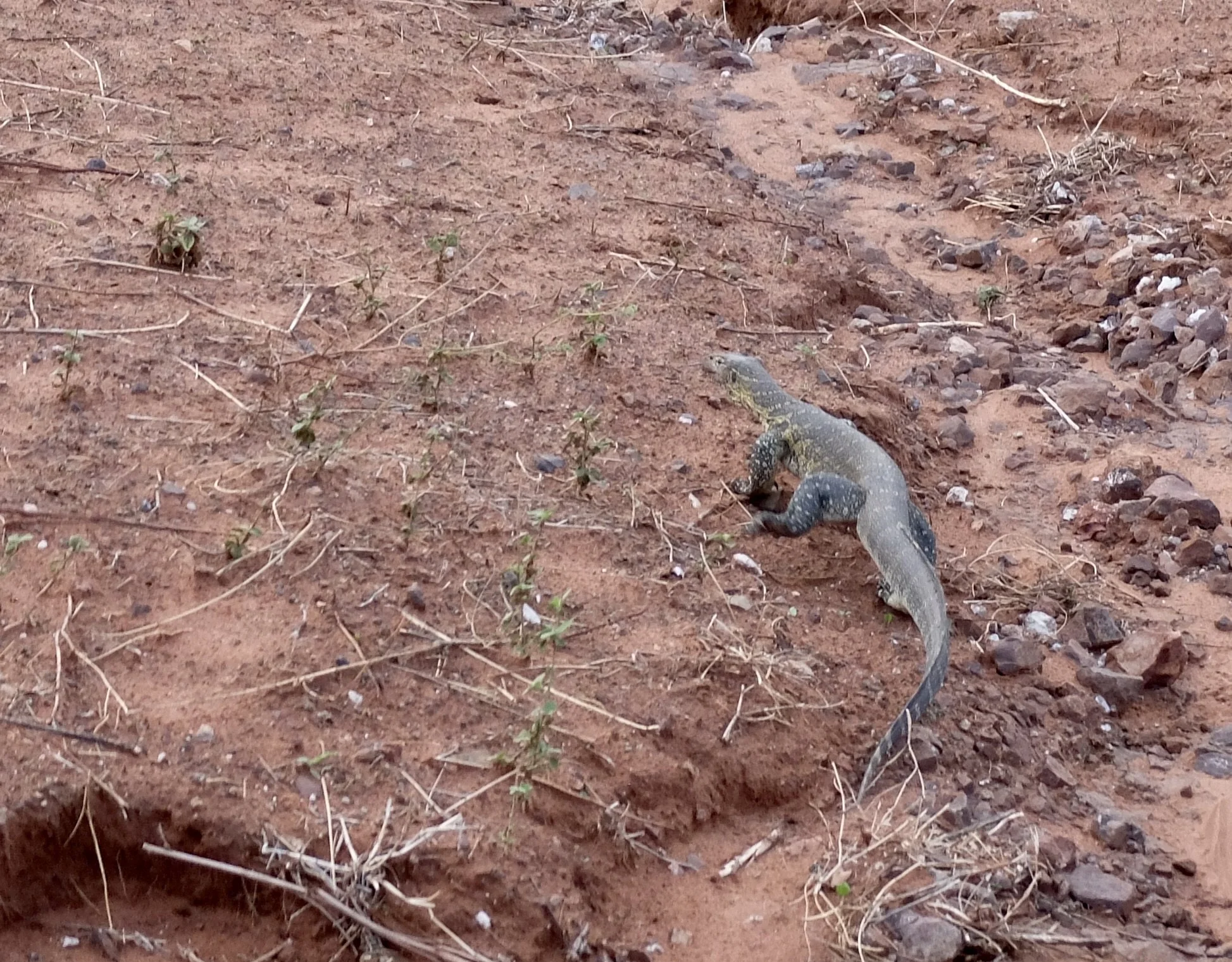
Nile monitor.
-
-
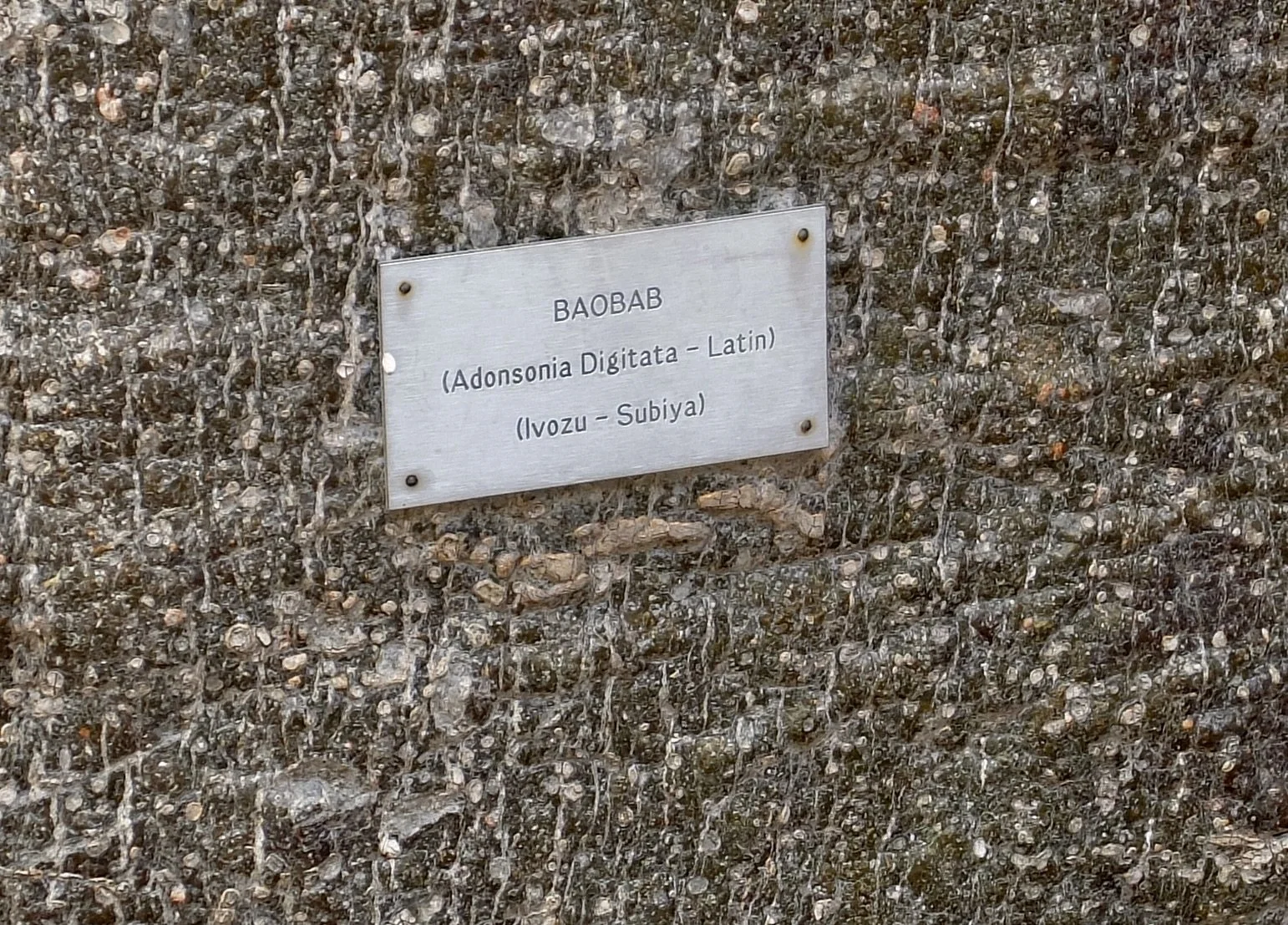
To my right, is an old baobab.
This is the bark elephants love, yummy.
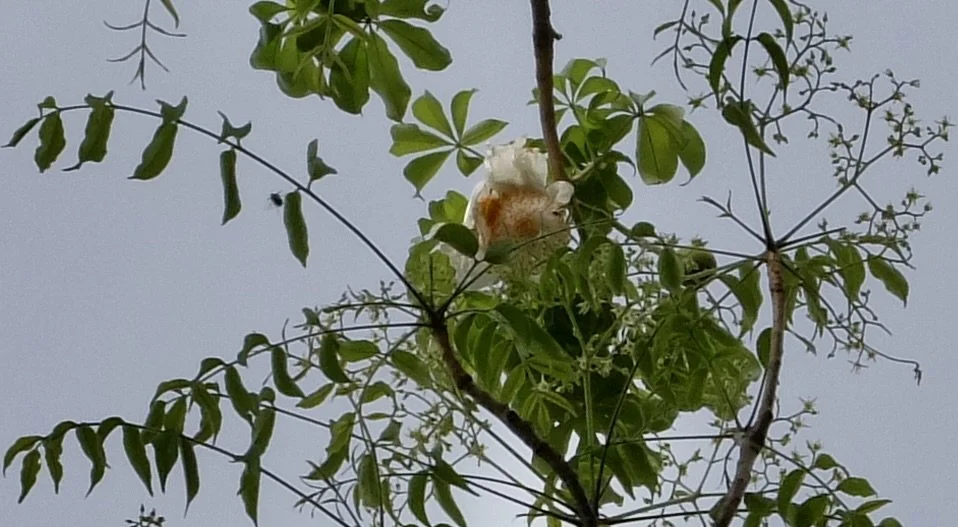
The baobobs had just finished flowering. We were told we might still spot one or two flowers. I saw this one right overhead. These trees must have been gorgeous with the white petals blossoming.
Just near our room, the entrance to the Muchenje Safari Lodge. African Adventure Company arranged so I wouldn’t have much walking.
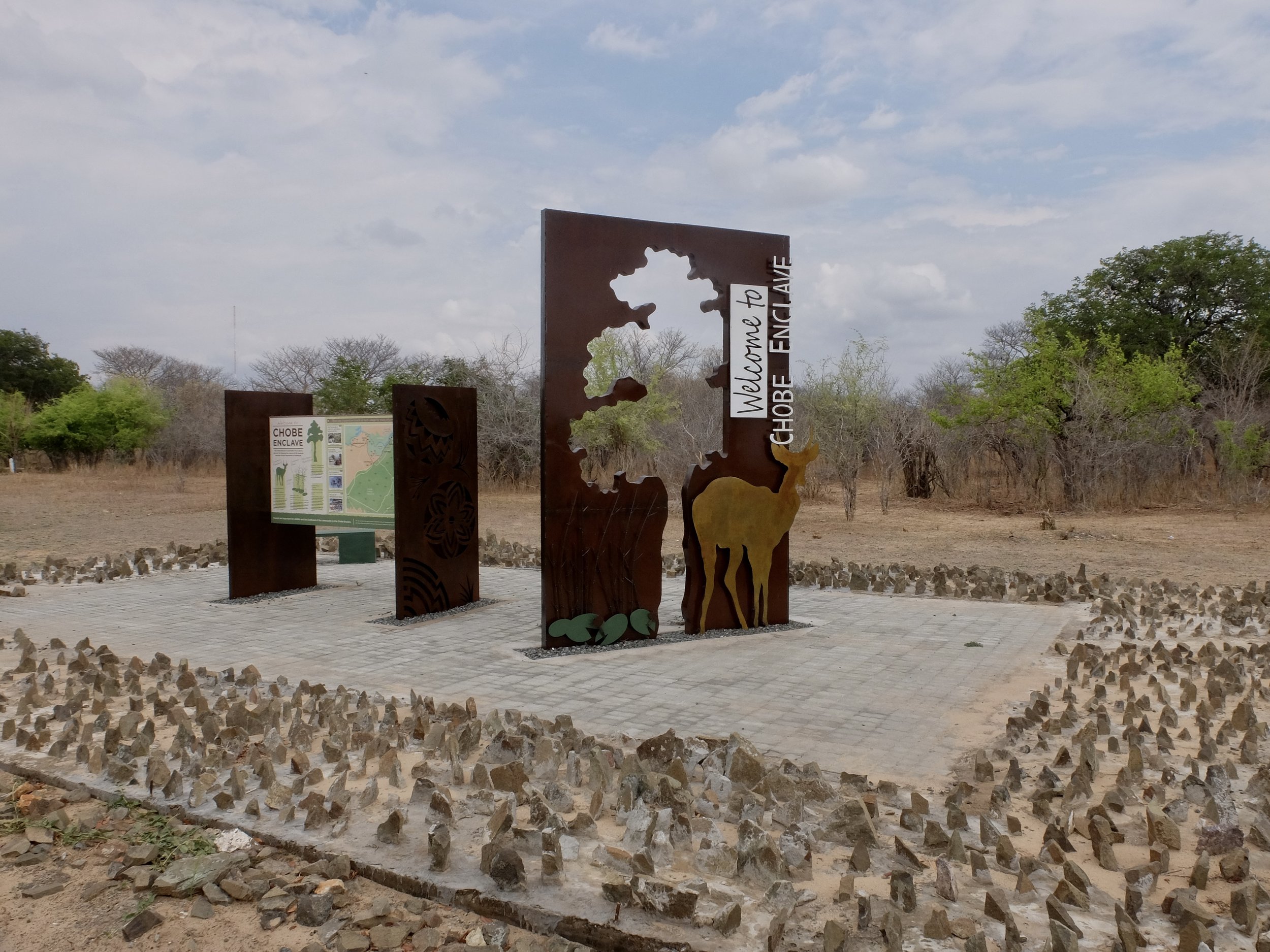
Trip to the Chobi Enclave & Mabela village.
The rocks keep elephants off.
Umbrella Thorn Acacia…
…adapts to extremely hot & dry conditions. It has a taproot, which can reach 115 ft under the ground.
They are very desirable by home owners.
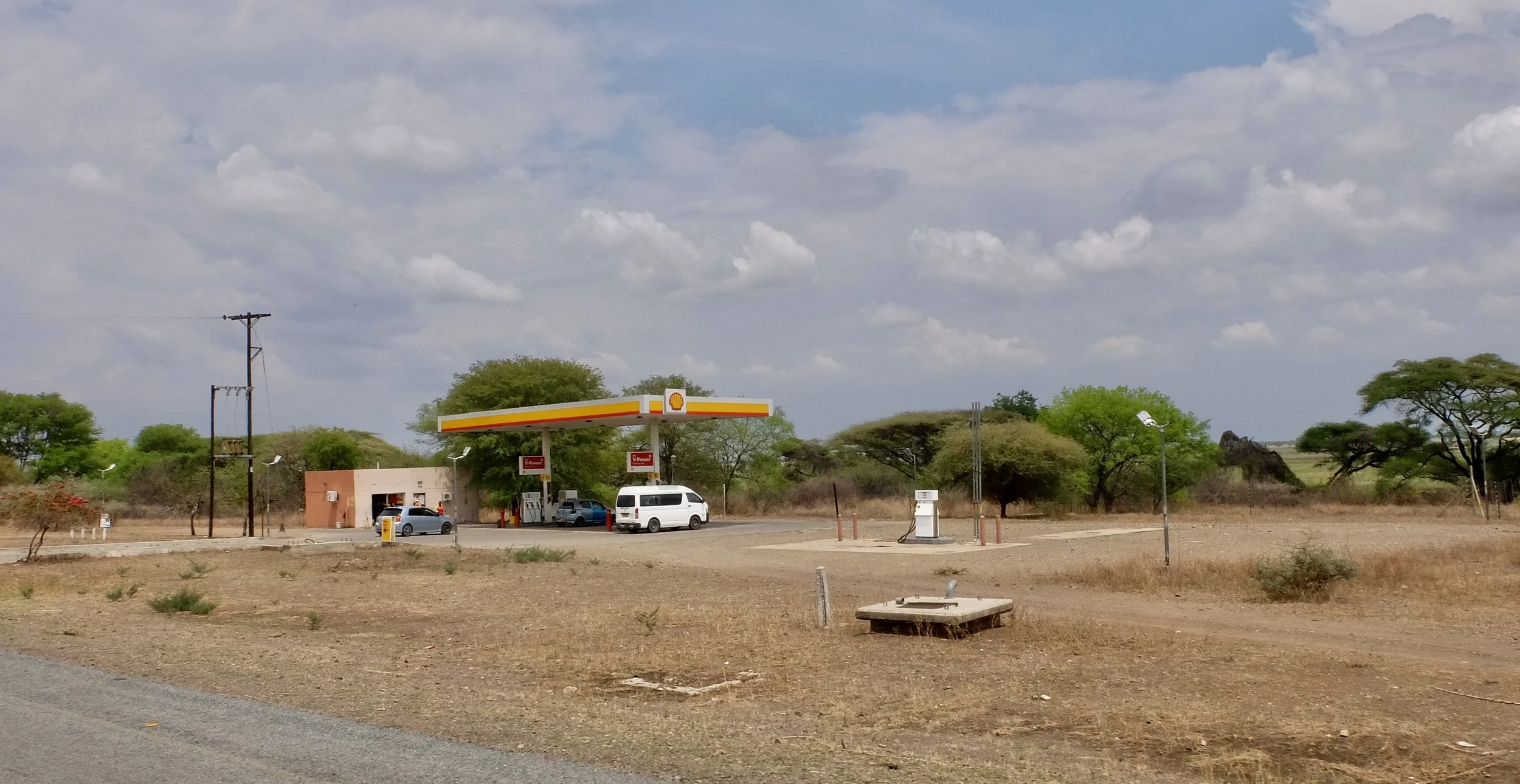
I was wondering where people fueled up around here.
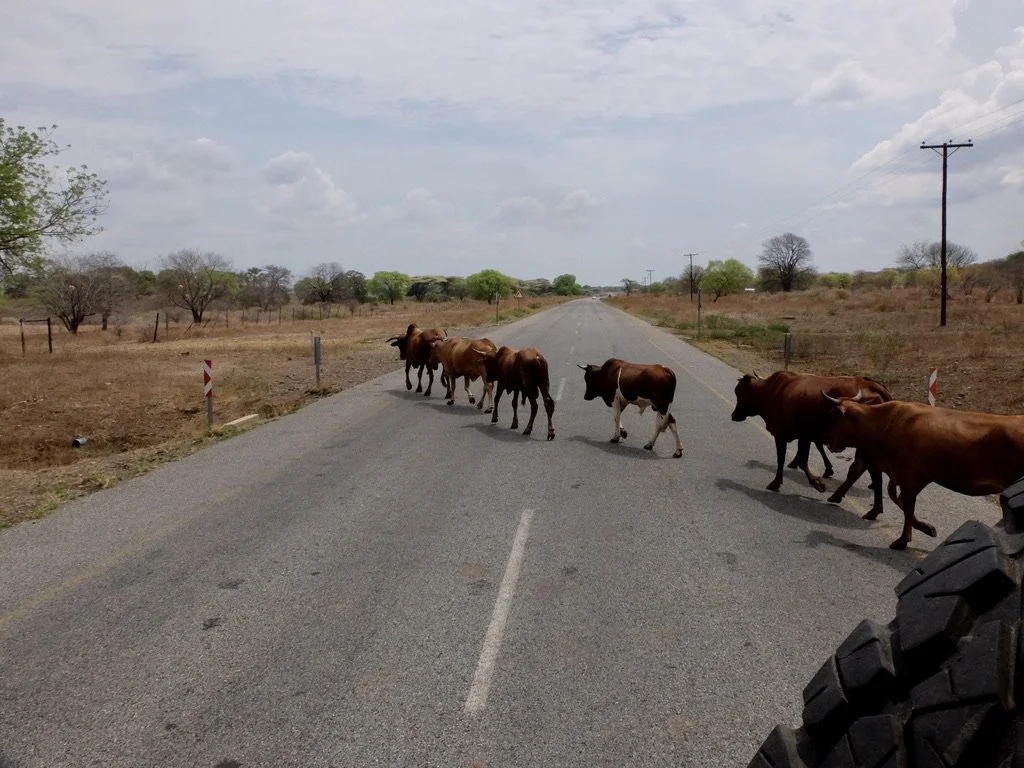
“Nguni cattle are…most beloved breed amongst the local Bantu-speaking people of southern Africa.”
“…cattle production, is the largest agricultural sector in Botswana.…Cattle have long been a symbol of wealth and status in Botswana’s culture. For many, cattle ownership is deeply intertwined with social standing, family wealth, and heritage. Traditionally, cattle were used as a form of currency and dowry, and even today, they continue to be a measure of economic security for many rural families.”
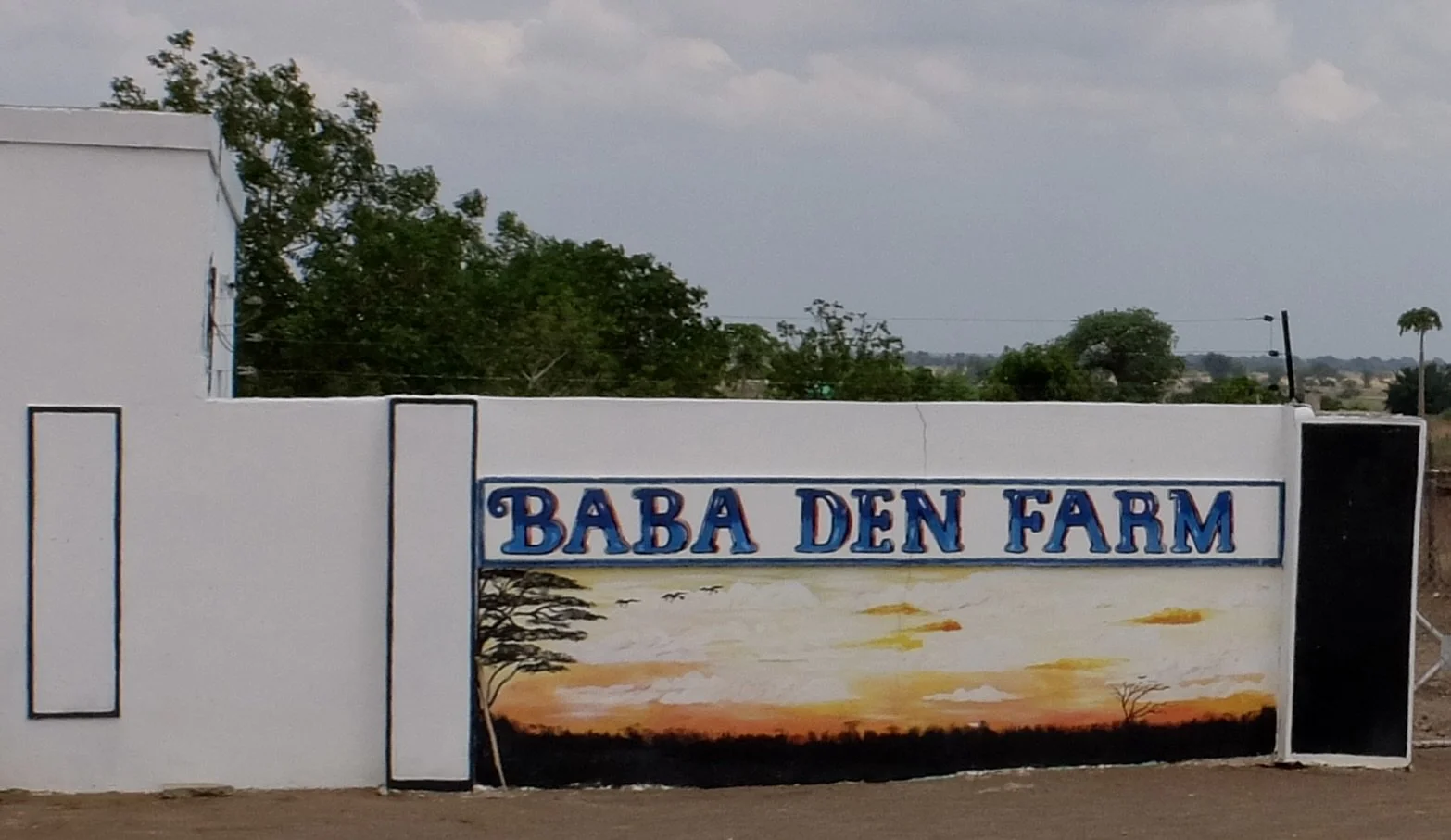
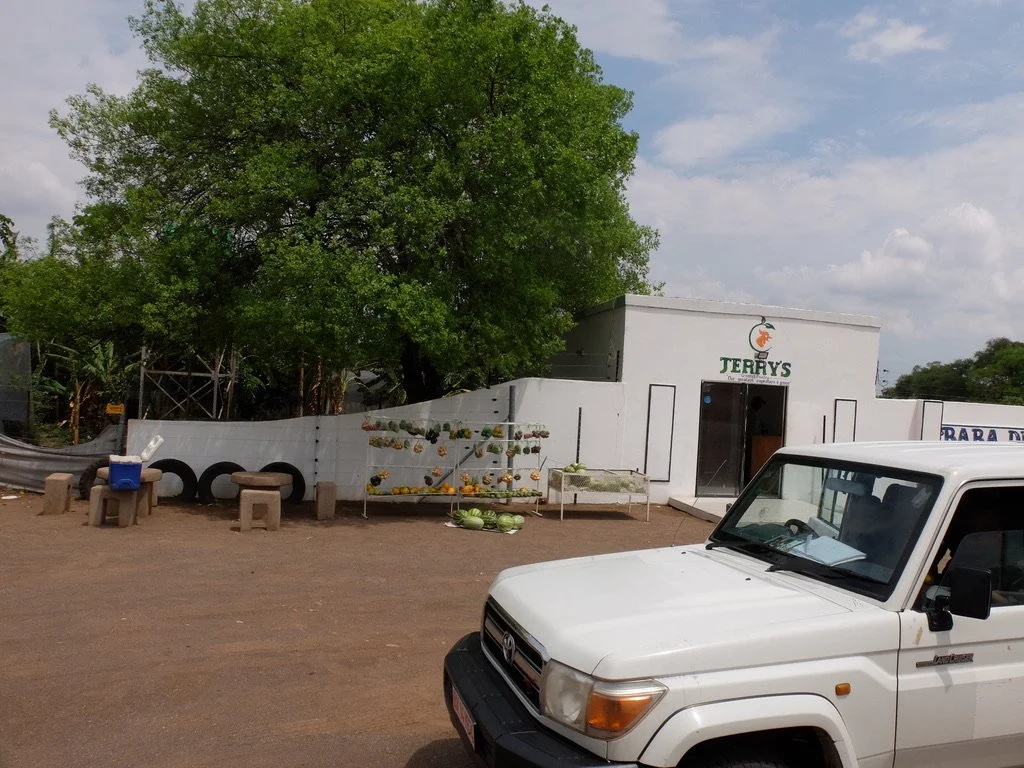
A.K.A. Jerry’s. Muchenje Safari Lodge buys their fresh vegetables from this farm.
Jerry's.
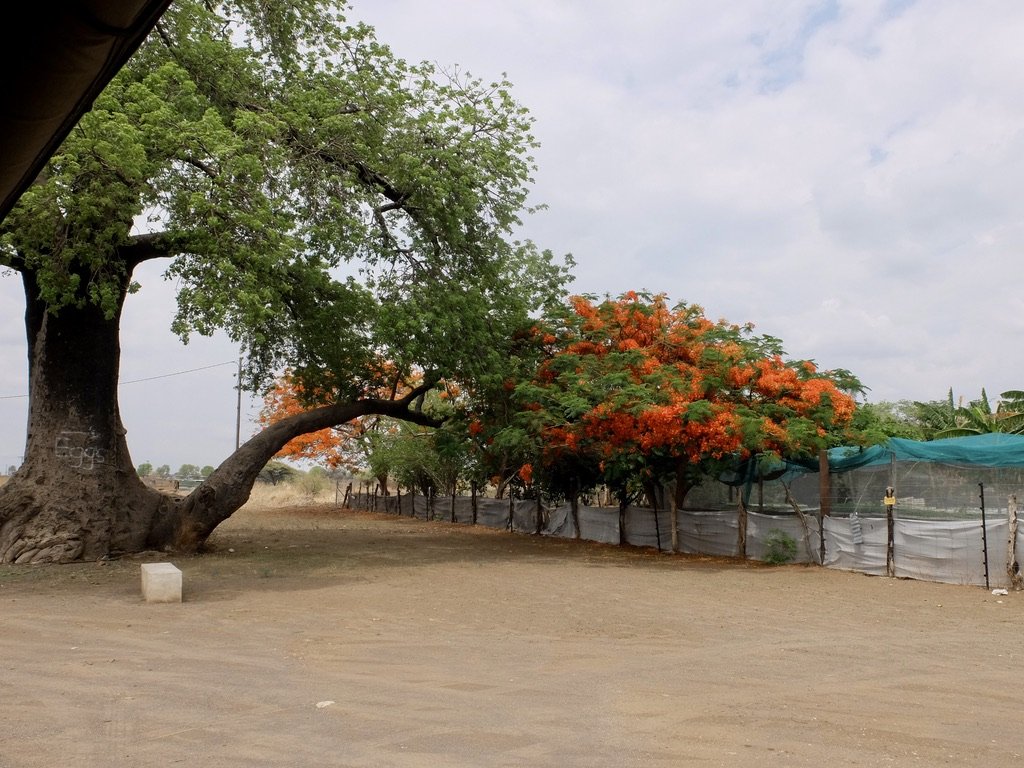
Flamboyant tree at Jerry’s Baba Den Farm.
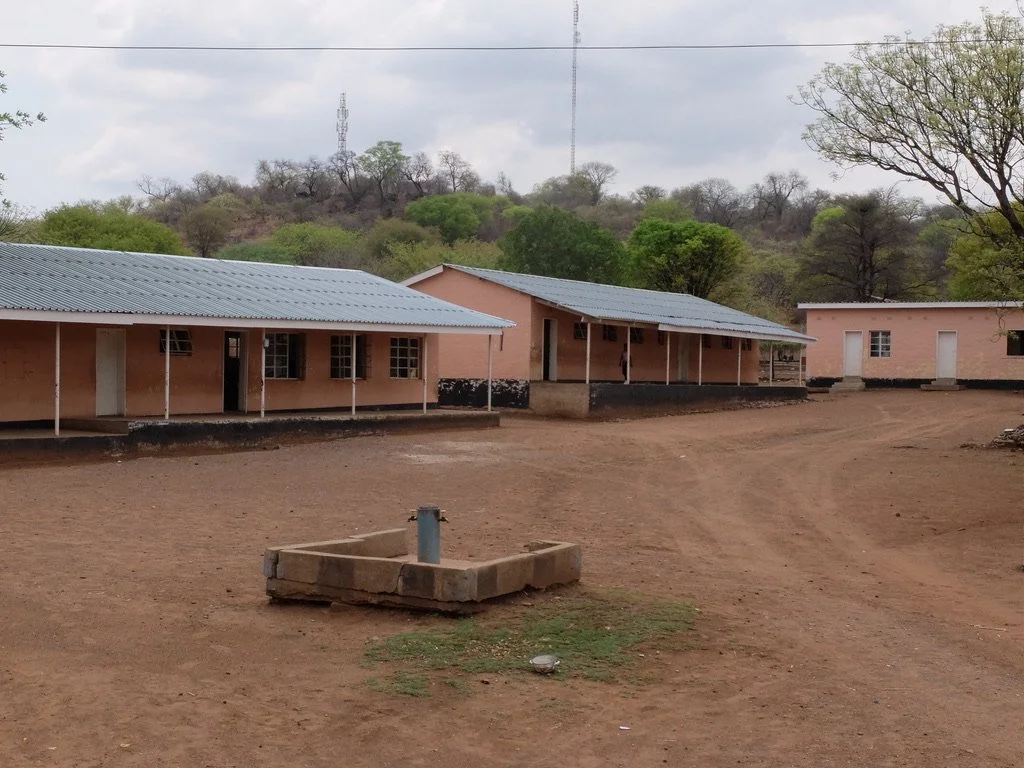
Maleba Primary School.
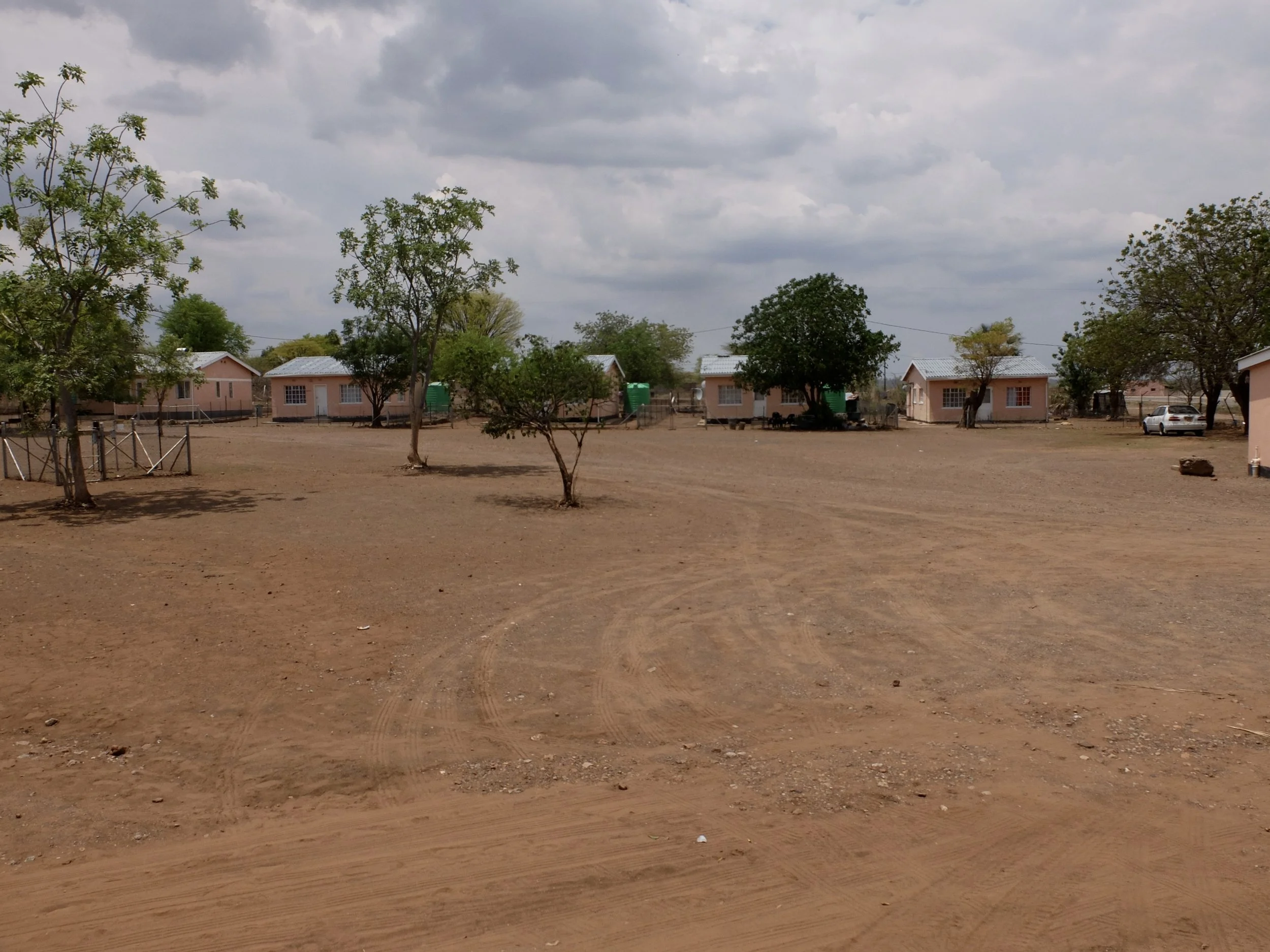
On campus, teacher housing at Mabela Primary School.
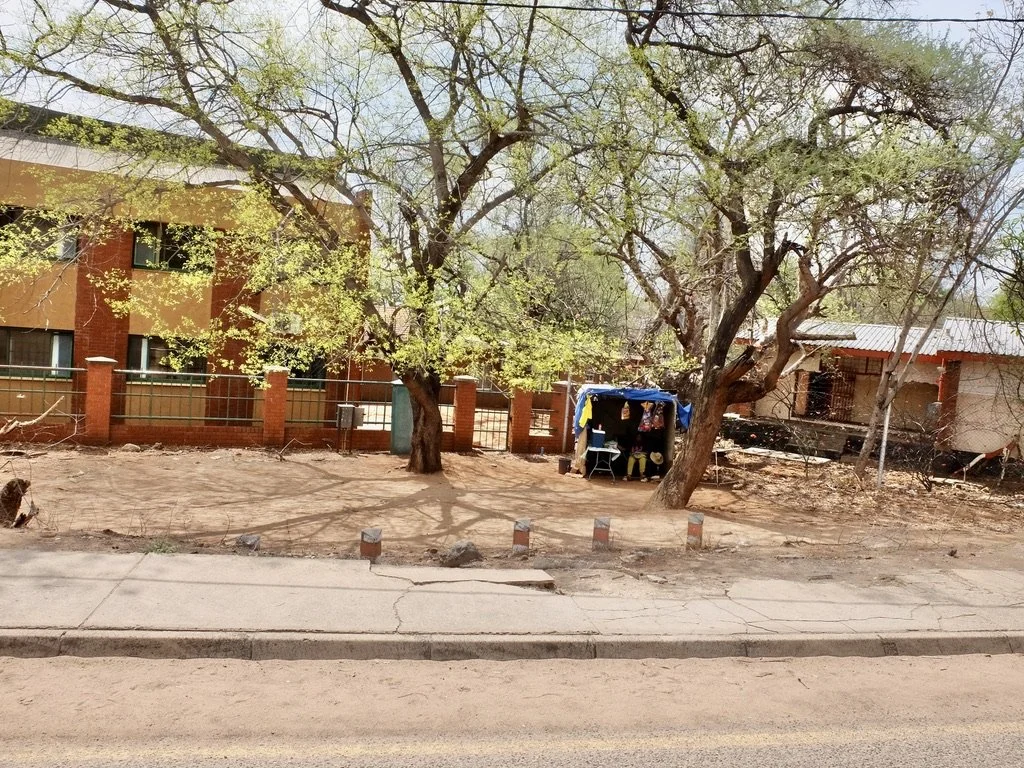
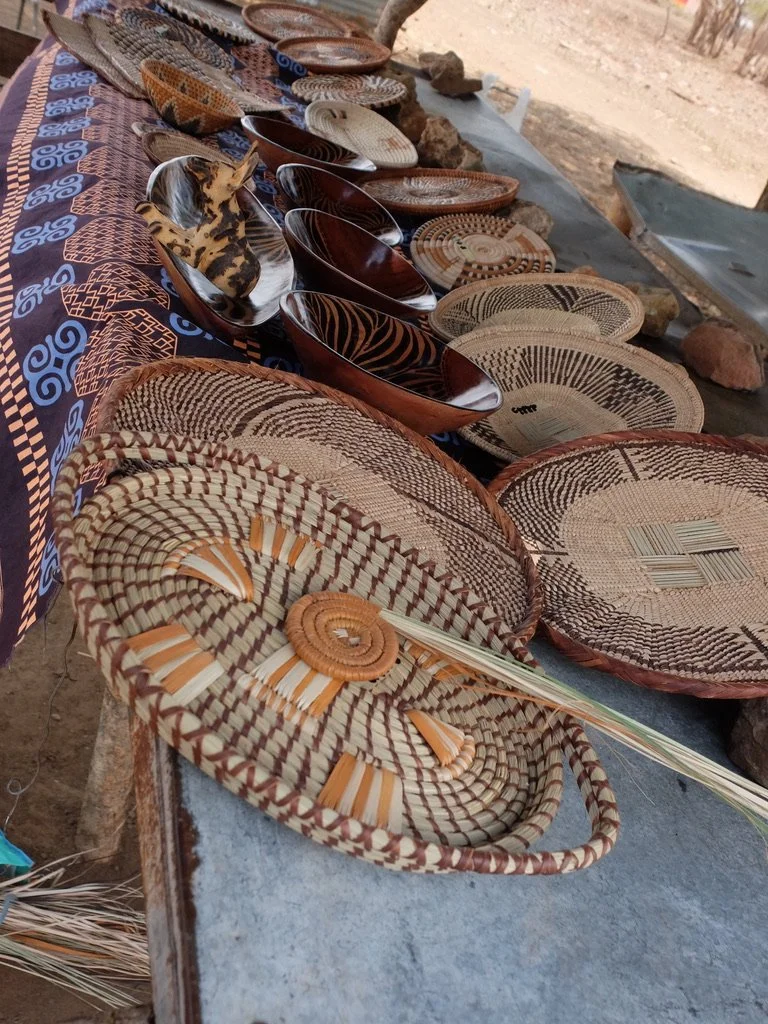
Mabela Village, roadside stand.
Mabela Village, roadside stand.
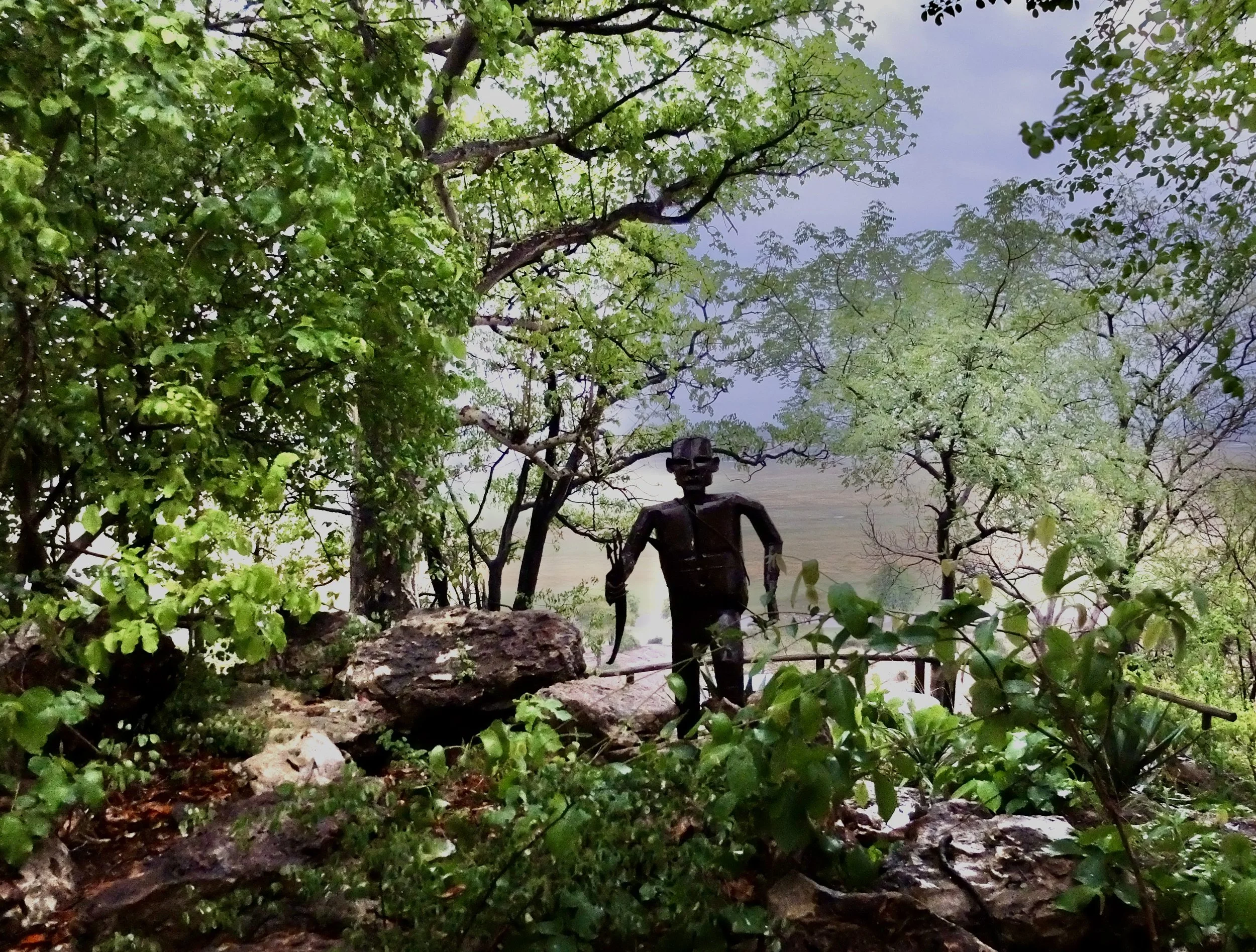
Note the carved painted dog. We never again saw one of these dog carvings for sale.
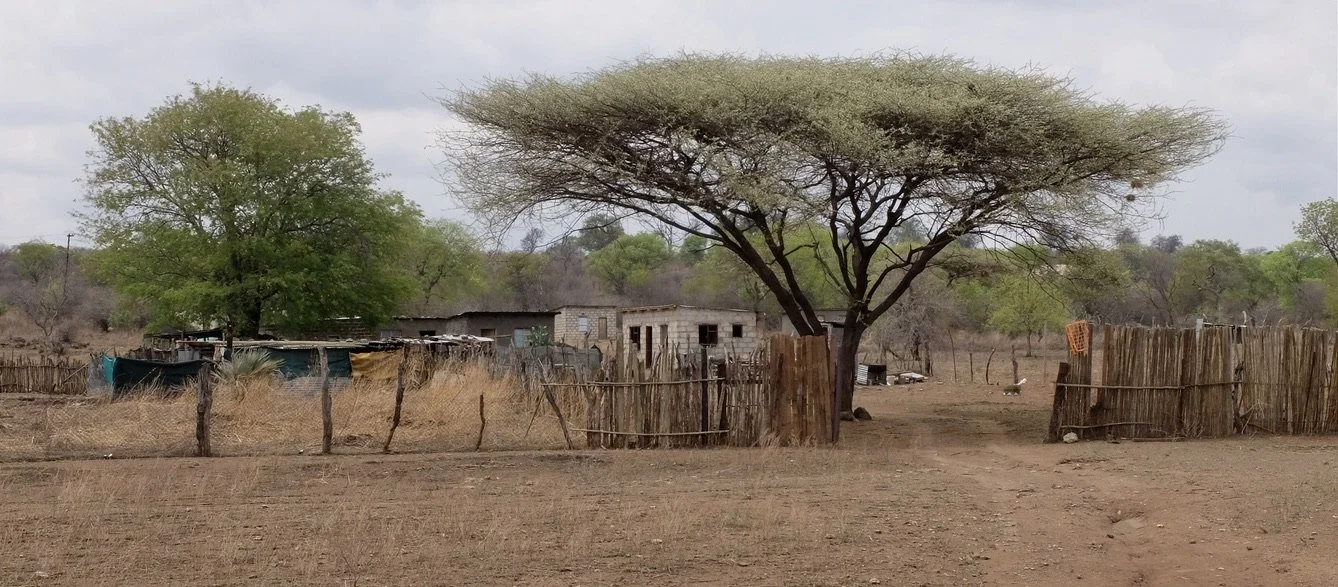
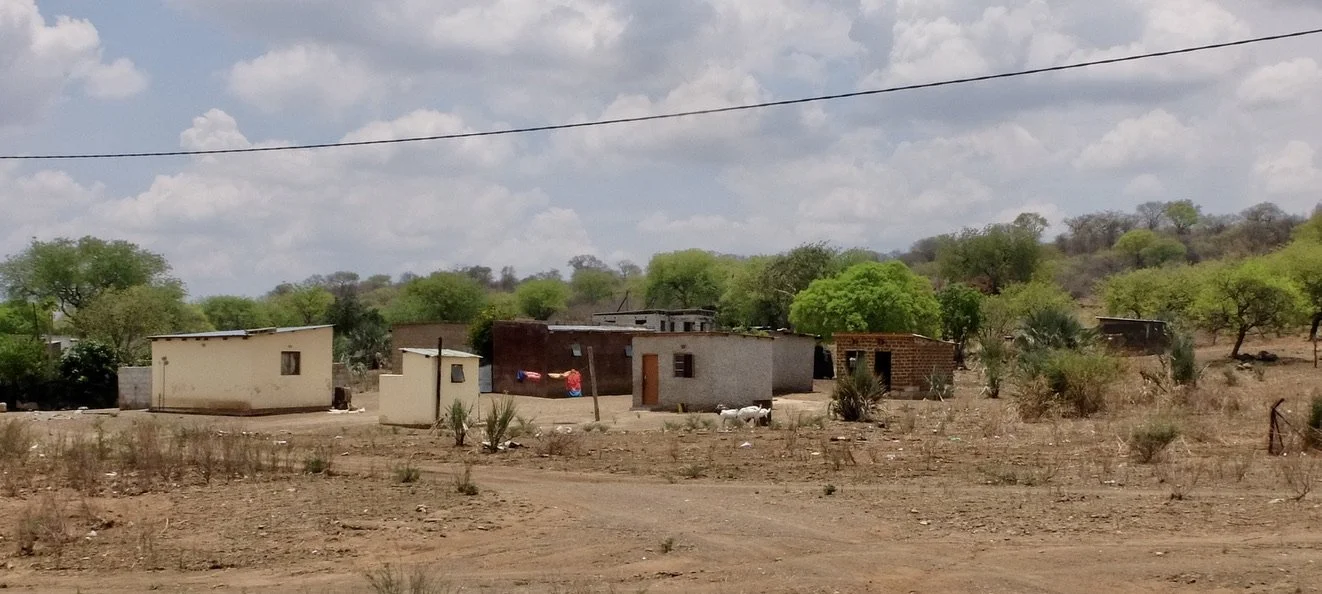
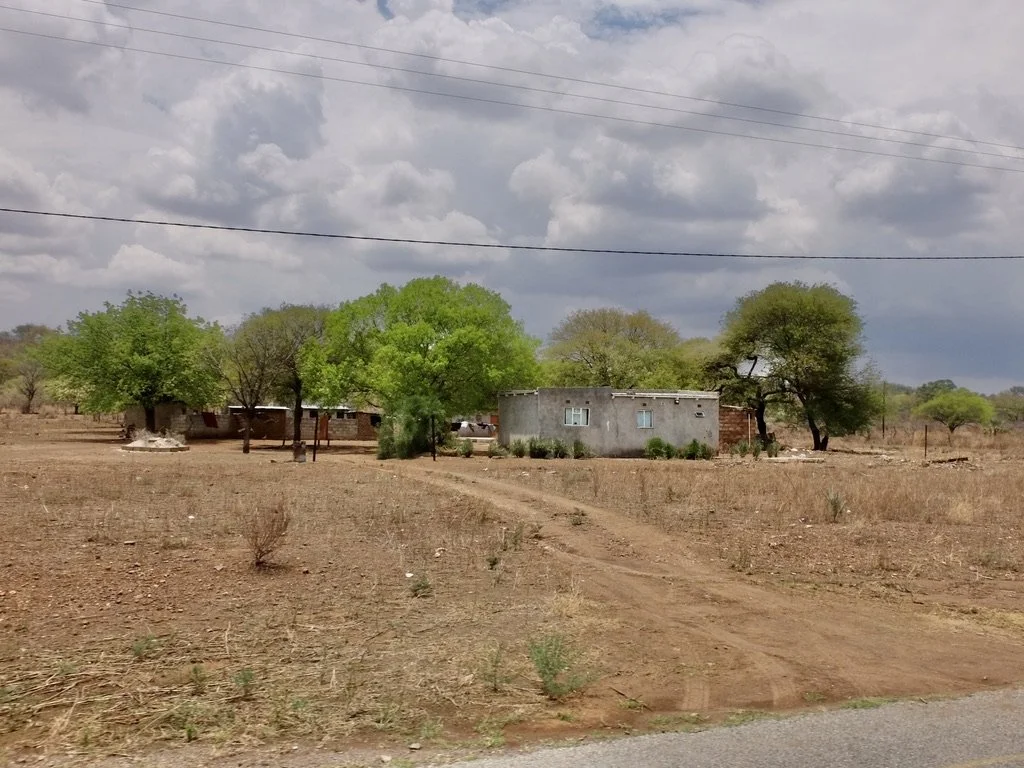
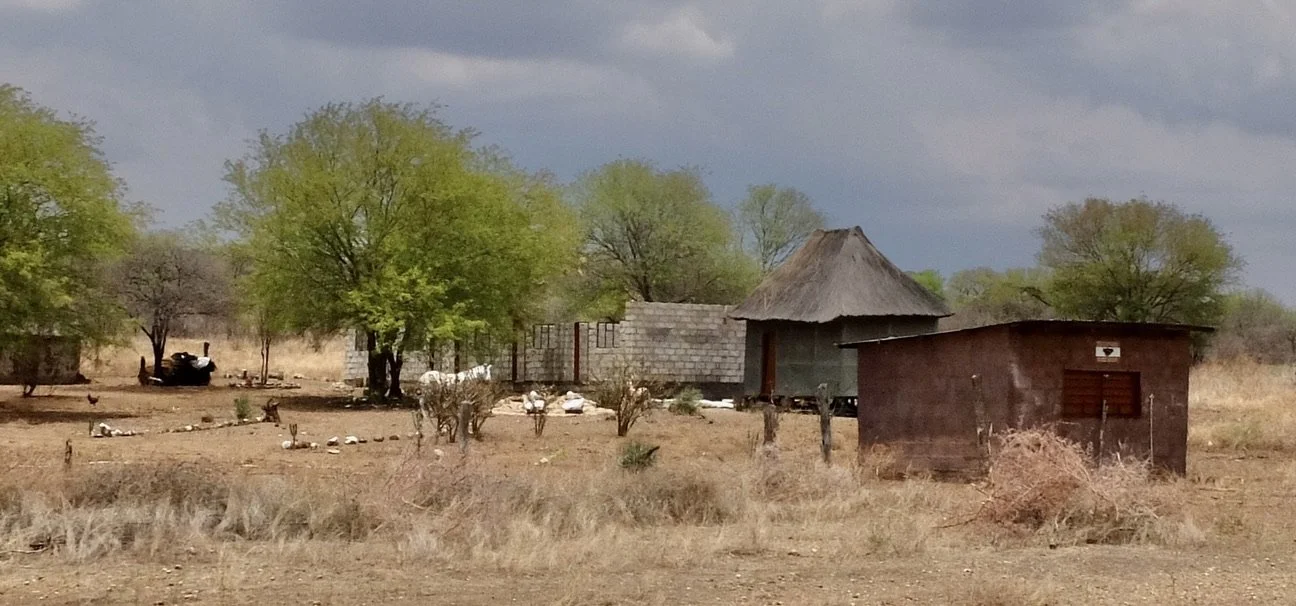
The excursion to Mabele village in the Chobi Enclave was in our itinerary but we did not have a clue about it. The elementary school visit was a highlight but driving along & noticing how the people lived here was sure educational.
-
Communal gardens. The large structure holds water tanks.
It’s hard to discern but in the garden leading to the house’s entrance are metal animal sculptures. This person buys cigarettes, & maybe other items in bulk, & then sells single cigarettes.
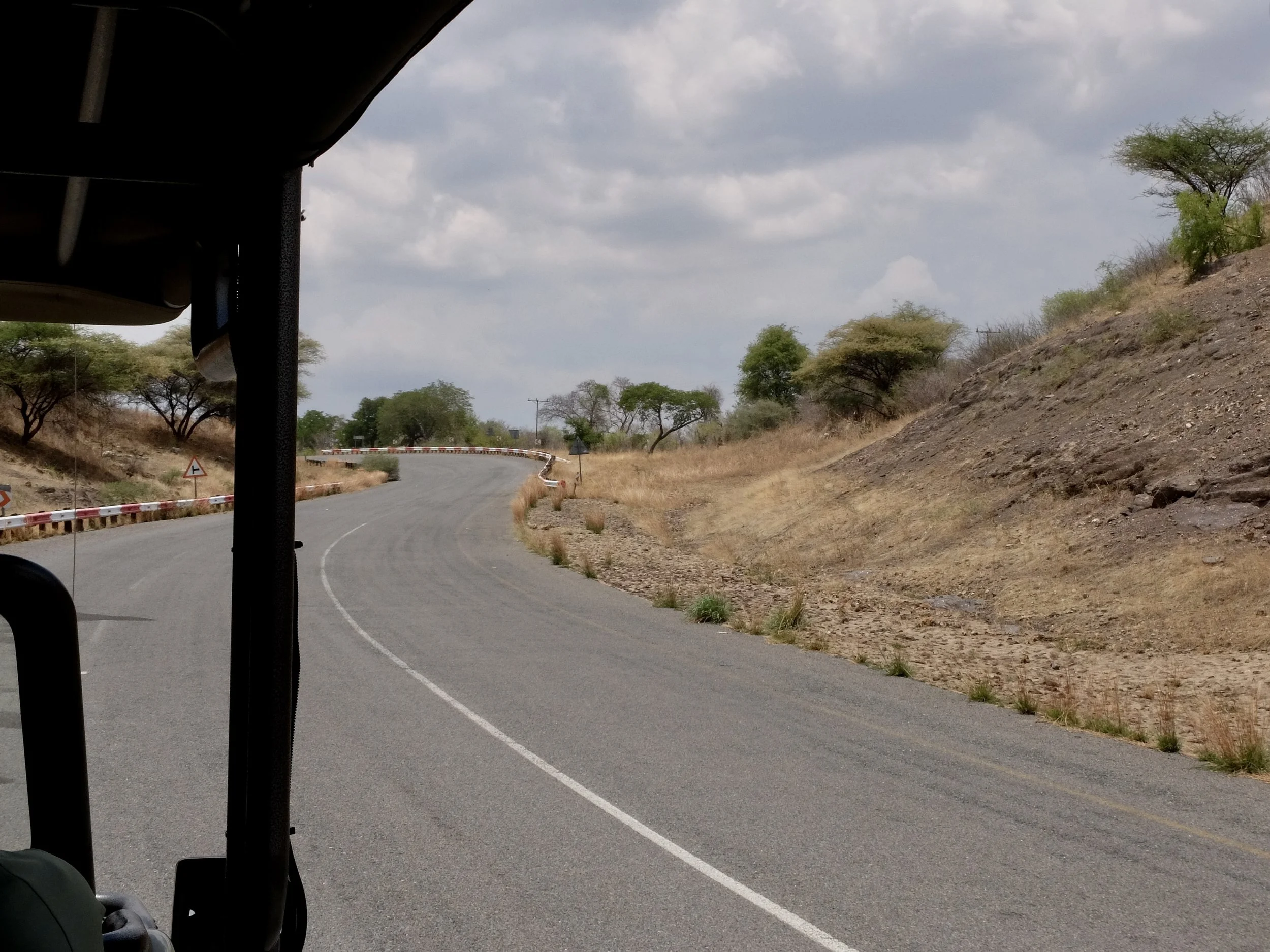
Road from Mabele to Muchenje Safari Lodge.
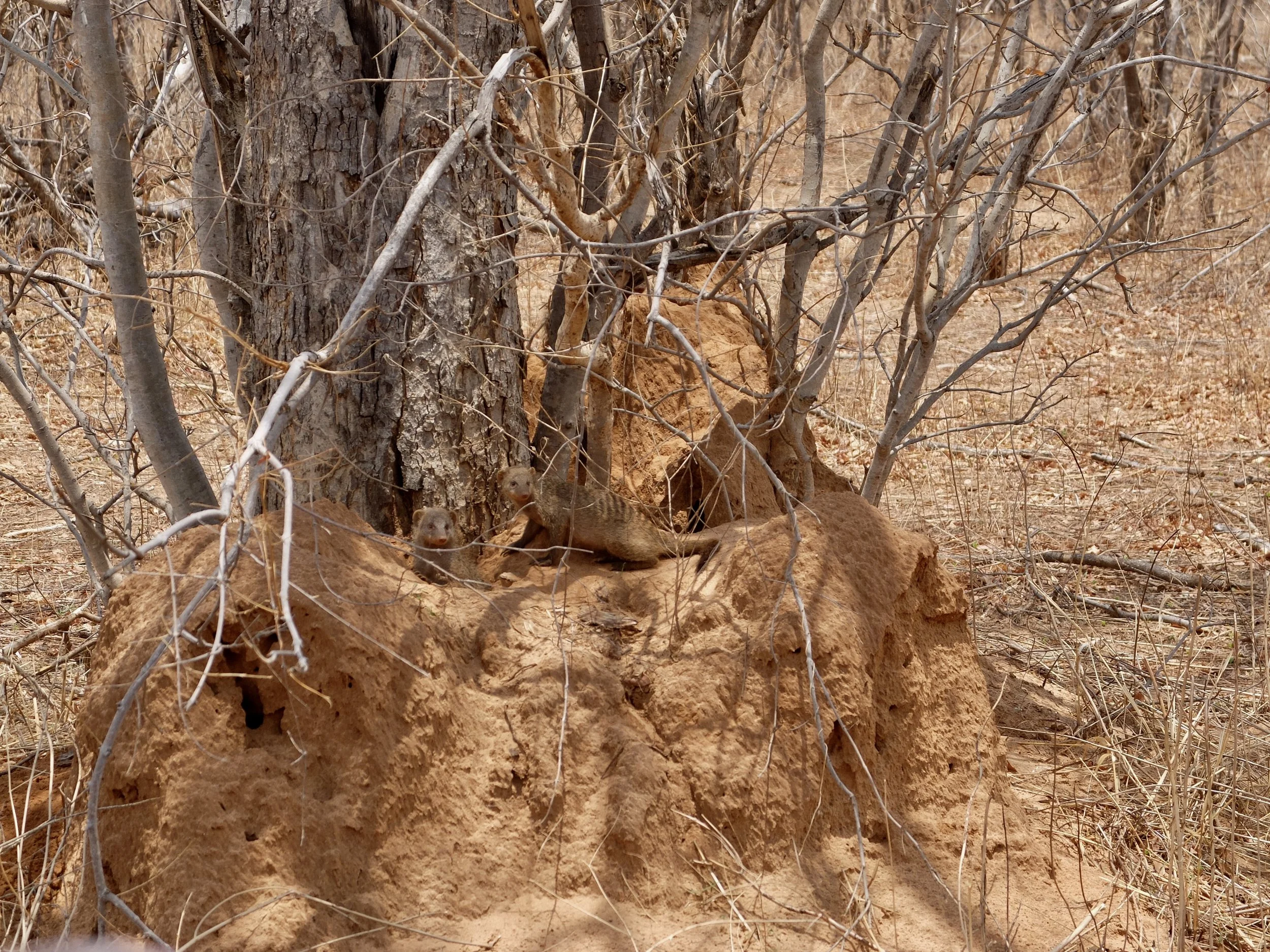
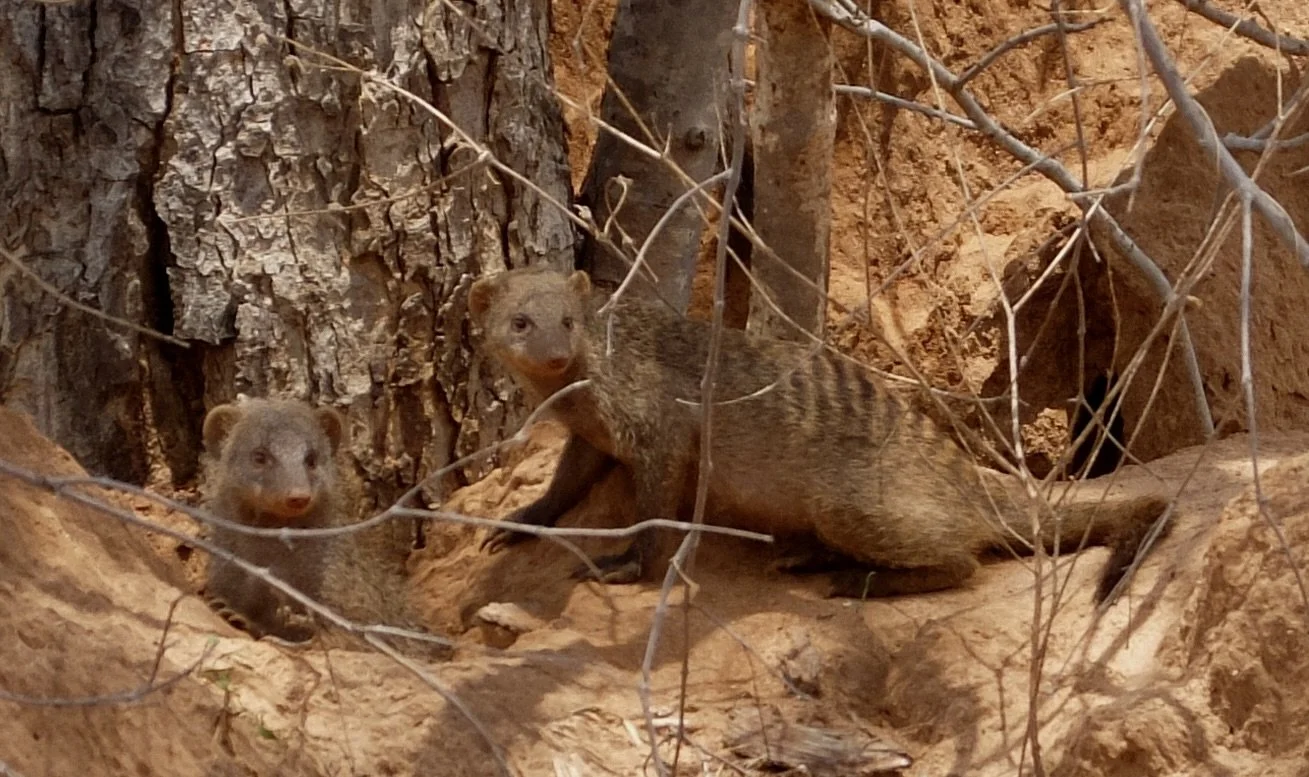
Shortly after we passed the gate returning into Muchenje Safari Lodge, Naomi spotted these banded mongooses in an abandoned termite mound. Our guide hadn’t seen them.
They “live in colonies with a complex social structure.”
-
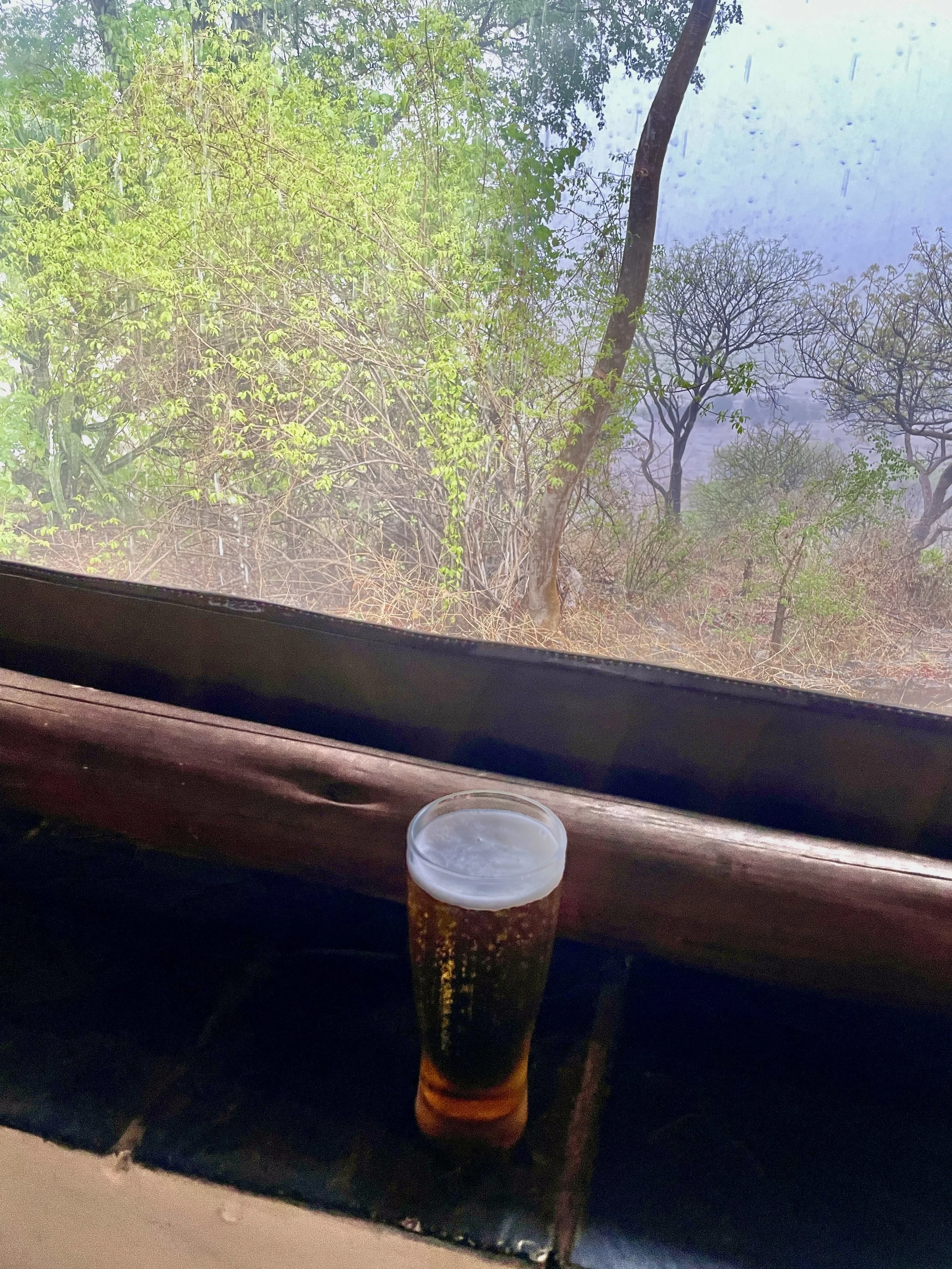
Pula!
In Setswana, pula means “Cheers!, rain & it’s the name of Botswana’s currency.”
It rained that afternoon. We declined to go on a game drive & get soaked…
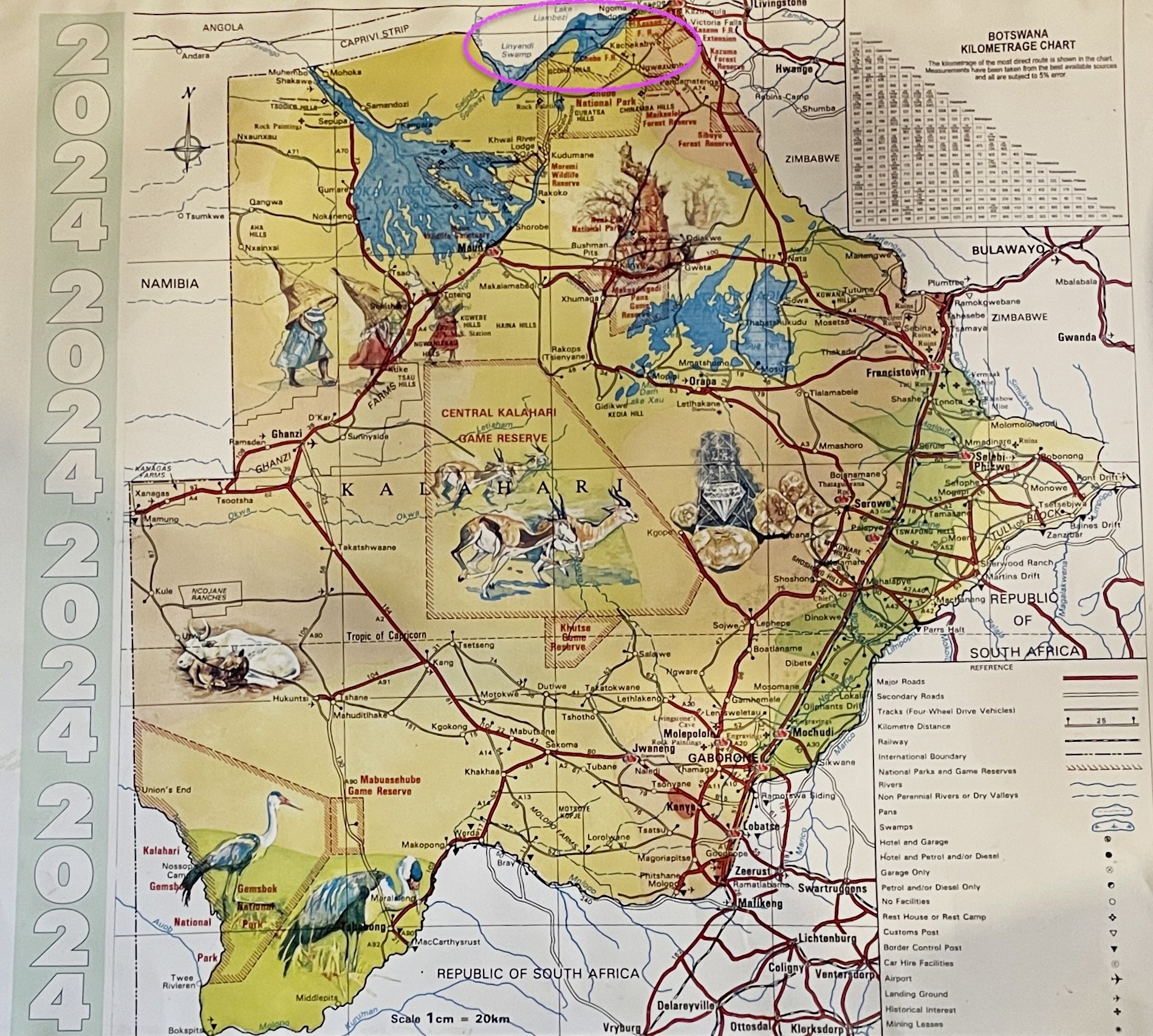
…so our guide K.B. told us about Botswana.
The lesson went down smoothly with a local lager & other cocktails.
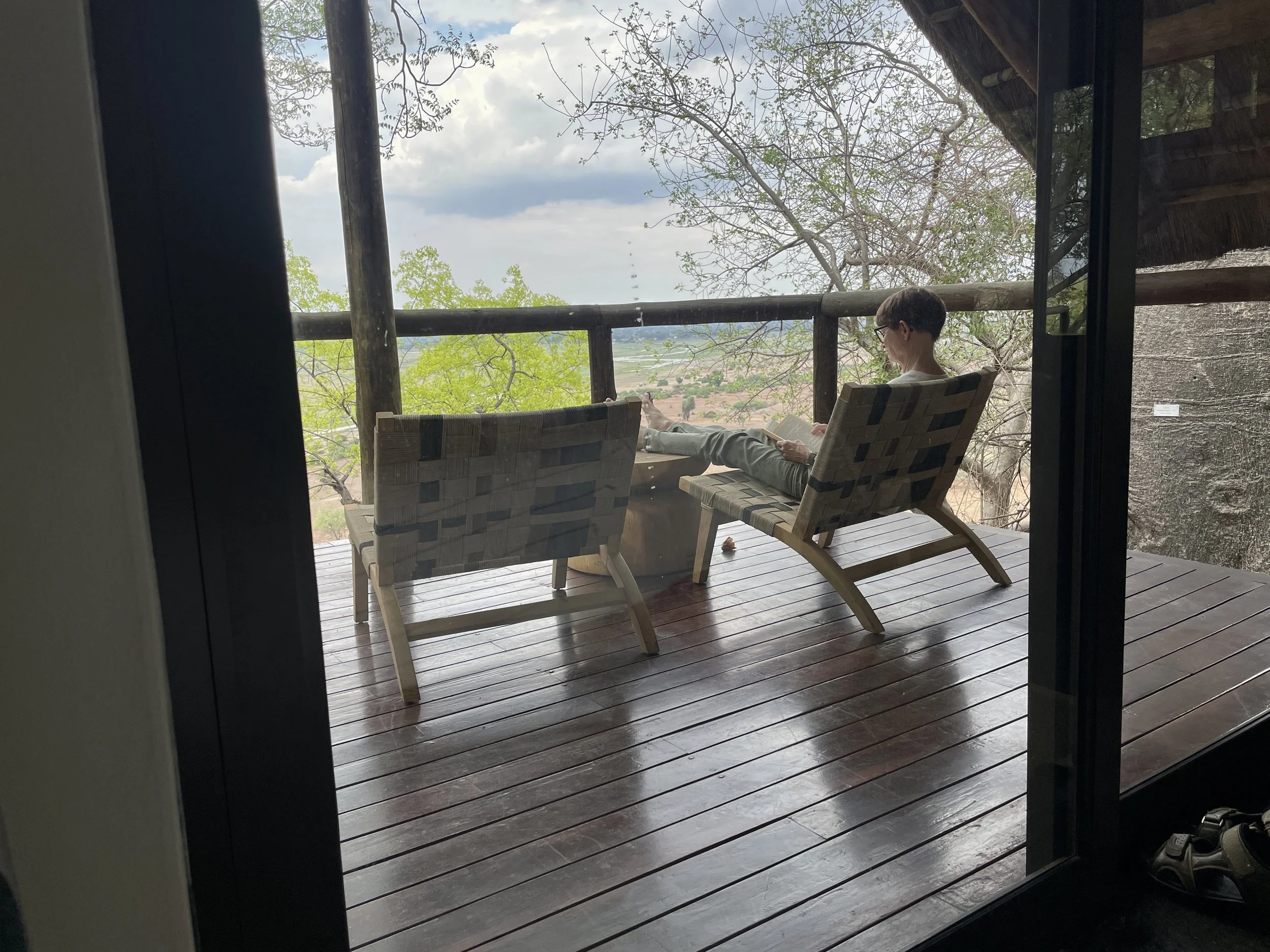
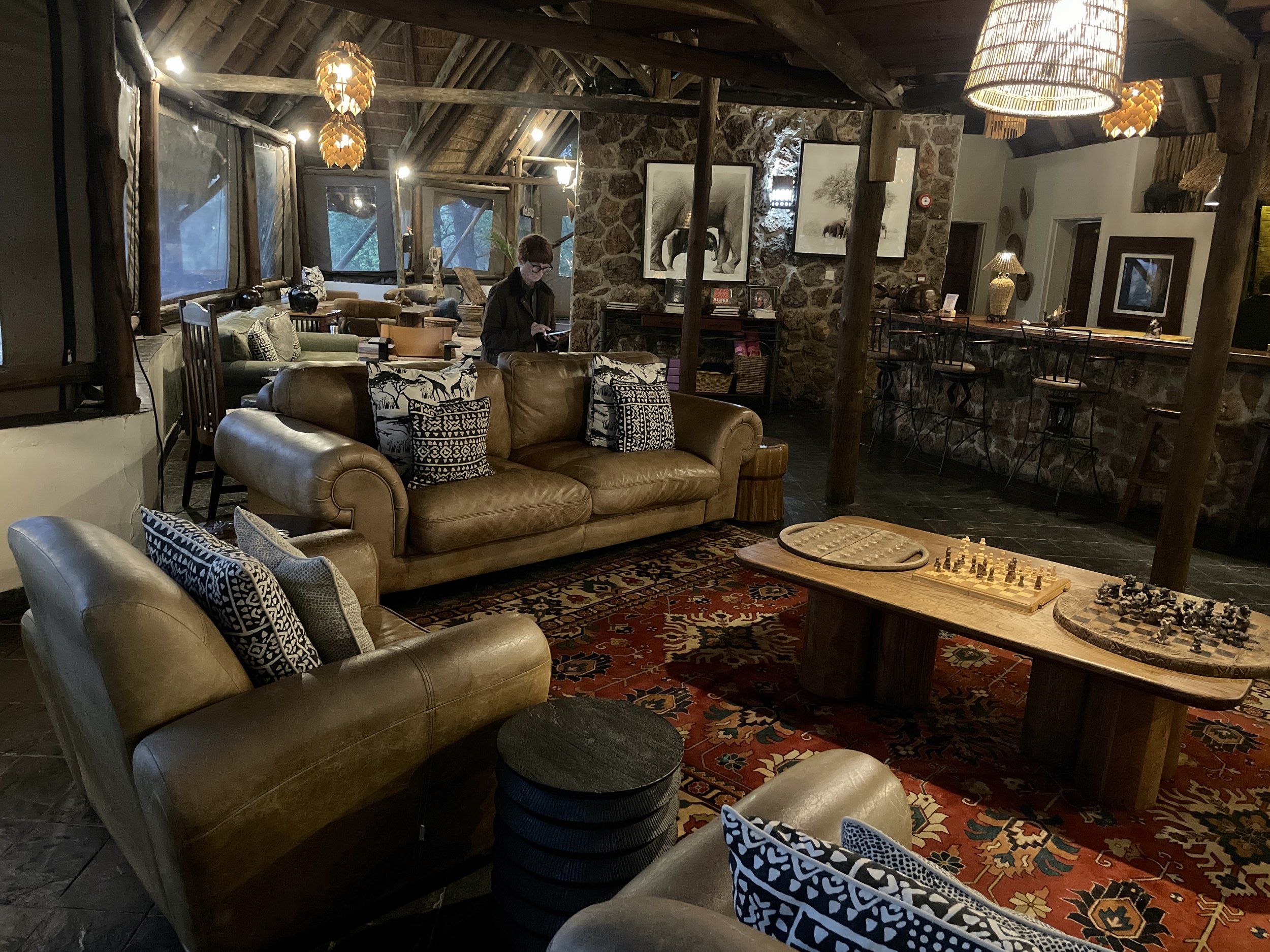
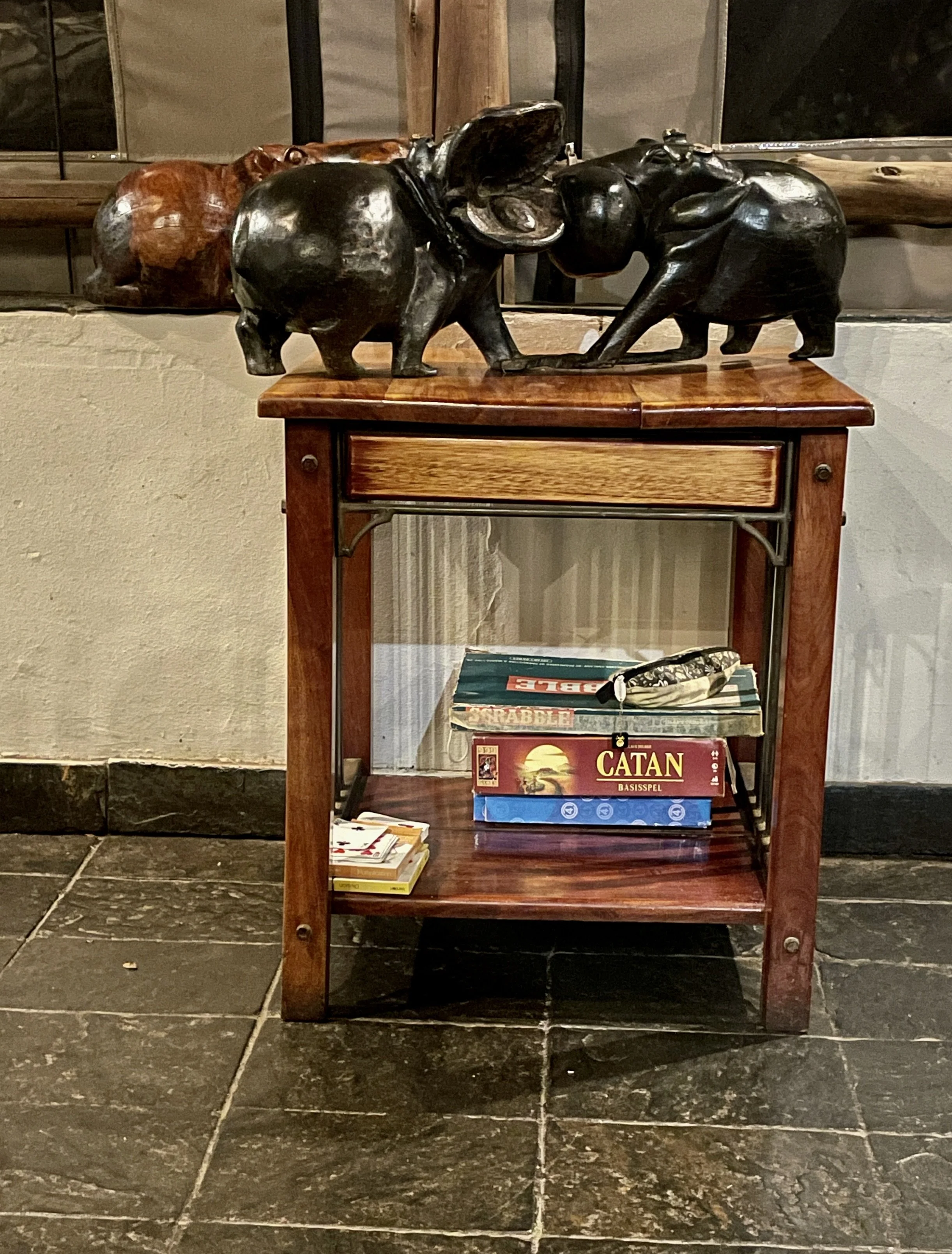
Who could resist this relaxing lodge?
Nomi & I liked the light fixtures throughout the lodge.
-
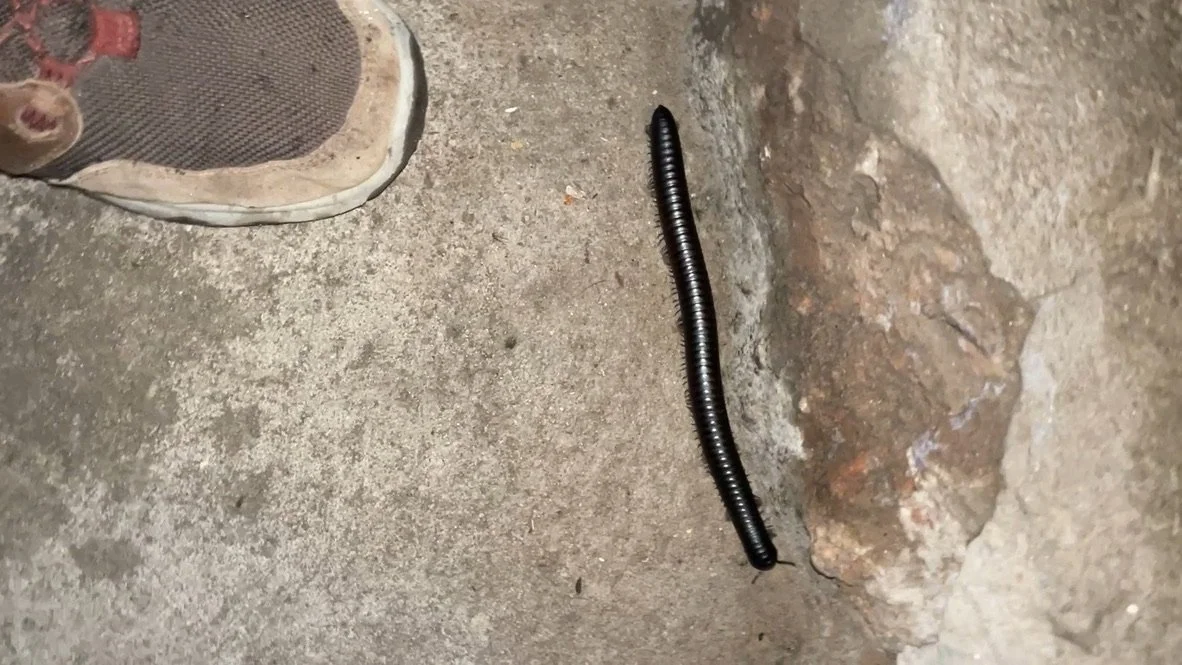
A giant African millipede greeted us on the path to our room. We let it scurry by. They can grow to over a foot long & can live seven to ten years.
Next, a three border crossing day; Botswana, Zambia & Zimbabwe.